about the Campus Wörth-Wiesent
Green hydrogen is a central energy carrier for the climate-neutral future. Basic technical solutions in the field of hydrogen are known, but comprehensive integration into economic processes remains a challenge.
As a research facility of the Deggendorf Institute of Technology, the Technology Campus Wörth-Wiesent supports commercial enterprises in integrating hydrogen technologies into existing processes and jointly develops individual solutions for future-oriented issues. One area of application is heavy goods transport, whose conversion to renewable drive concepts is of particular importance due to the constantly increasing demand for transport.
With our three main research areas of power electronics, electrolysis and fuel cell technology, as well as process and systems technology, we cover the entire hydrogen value chain in an interdisciplinary manner. Together with the OTH Regensburg, we pool our experience and knowledge in the field of water technologies and, together with the Hydrogen Centre Kelheim (WTZ Kelheim), form the Danube Hydrogen Cluster.
The Technology Campus Wörth-Wiesent is currently under construction. Would you like to be part of actively shaping the future of hydrogen use and heavy-duty transport? Please feel free to contact us.
expertise
The research area for electrolysis and fuel cell technology is currently being established.
Hydrogen electrolysis is the conversion of electrical energy into chemical energy. Fuel cell technology represents the reverse process, i.e. the conversion of chemical energy into electrical energy.
The basic goals here are:
- Increasing the conversion efficiency between chemical and electrical energy (both directions) in order to require less green electricity for the same drive energy in heavy-duty transport.
- Increasing the power density, and thus reducing the size of the components
- Reduction of rare and expensive raw materials such as platinum and palladium
- Increased service life with reduced necessary hydrogen quality
In power electronics, the focus is on increasing the efficiency of current and voltage conversion between a green electricity source and water electrolysis as well as a fuel cell and a mechanical drive system. Power electronics acts as a link between the green power source and the electrolyser as well as the fuel cells and the drive motor.
- Harnessing and storing "leftover" electricity in the form of hydrogen, i.e. green electricity that would otherwise be lost by shutting down the plants in the event of oversupply
- Reducing the economic threshold for storing surplus electricity through more efficient and cheaper DC/DC converters to alkaline electrolysers
- Coupling energy storage and energy grids such as traction power grids, public distribution grids and local intra-company DC grids
- Development of direct current (DC) grids in large solar parks for efficient direct conversion of direct current into hydrogen
- Development of high-temperature resistant power electronics based on silicon carbide in order to be able to use high-temperature fuel cells in mobile applications.
- Development of motor inverters with a wide input voltage range in order to be able to dispense with the additional DC converter that has been customary in fuel cell systems up to now.
- Expansion of grid-connected electrolysers to include a function for active compensation of reactive power, so that such systems can be used to relieve the load on the power grid.
- Modular design of power electronics for fuel cell systems in order to be able to realise fluctuating hydrogen production without efficiency losses.
The research area for process and systems engineering is currently being established.
In order to build complete fuel cell systems, the entire system is considered in addition to optimising the individual components. In addition to the interaction of the individual components, safety technology, standardisation and the use of fuel cells and electrolyser systems in special applications are also considered.
By focusing on process and system technology, complete fuel cell systems can be offered to customers and research partners. This makes innovative retrofit solutions in existing systems possible, as well as supplier solutions developed specifically according to customer requirements. Furthermore, companies in the region can be advised and trained in the implementation of hydrogen systems.
Research areas in process and systems engineering are:
- Large-scale storage and use of hydrogen in elemental and chemically bonded form
- Mobile charging stations for electric vehicles, which can be refuelled with hydrogen and thus accelerate the market ramp-up of electric vehicles and electric trucks
- Grid support of overhead line systems and distribution lines through transportable, grid-connectable fuel cell systems
- Linking goods train infrastructure with hydrogen through sector coupling between rail and road freight transport
- System qualification and testing for fuel cell systems with regard to dynamics and conversion efficiency
- Failure analysis and improvement of repair options for fuel cell systems through modular subsystems
- Fuel cell systems for military transport tasks (lower noise and heat signature for better camouflage)
- Electrolysis systems for the reduction of CO2 from the atmosphere for effective removal and reconversion of greenhouse gases
- Development of utilisation possibilities of waste hydrogen from the semiconductor and electrolysis industry
cooperations & projects
European cutting-edge technology is characterised by intensive cooperation between industry and universities and institutes.
We support you in publicly funded research projects - from idea development and application to the final report, and also carry out individual service and contract research projects for you.
Our team will be happy to answer all your research and development questions.
news
Visit from the Women’s Union
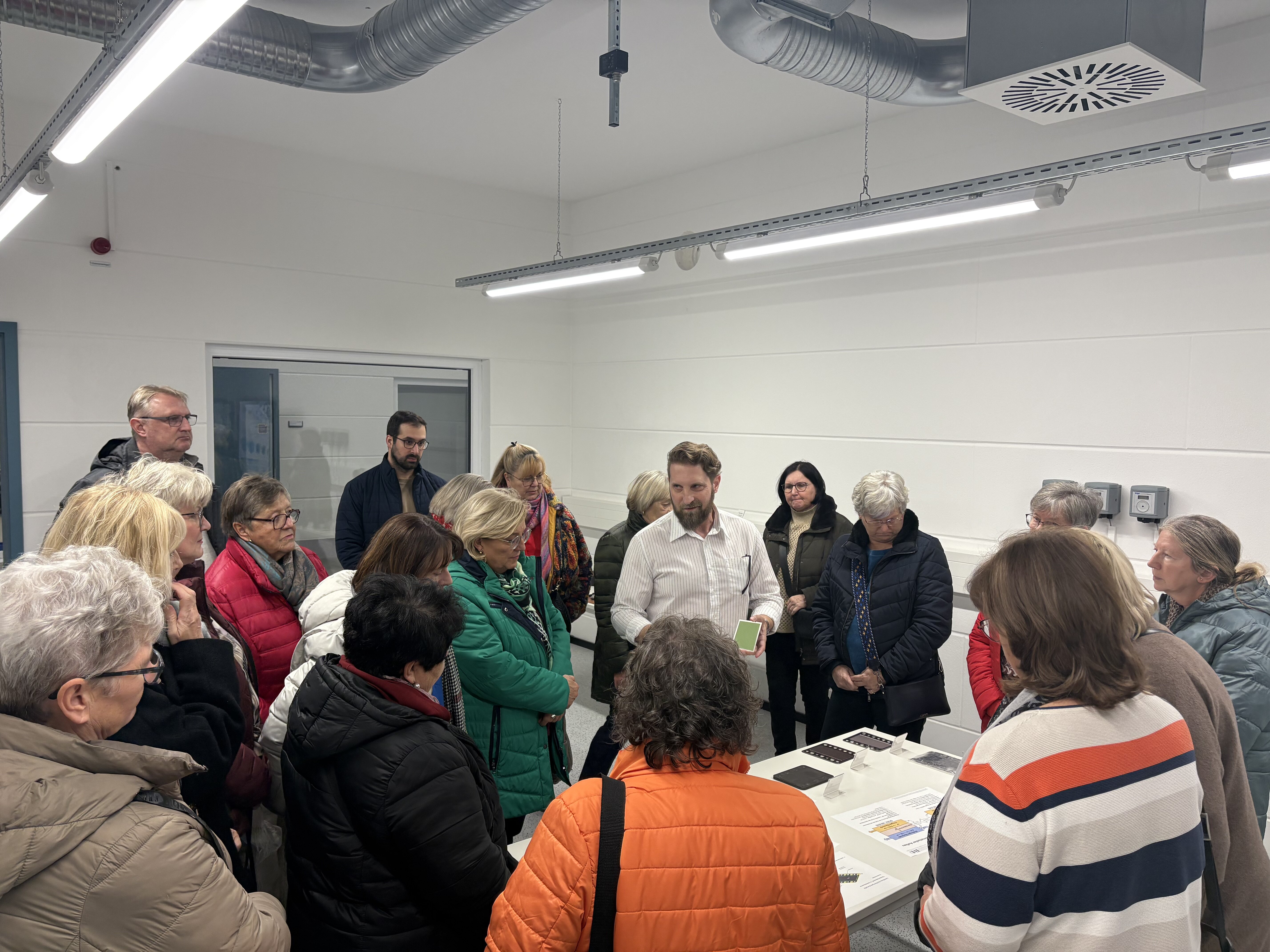
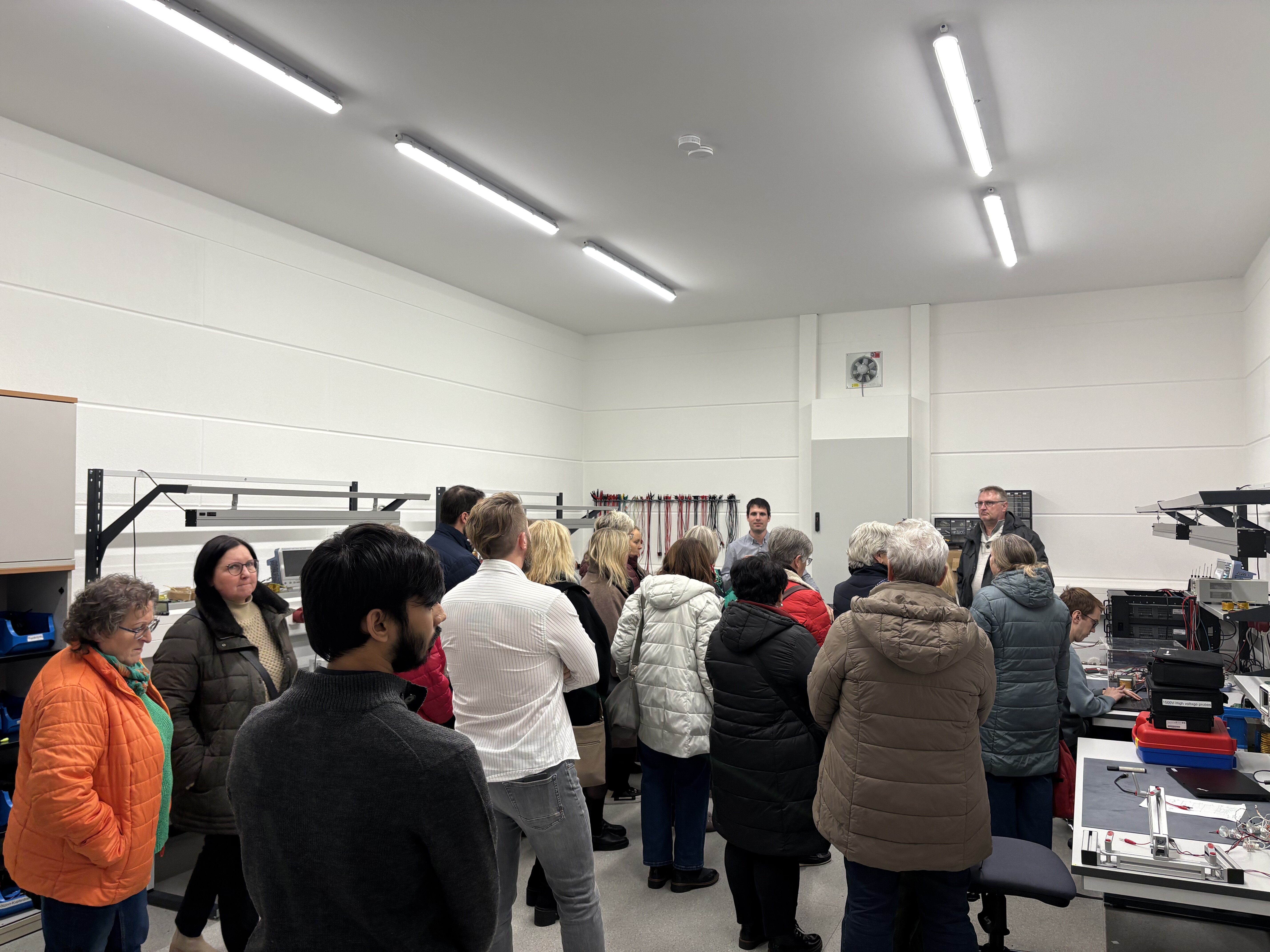
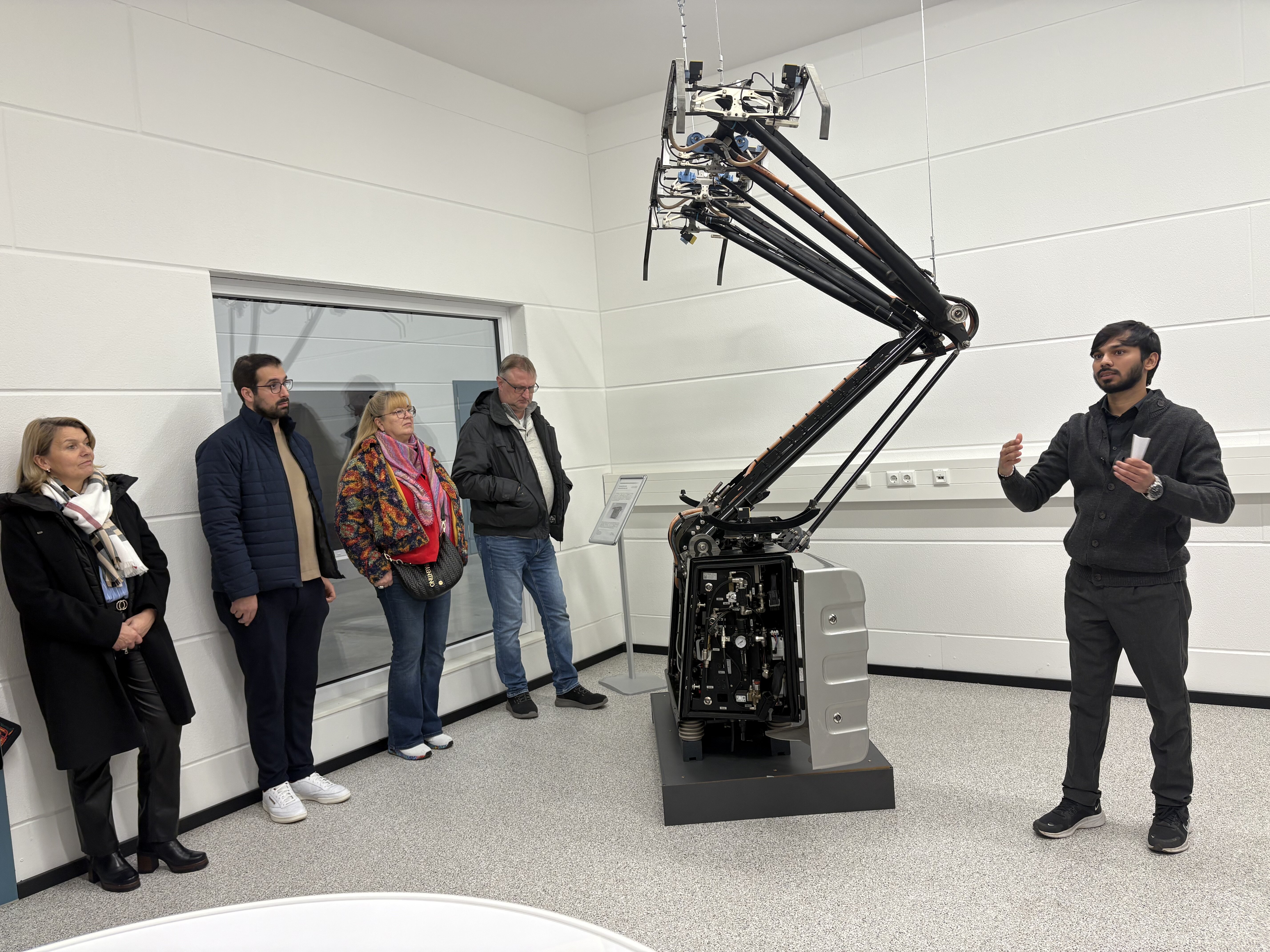
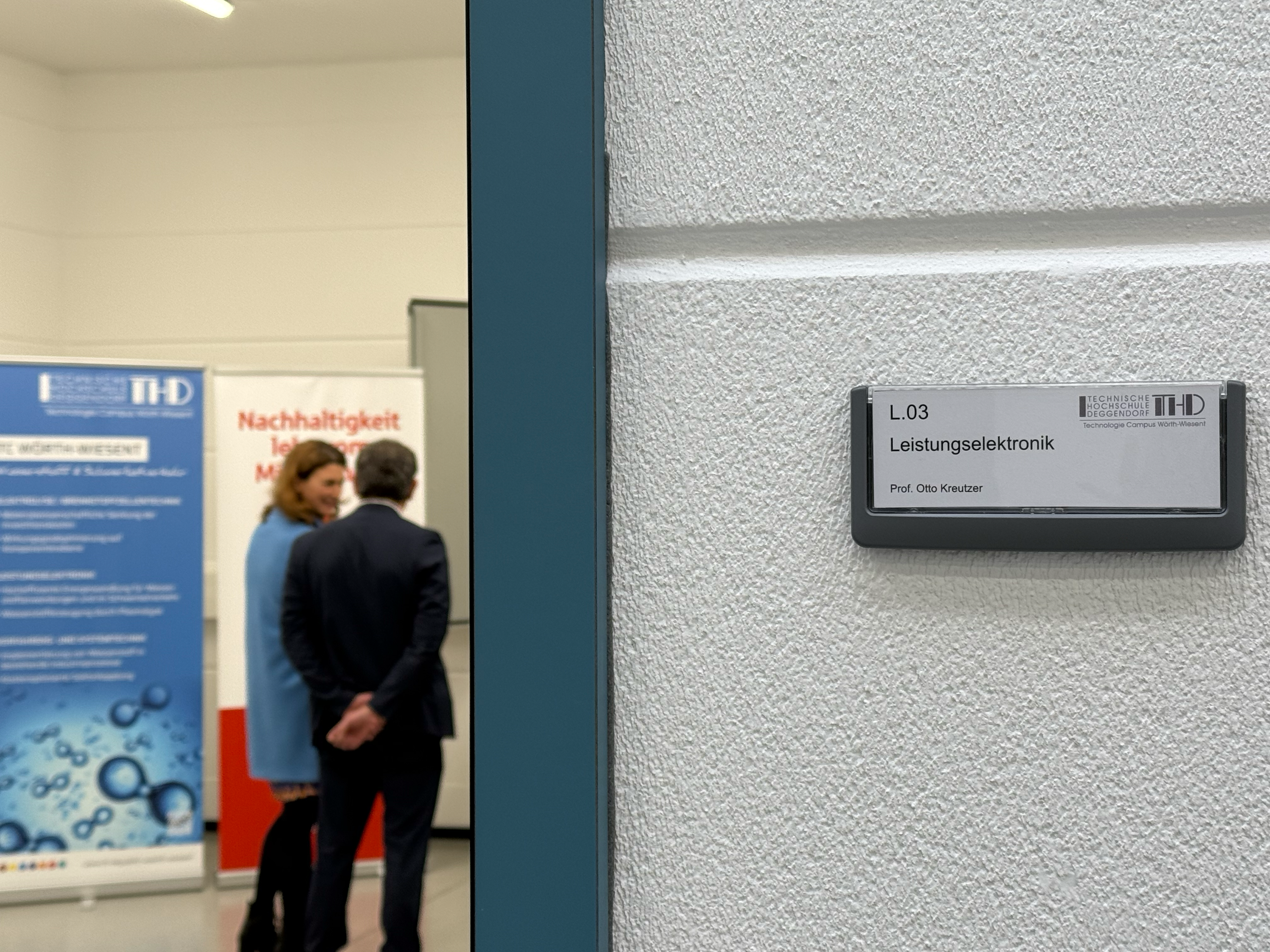
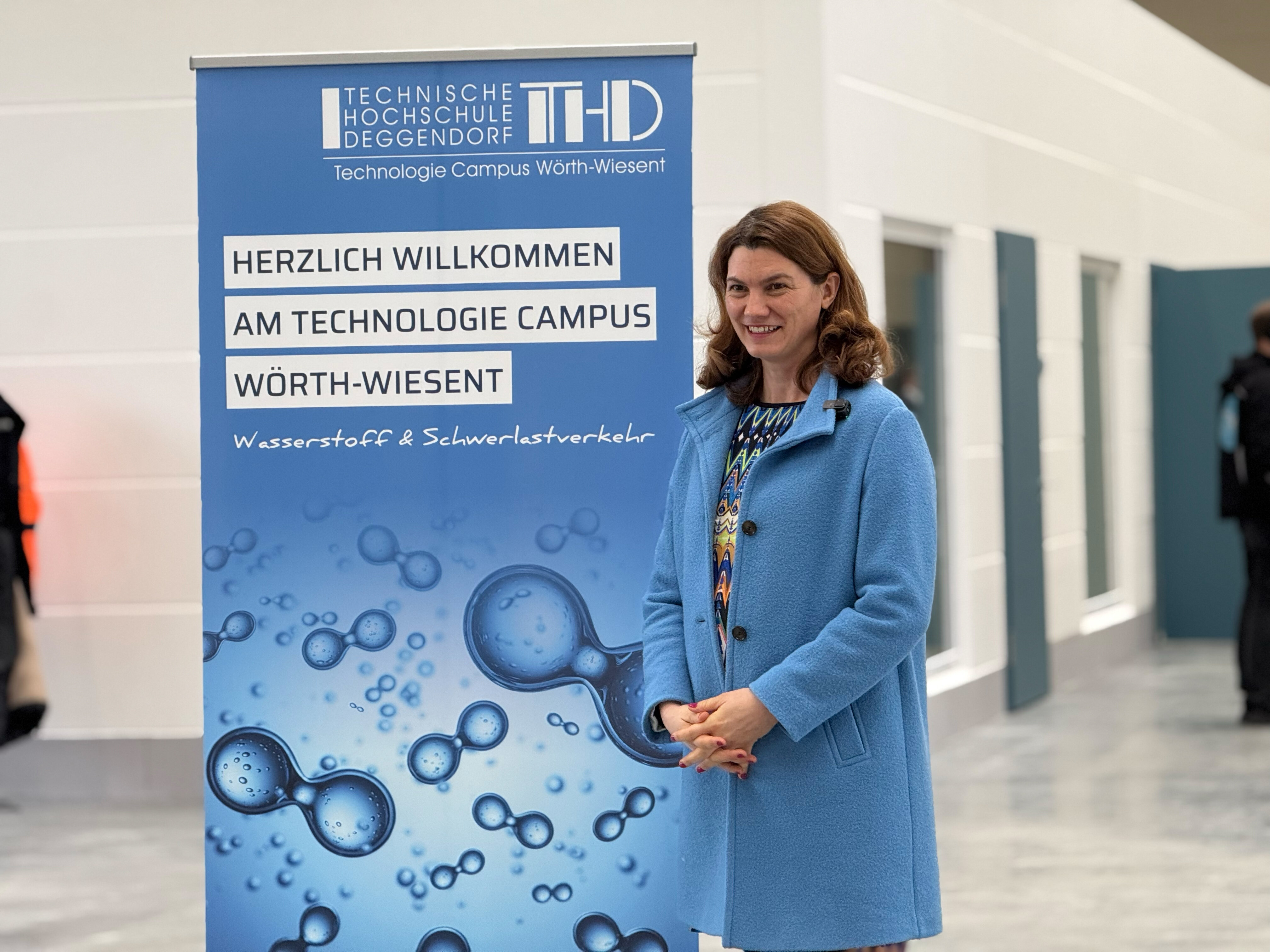
On November 27, the Pfatter Women’s Union visited our campus, accompanied by the "Mother of the Campus"—as Mayor Elisabeth Kerscher aptly put it—and their chairwoman, former Member of the State Parliament Sylvia Stierstorfer.
Our professors, Prof. Dr. Otto Kreutzer and Prof. Dr. Bernd Kuhn, along with research associate Rohit Manohar Mali, offered fascinating insights into their respective fields of research and answered numerous questions from the visitors.
It was an inspiring exchange and a wonderful example of how science, politics, and civic engagement can work together. Many thanks for the visit!
A Big Kick-Off: Wörth-Wiesent Campus
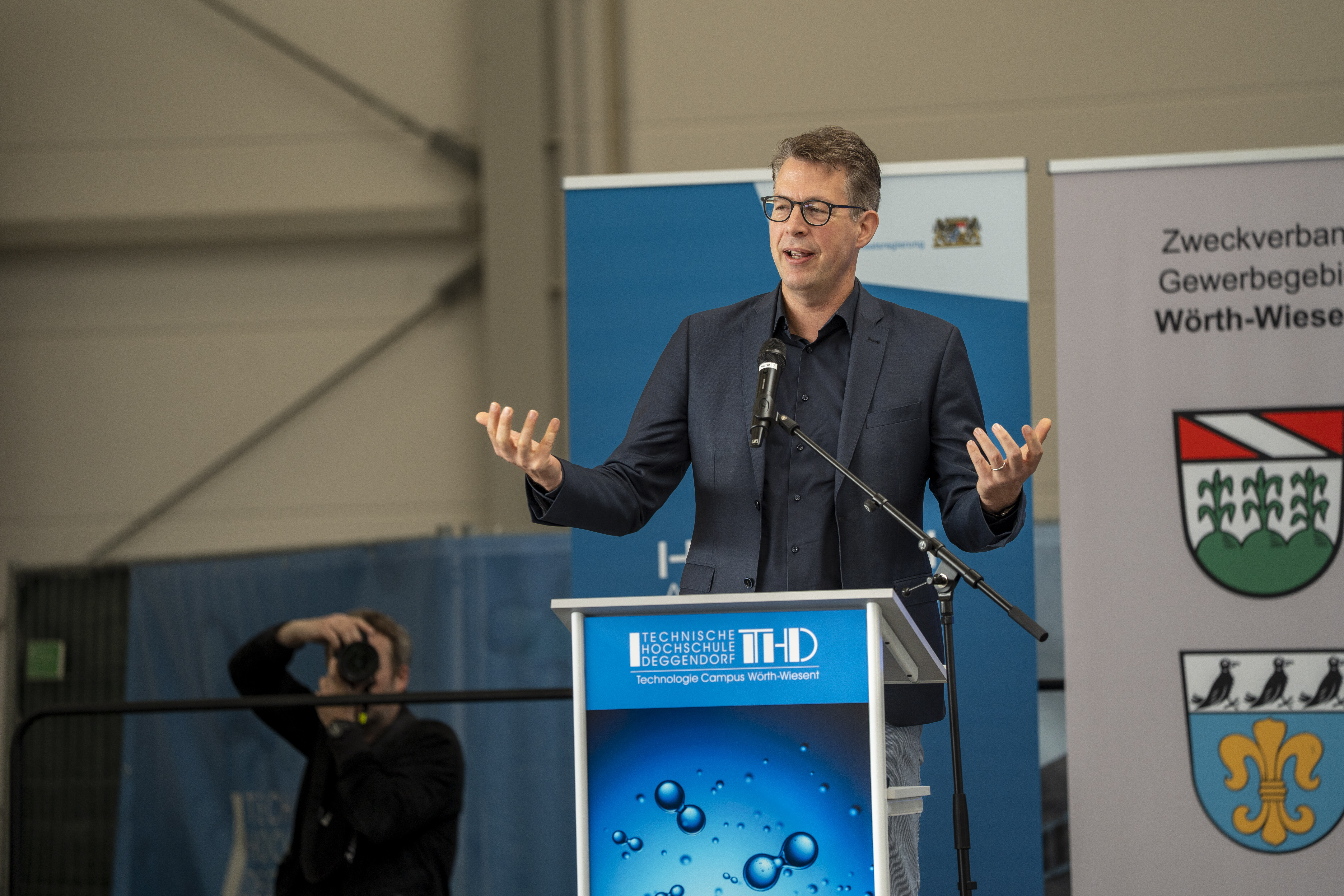
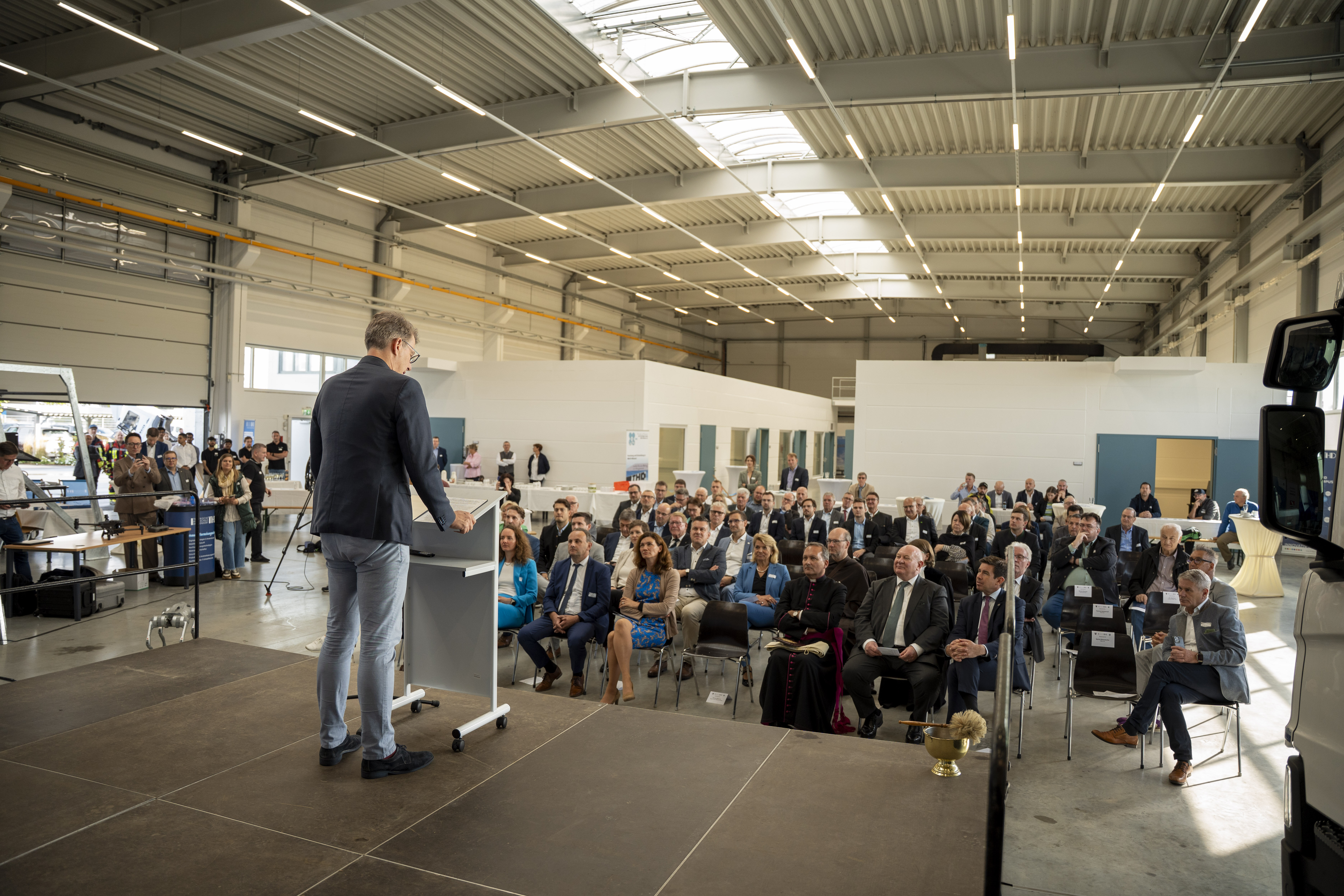
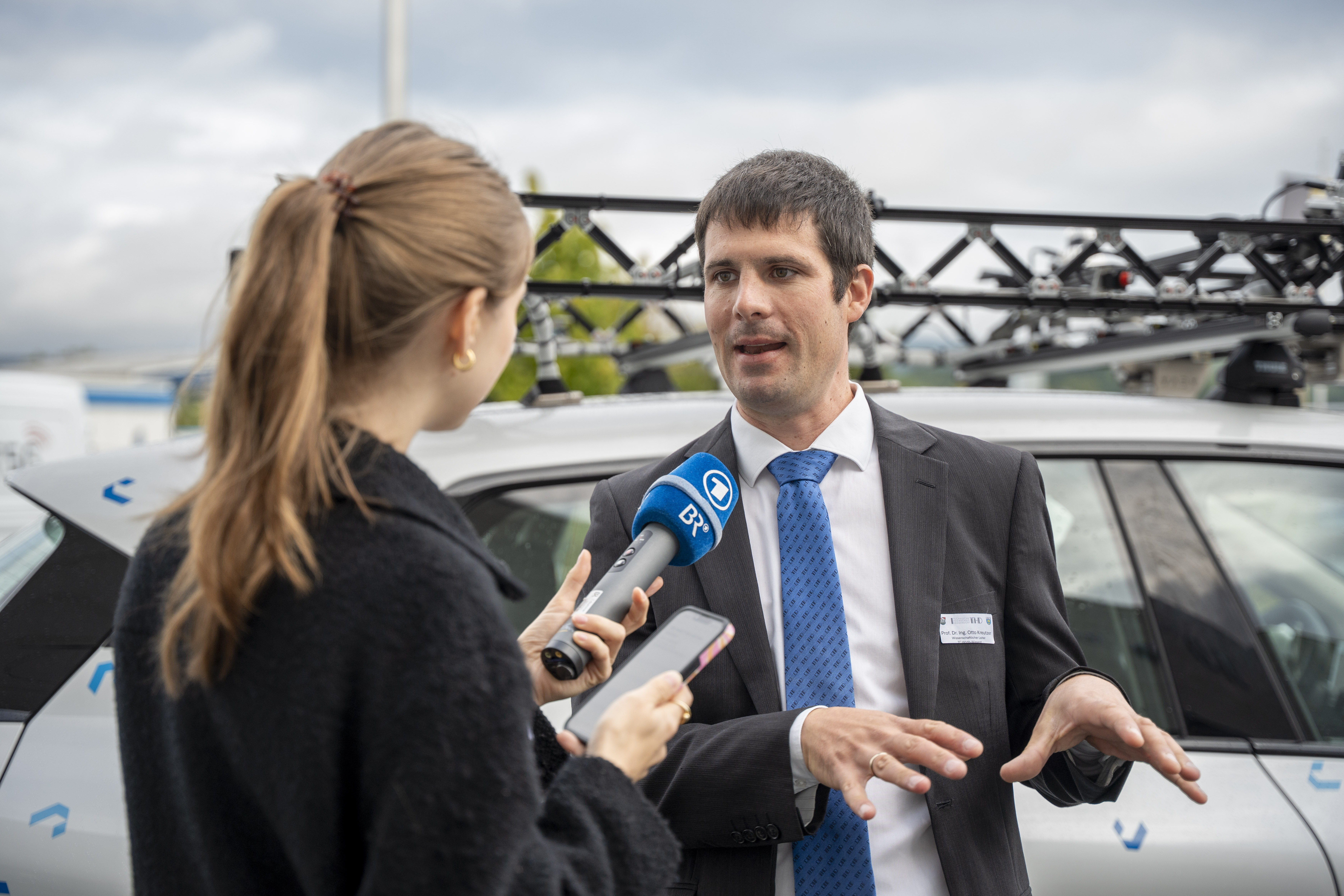
The Wörth-Wiesent Campus marks a new addition to the landscape of hydrogen technologies and the path toward a climate-neutral future. On Monday, September 15, Science Minister Markus Blume officially inaugurated the site—part of the Deggendorf Institute of Technology (DIT)—by popping a hydrogen-filled balloon to mark the occasion.
For the past two years, projects have been underway in the campus's state-of-the-art laboratories—such as research into high-voltage direct current (HVDC) transmission, conducted in cooperation with Tunisia. The goal is to make the technology more affordable and widely available.
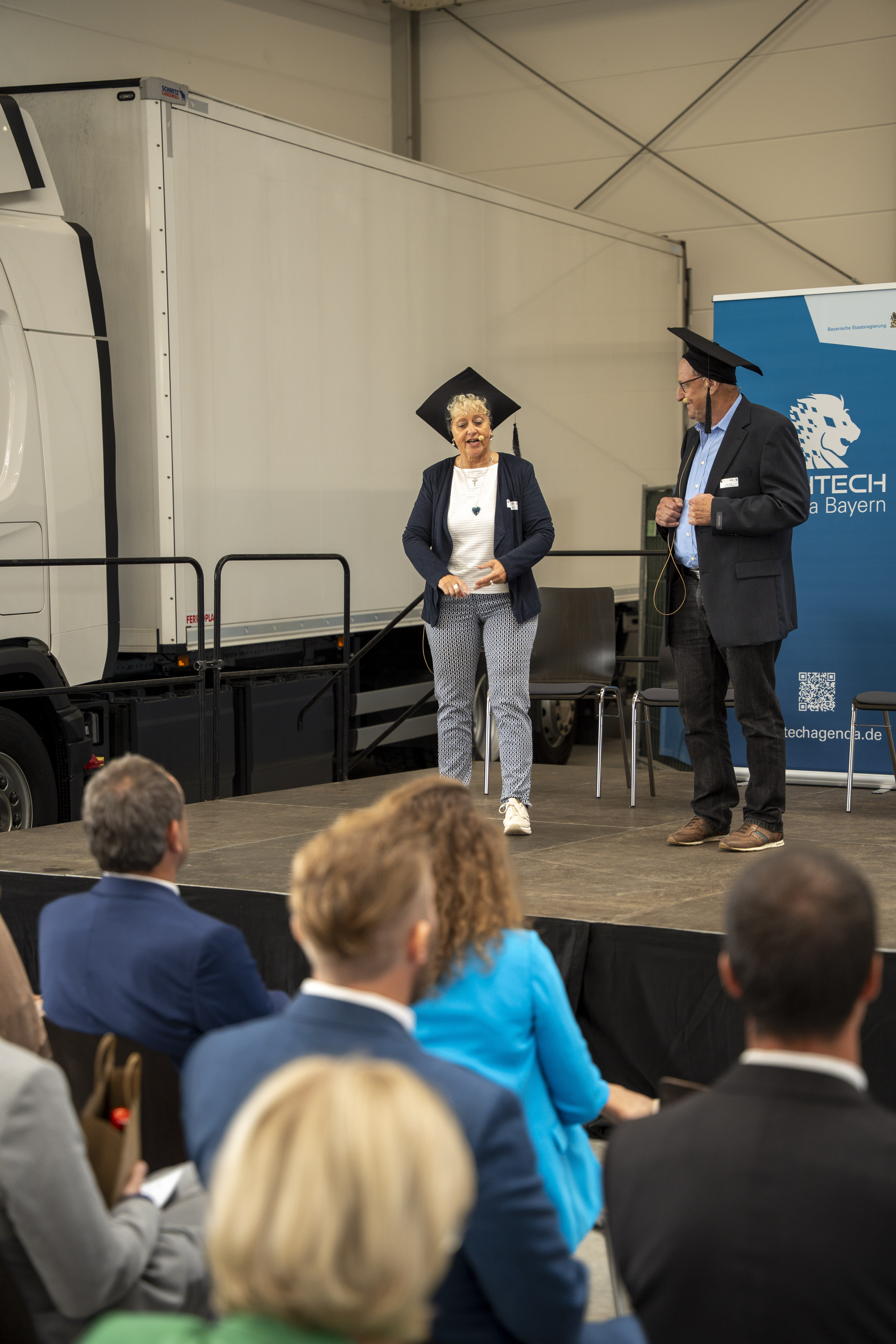
During the open house event, numerous visitors gained fascinating insights into the research work being done.
We would like to thank everyone who helped make this day such a resounding success!
Photos: Stefan Kunz (DIT)
Researchers' Breakfast on Campus
On July 4th, we hosted a researchers' breakfast on our campus in collaboration with the Center for Applied Research (ZAF).
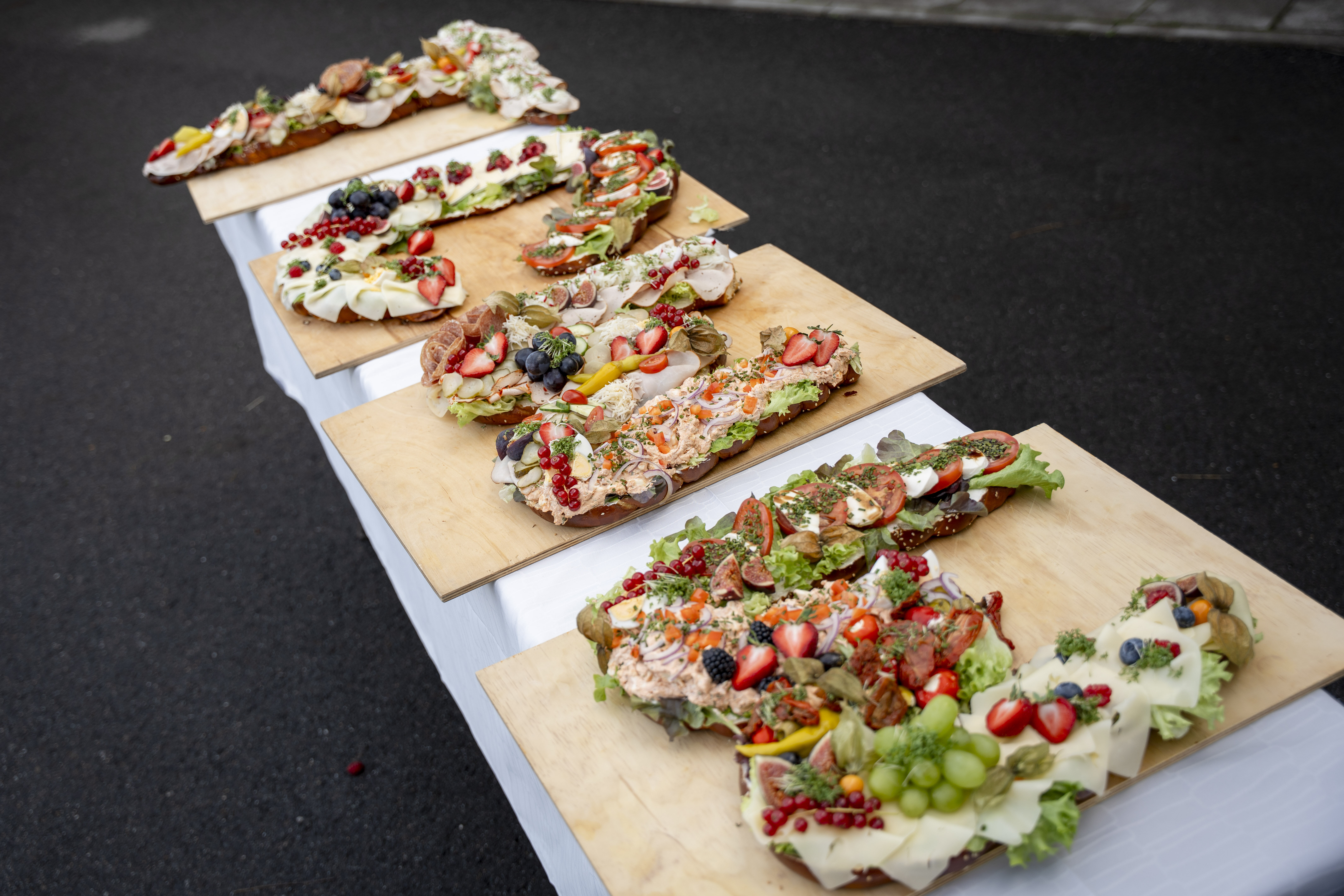
Over coffee and pretzels in a relaxed atmosphere, we showcased the current research projects led by our three professors and presented our facilities—including the newly constructed laboratories, some of which are already in use.
The focus was on personal interaction: What solutions are already working? Where do we see potential? What ideas emerge through dialogue?
The subsequent get-together provided ample opportunity for conversation, networking, and valuable insights from the worlds of academia, industry, and administration. Many thanks to all the participants for their keen interest and stimulating discussions!
We look forward to the next researchers' breakfast and to continuing the exchange on research, innovation, and sustainability.
VDE Excursion to the Wörth-Wiesent Campus
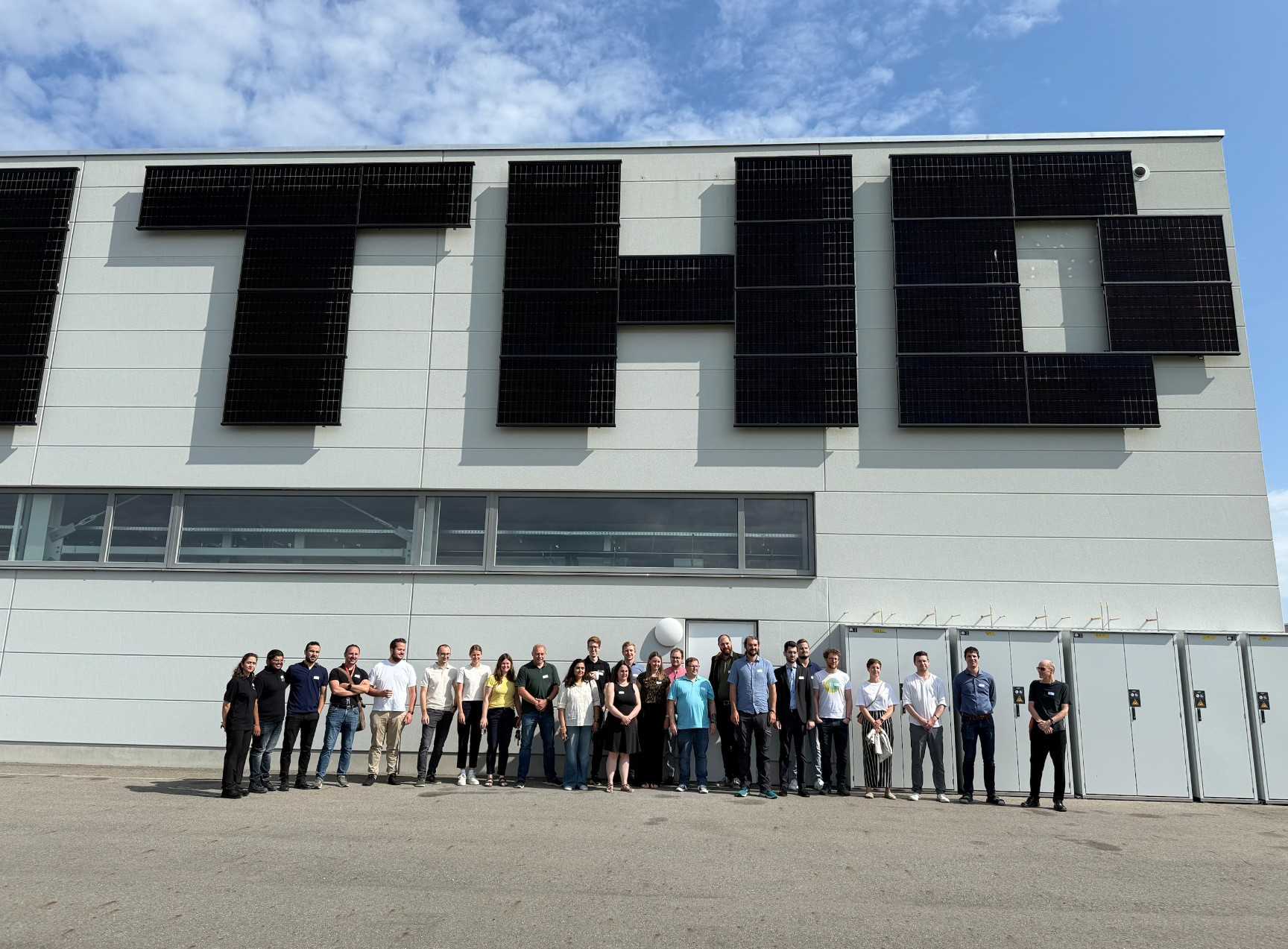
On June 4, 2025, we had the pleasure of welcoming a group of students from the Deggendorf Institute of Technology. Organized in collaboration with the VDE, the event offered participants an initial glimpse into the laboratories and research activities in the field of power electronics that are currently being established at the site.
The program focused on tours of the research facilities and professional exchanges with our scientists. The aim was to provide students with an overview of current projects and future research priorities at the location.
The event concluded with a get-together featuring a barbecue, offering an opportunity for conversation and networking in a relaxed atmosphere.
Our takeaway: Direct interaction with the next generation of technical talent is a vital part of our work. Events like this help spark early interest in applied research and highlight potential opportunities for practical projects or thesis work.
We would like to thank all the participants for their interest and the VDE for organizing the event's program.
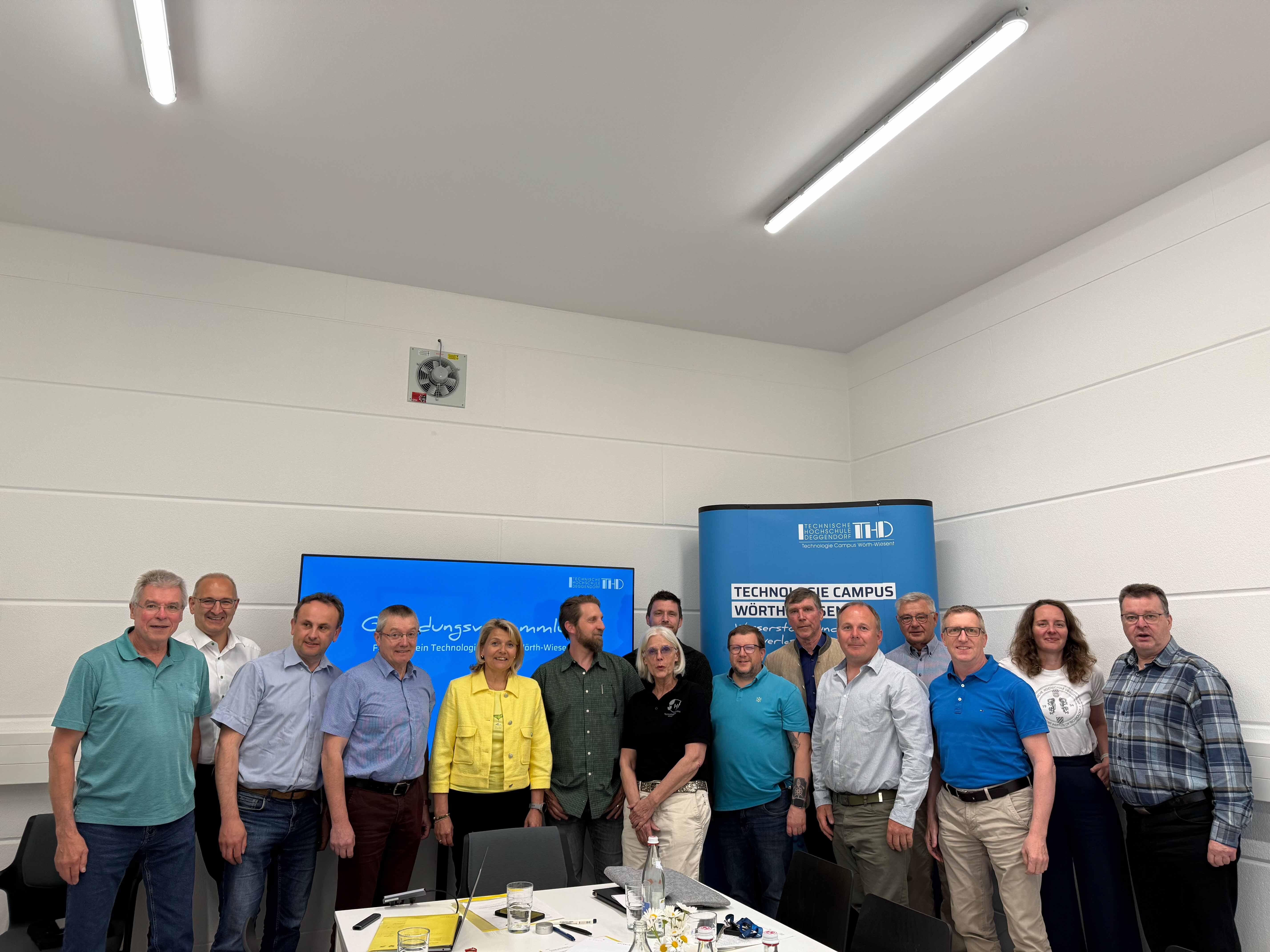
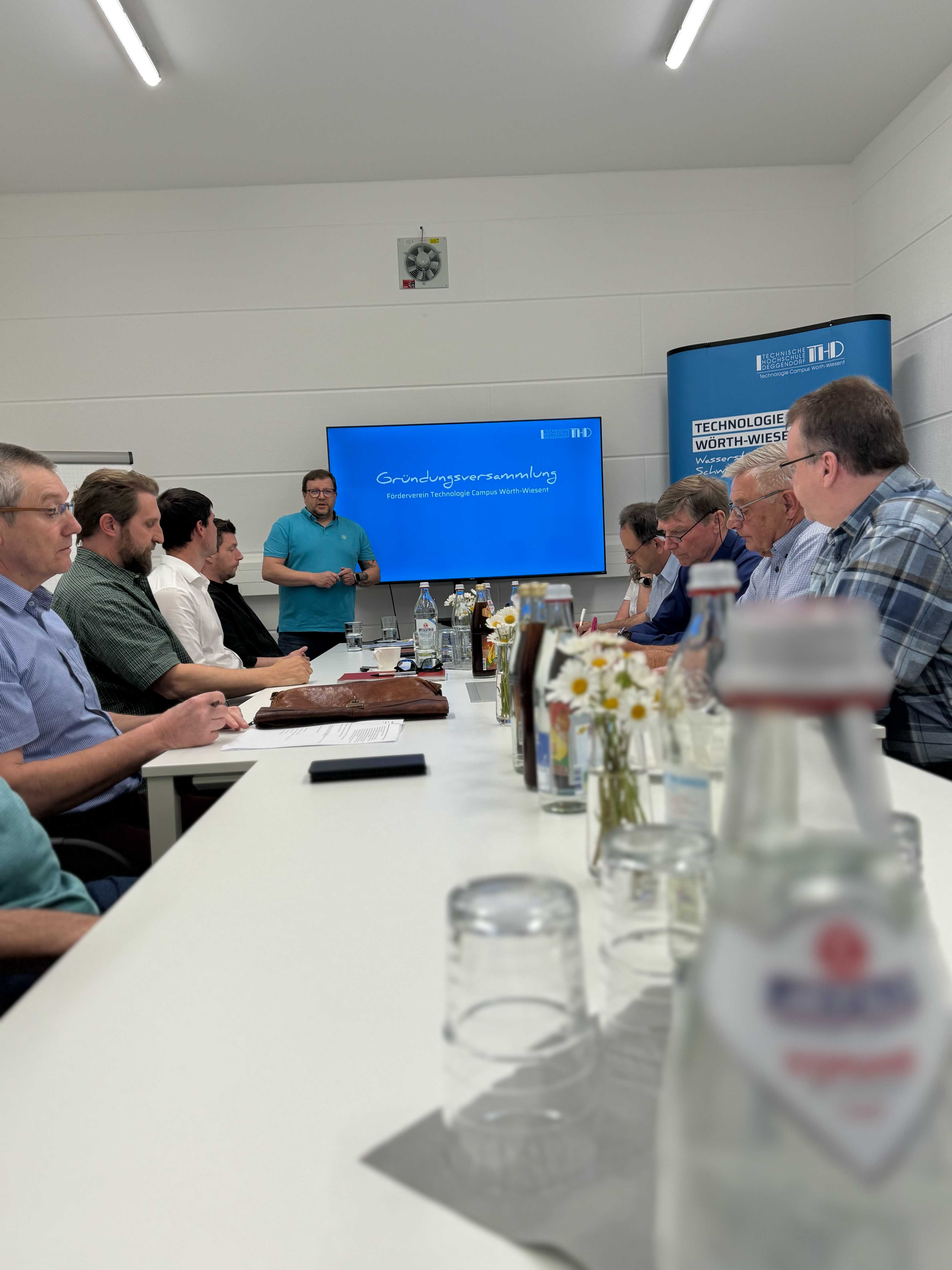
Founding of the support association "Friends and Supporters of the Wörth-Wiesent Technology Campus"
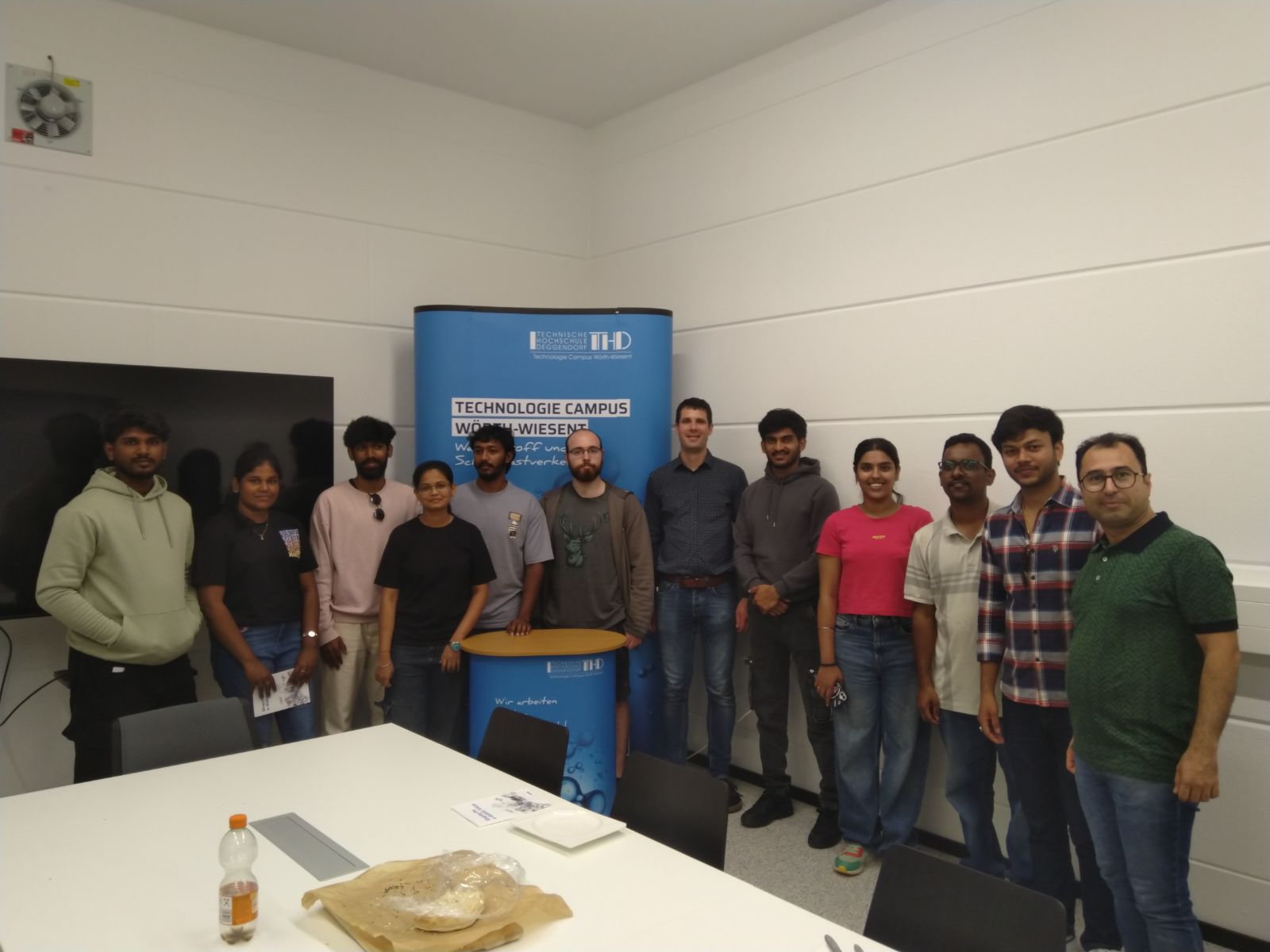
With the aim of providing sustainable support for the Wörth-Wiesent Technology Campus and anchoring it firmly within the region, the support association "Friends and Supporters of the Wörth-Wiesent Technology Campus" (*Freunde und Förderer des Technologie Campus Wörth-Wiesent e.V.*) was founded on May 14, 2025. The new association seeks to actively promote research and teaching at the site, support students and visiting students, and further strengthen the ties between the campus, the local community, and regional businesses. The goal is to continue developing the campus as a hub for innovation and education in collaboration with committed citizens, institutions, and companies.
"Through this support association, we are building a vital bridge between the university, the business sector, and society. This allows us to provide targeted support for projects that go beyond standard funding—truly fostering a vibrant scientific region," explains Dr. Rudi Apfelbeck, who was elected as the association's first chairperson.
The association launches with 18 founding members. Private individuals can join for an annual fee of 15 euros, while the annual fee for companies and institutions is 100 euros.
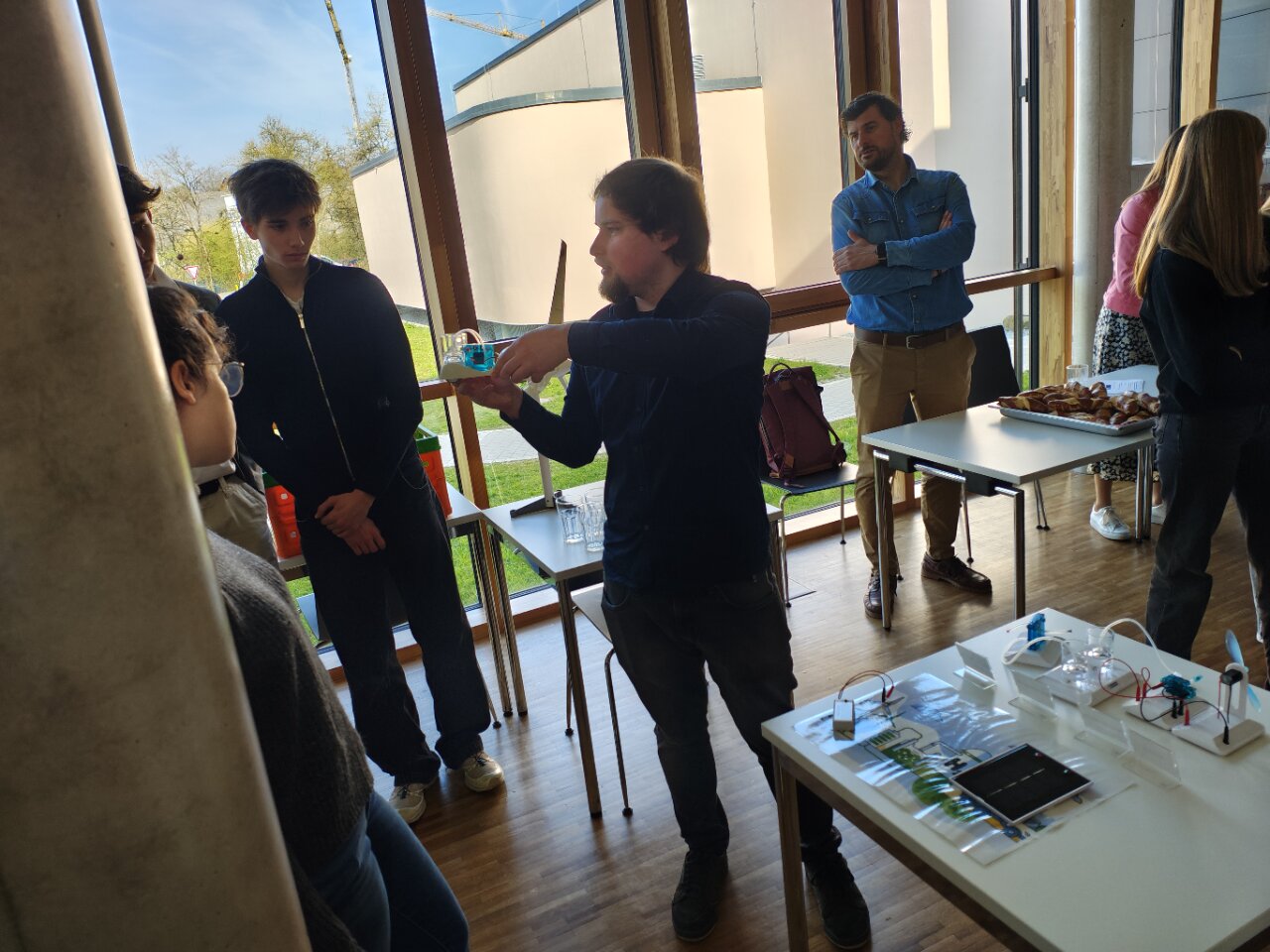
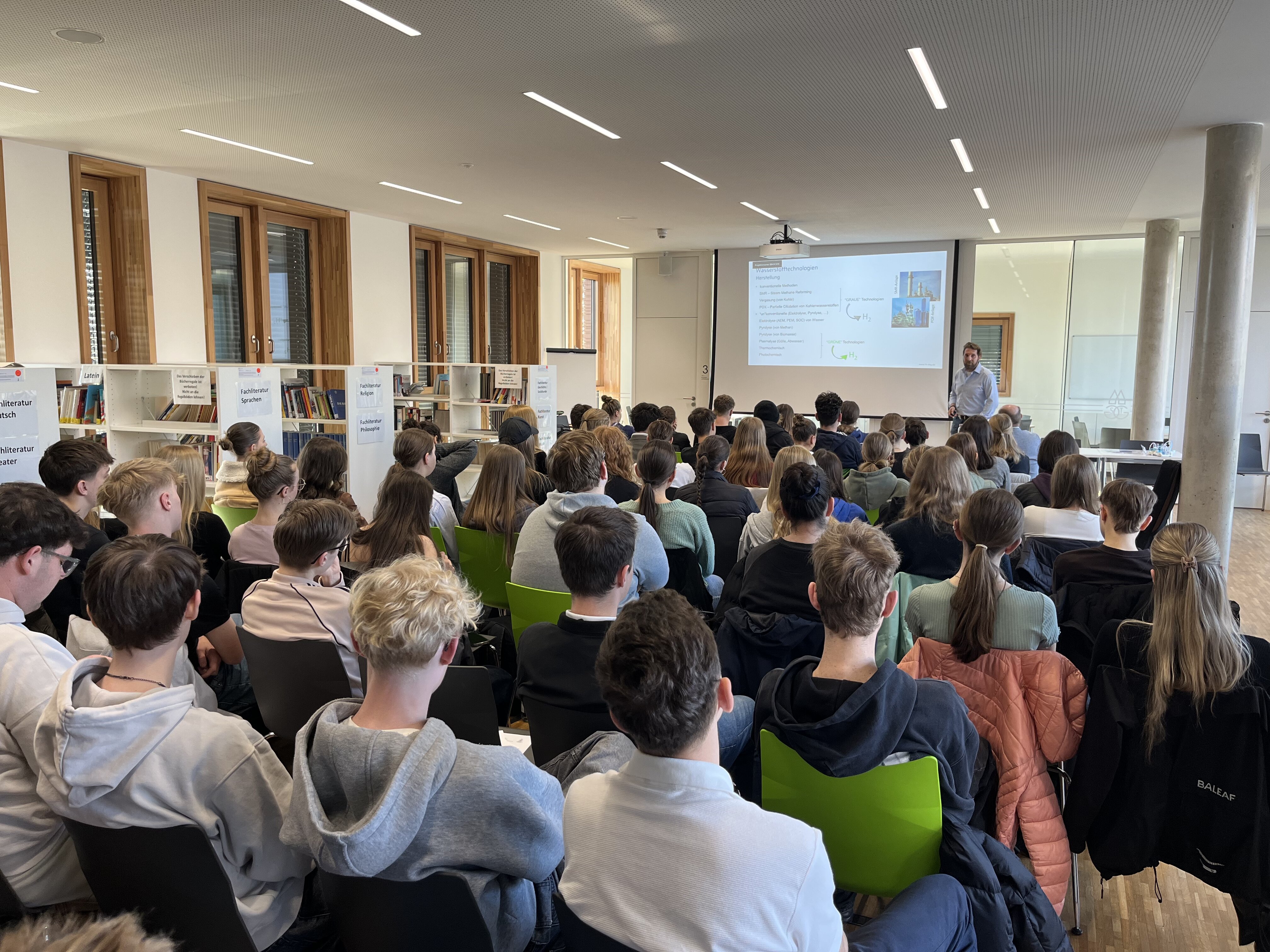
Experiencing Hydrogen – at the 8th Climate Day at Gymnasium Niederalteich
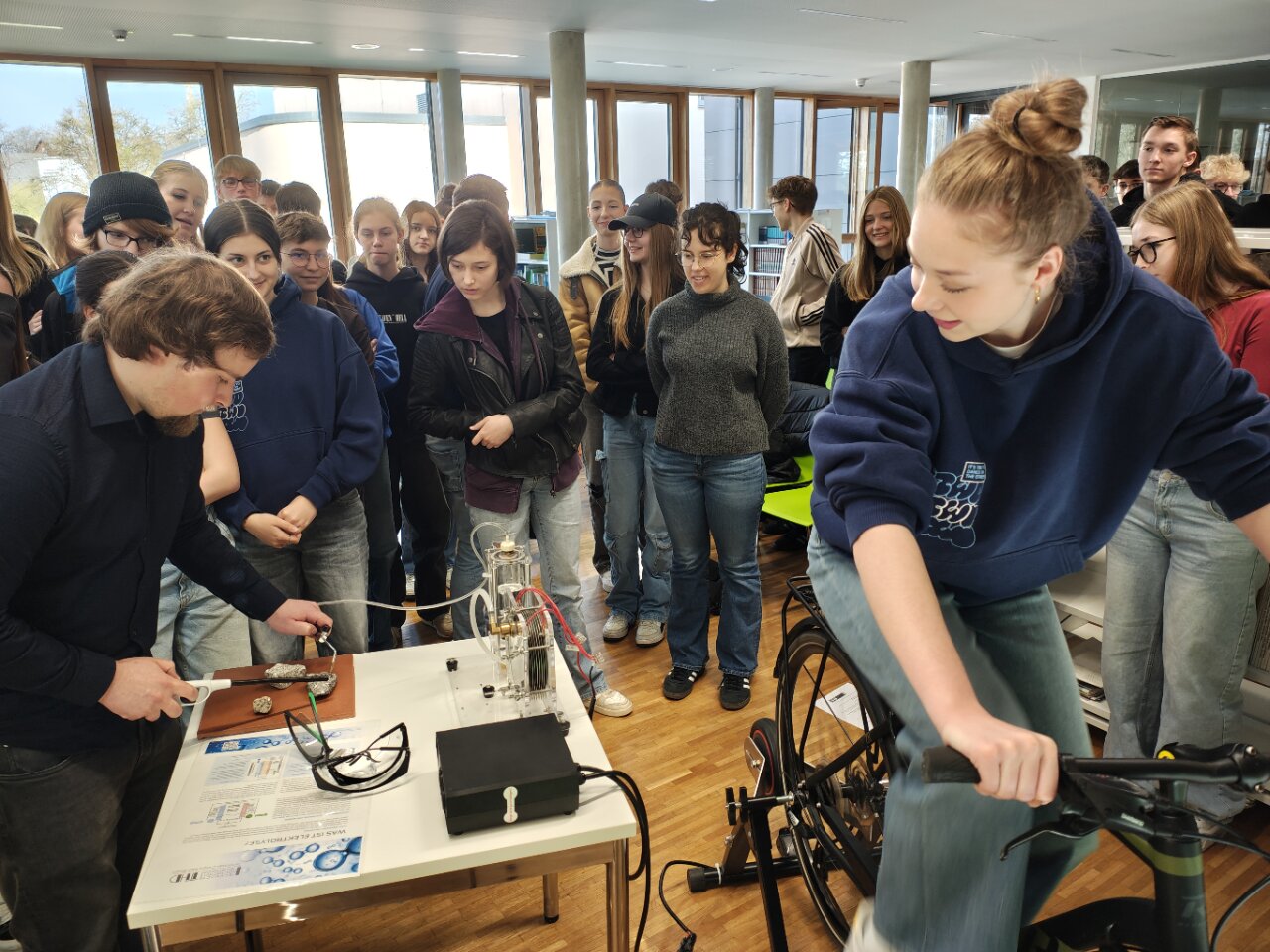
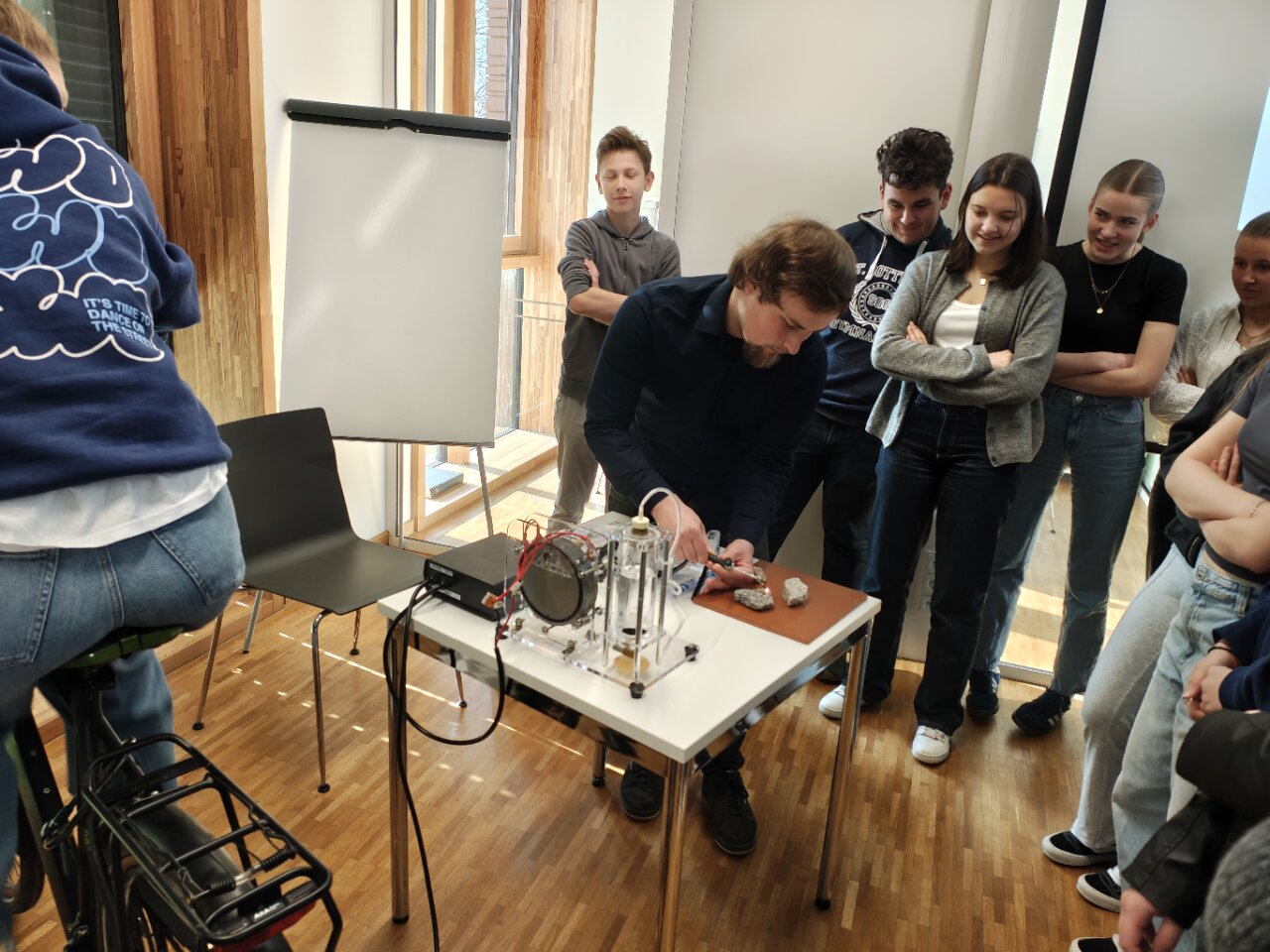
At the invitation of Principal Mr. Lummer, we had the opportunity to give a presentation on hydrogen technologies at Gymnasium Niederalteich’s 8th Climate Day.
For the 11th-grade students, we explained the concept of electrolysis not only in theory but also in a very practical way—literally allowing them to experience it firsthand through a hands-on demonstration.
A heartfelt thank you to the school for the invitation, the interest shown, and the open dialogue; we hope we were able to spark an enthusiasm for sustainable energy among some of the students!
Sparkasse Regensburg Supports Laboratory Expansion at Wörth-Wiesent Campus
Investing in the Future: Promoting Hydrogen Research in the Region
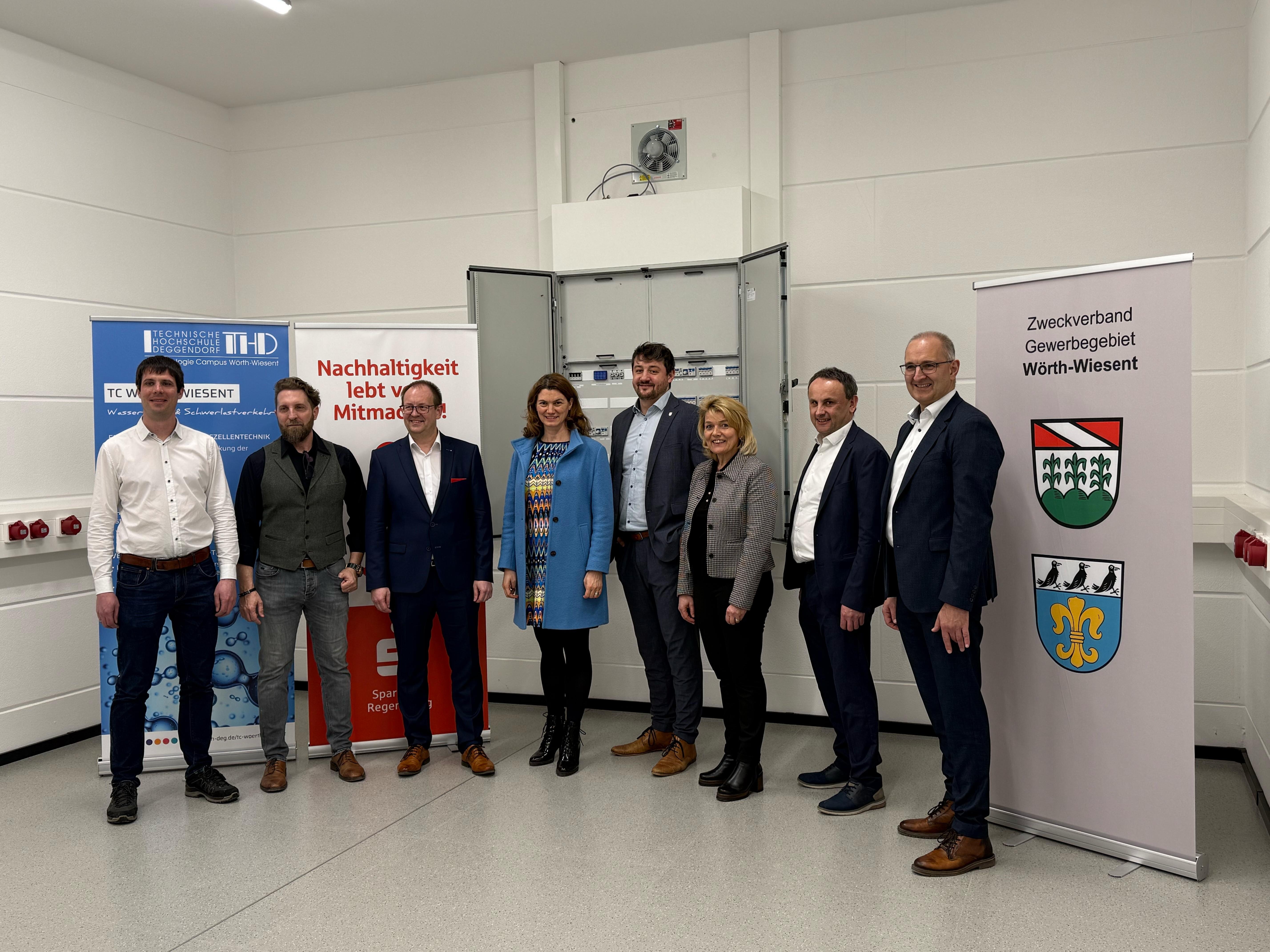
A significant step for innovation and sustainability: Thanks to financial support from Sparkasse Regensburg, the expansion of laboratory facilities at the Wörth-Wiesent Campus is moving forward. This enables the targeted advancement of hydrogen research and strengthens the region as a hub for research.
In close cooperation with the District of Regensburg, the town of Wörth, the municipality of Wiesent, and the Deggendorf Institute of Technology, this expansion makes a vital contribution to the future development of sustainable mobility and energy solutions.
At the official announcement of the funding, District Administrator Tanja Schweiger emphasized the project's importance for the region:
"Thanks to the support from Sparkasse Regensburg, we can further strengthen the region's innovative capacity and drive the development of sustainable technologies that are essential for the future of our economy and mobility."
Overview of the funding's significance:
- Strengthening research: Expansion of hydrogen technology for sustainable mobility
- Regional development: Enhanced innovative capacity for businesses and municipalities
- Attractive future prospects: Optimal conditions for students and skilled professionals
This funding sends a strong signal in support of education, technology, and sustainability. The Wörth-Wiesent Campus looks forward to the next steps in the ongoing development of its research infrastructure.
Bavarian State Parliament Awards €100,000 in Funding to Campus Wörth-Wiesent
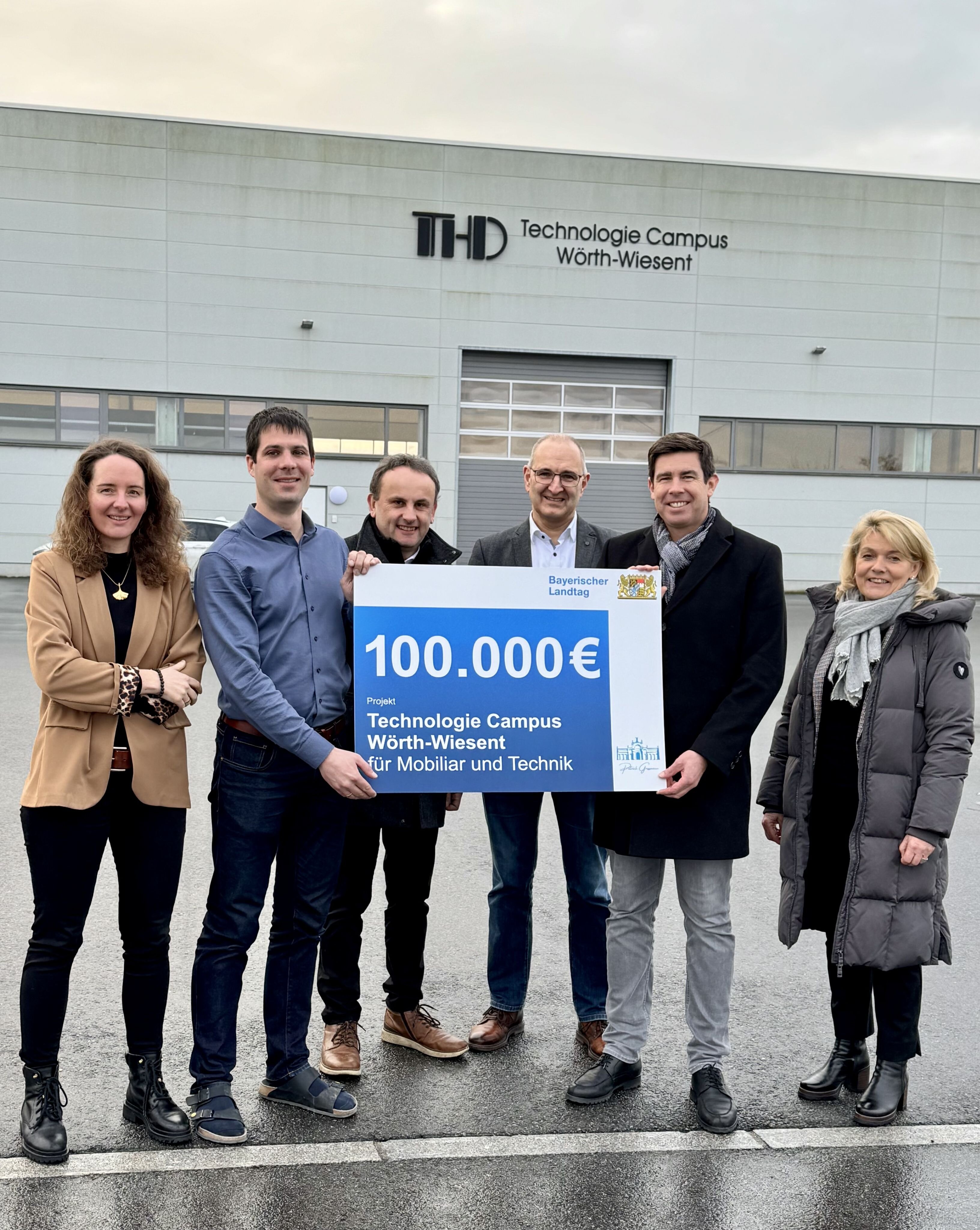
The Bavarian State Parliament is providing €100,000 in funding to support the establishment and expansion of Campus Wörth-Wiesent. A motion by the Budget Committee explicitly acknowledges the significant financial efforts made by the Wörth-Wiesent Joint Authority regarding the campus. This grant aims to further support those efforts, given the campus's role as a flagship project for the region and for hydrogen research.
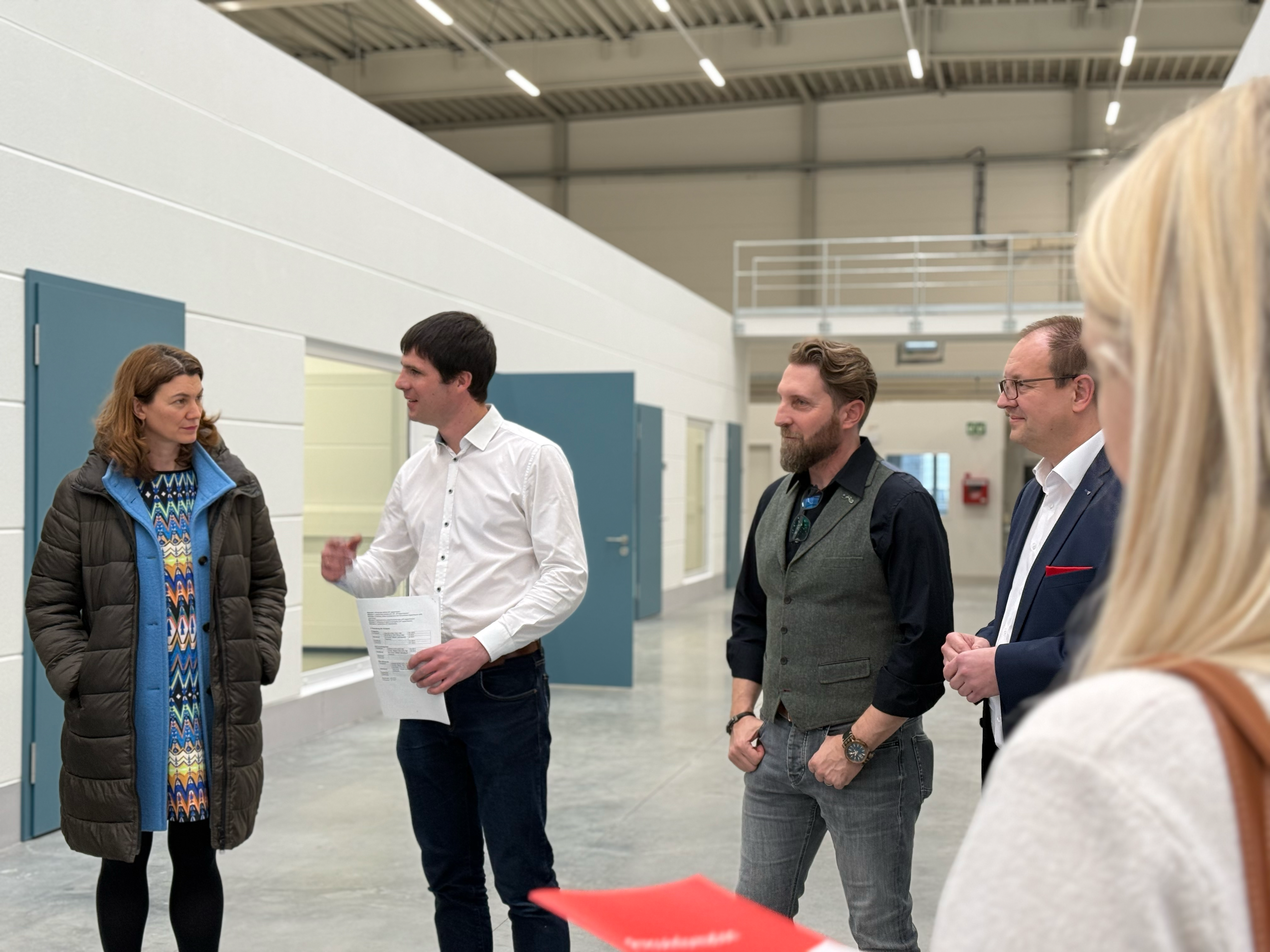
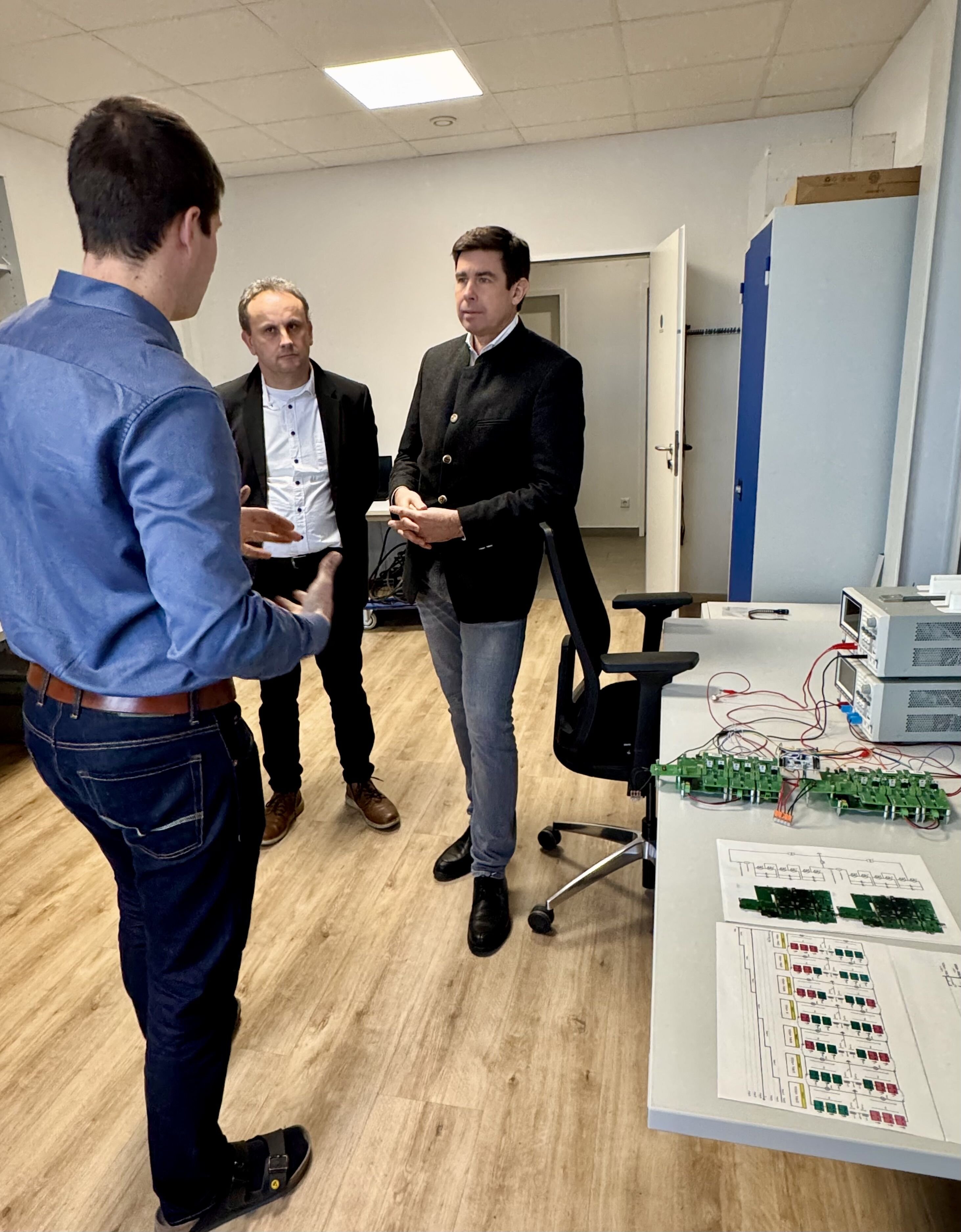
Member of the State Parliament (MdL) Patrick Grossmann personally delivered the funding notification and took the opportunity to see the current progress of the development firsthand. Scientific Director Prof. Otto Kreutzer led the tour, explaining the status of the work and outlining the research focus and future use of the new laboratories, which are currently being fitted out. With the Wörth campus, both companies and municipalities have a strong partner available for research and development in the fields of hydrogen technology and heavy-duty transport.
Looking Back
Campus Wörth-Wiesent Makes a Successful Showing at Hydrogen Dialogue 2024
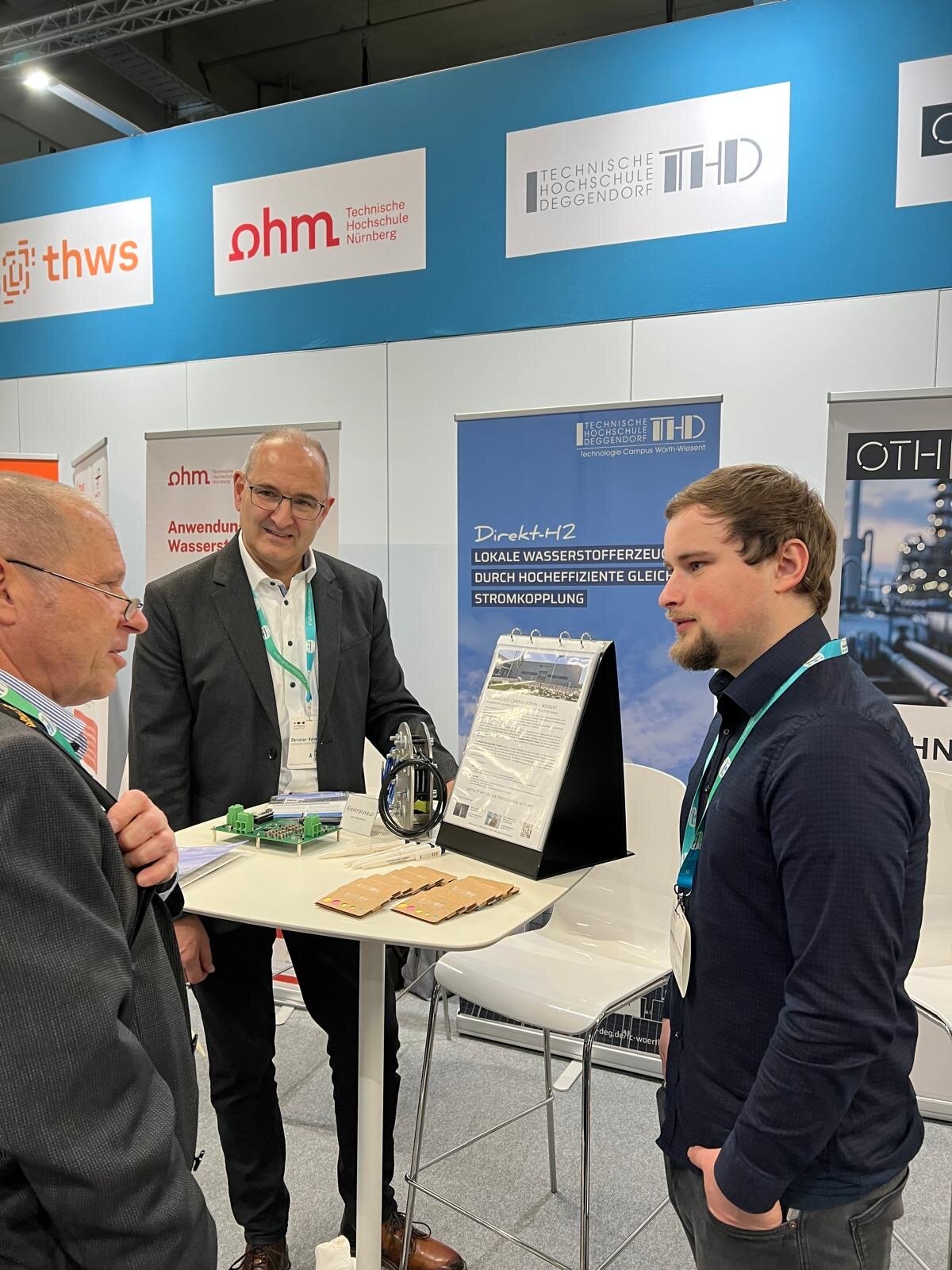
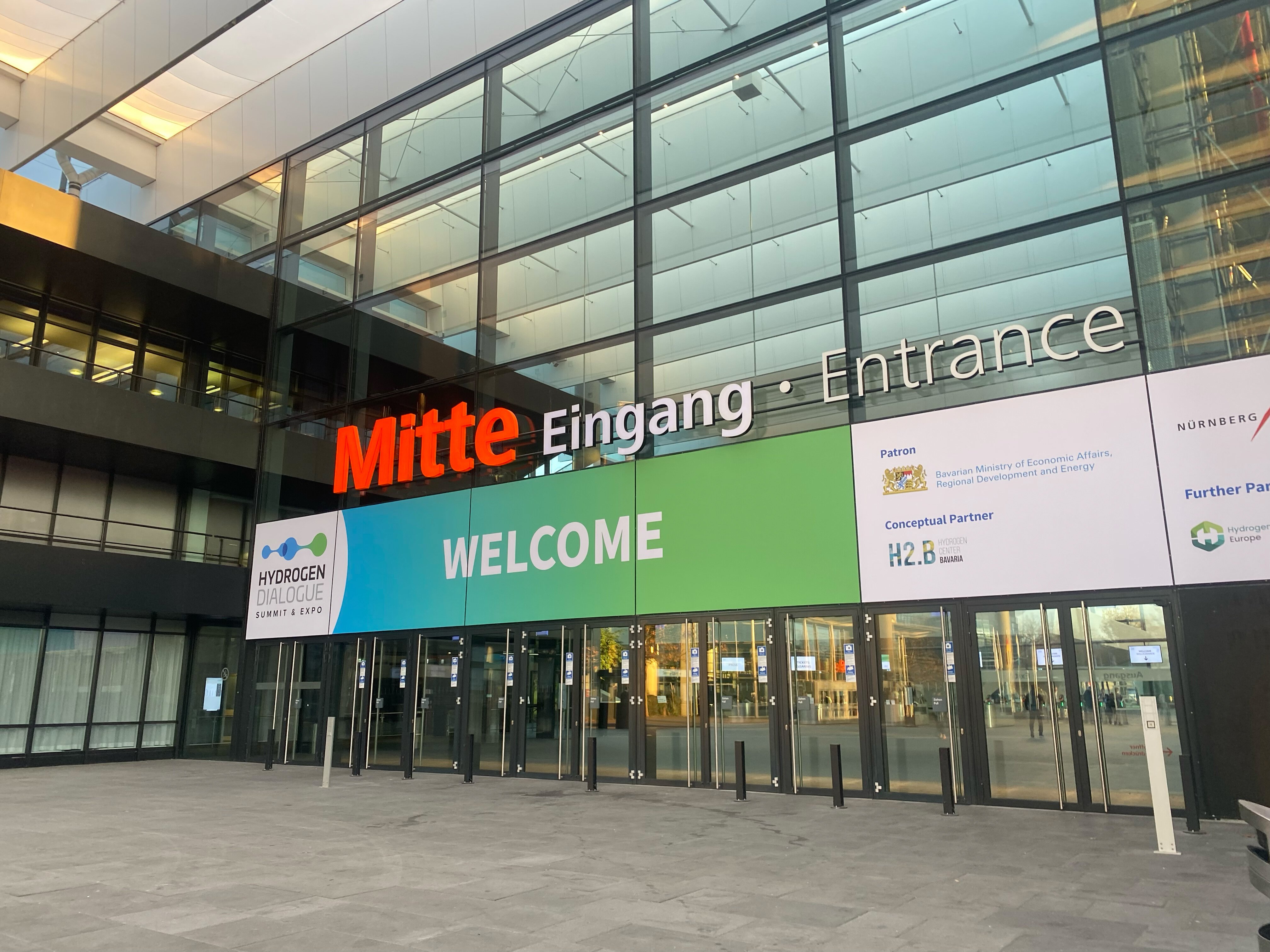
This year, we exhibited at the prestigious Hydrogen Dialogue 2024, held on December 5 and 6 at the Nuremberg Exhibition Center. The international trade fair and conference provided an ideal platform to showcase our latest developments in hydrogen technology and to network with leading industry players.
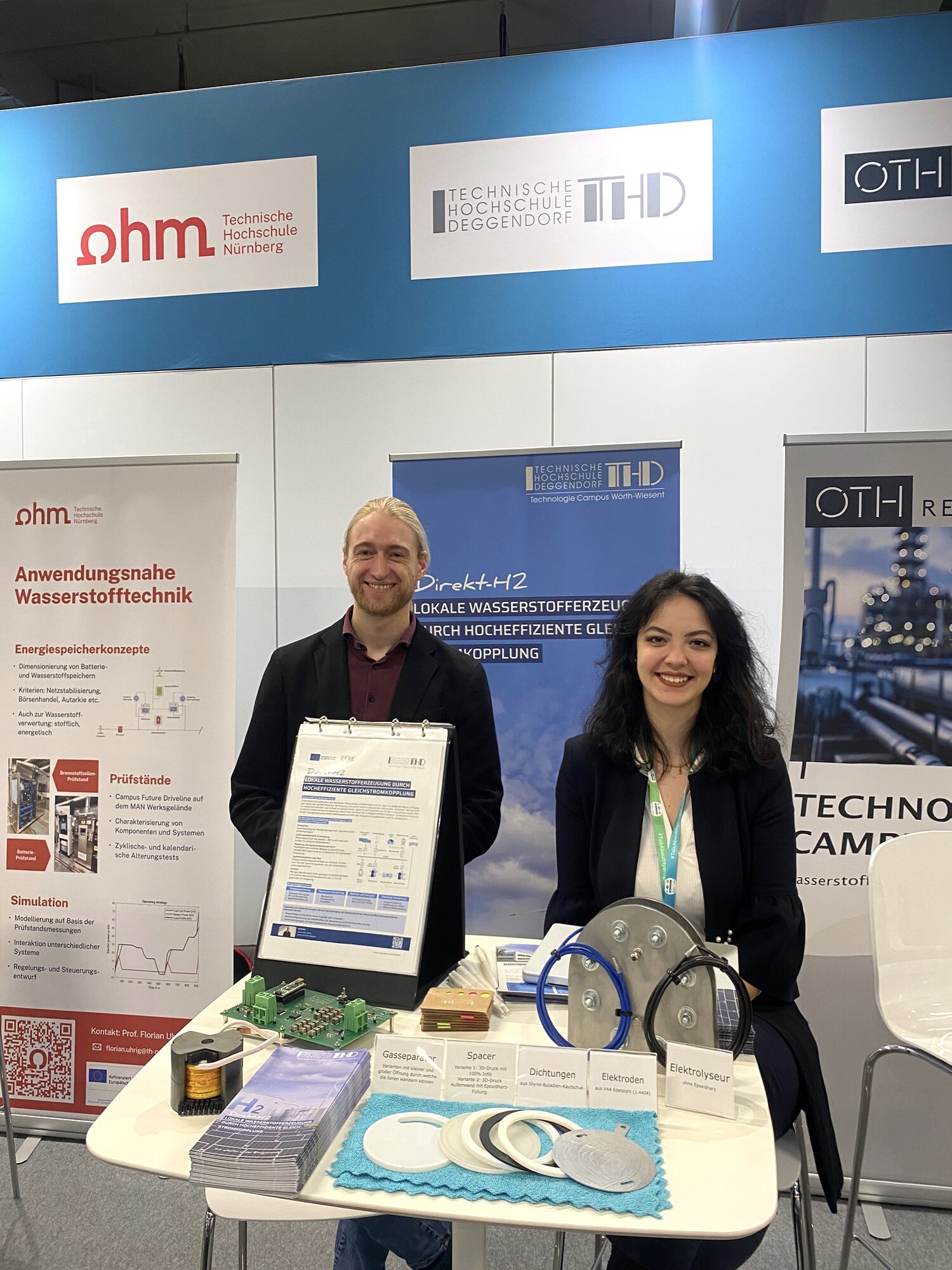
A key focus of our presence at the fair was the presentation of our "Direkt H2" project, which centers on local hydrogen generation using highly efficient direct current (DC) coupling. This project attracted significant interest from visitors.
We also presented a second key project focusing on high-voltage direct current (HVDC) transmission. The goal of this project is to develop an HVDC sub-module that—unlike conventional modules—consists entirely of automotive industry components, making it more cost-effective to manufacture.
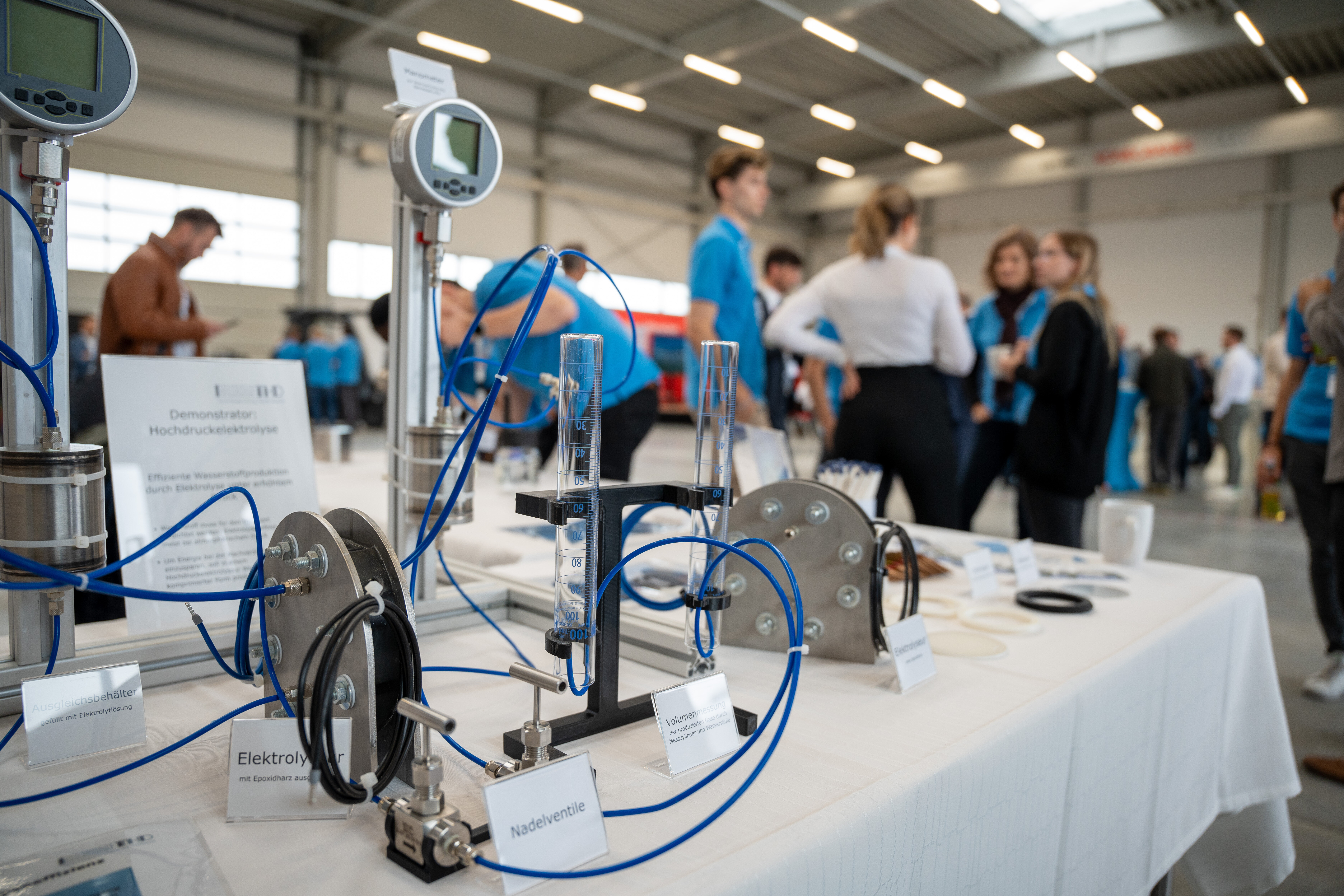
Another highlight was the presentation of a high-pressure electrolyzer demonstrator developed in-house at CWW. Visitors were able to examine a custom-made foam model of the electrolyzer on-site, allowing us to explain its design and operating principles in greater detail.
In addition to showcasing our projects, the fair offered an excellent opportunity to connect with representatives from companies and organizations that are already utilizing hydrogen or exploring its potential. Direct dialogue with hydrogen industry experts was a central aspect of our visit. A particular highlight was the visit of Tobias Gotthardt, State Secretary at the Bavarian Ministry of Economic Affairs, to the CWW booth. The State Secretary showed great interest in our projects and emphasized the importance of the innovative work being done by CWW and other
research institutions for the future of hydrogen technology in Bavaria and beyond. Fueled by engaging discussions, fresh insights, and a wealth of ideas, Campus Wörth Wiesent looks to the future with motivation, eager to further advance hydrogen technology and develop sustainable solutions for the challenges of the energy transition.
Intercultural Exchange at the Wörth-Wiesent Campus
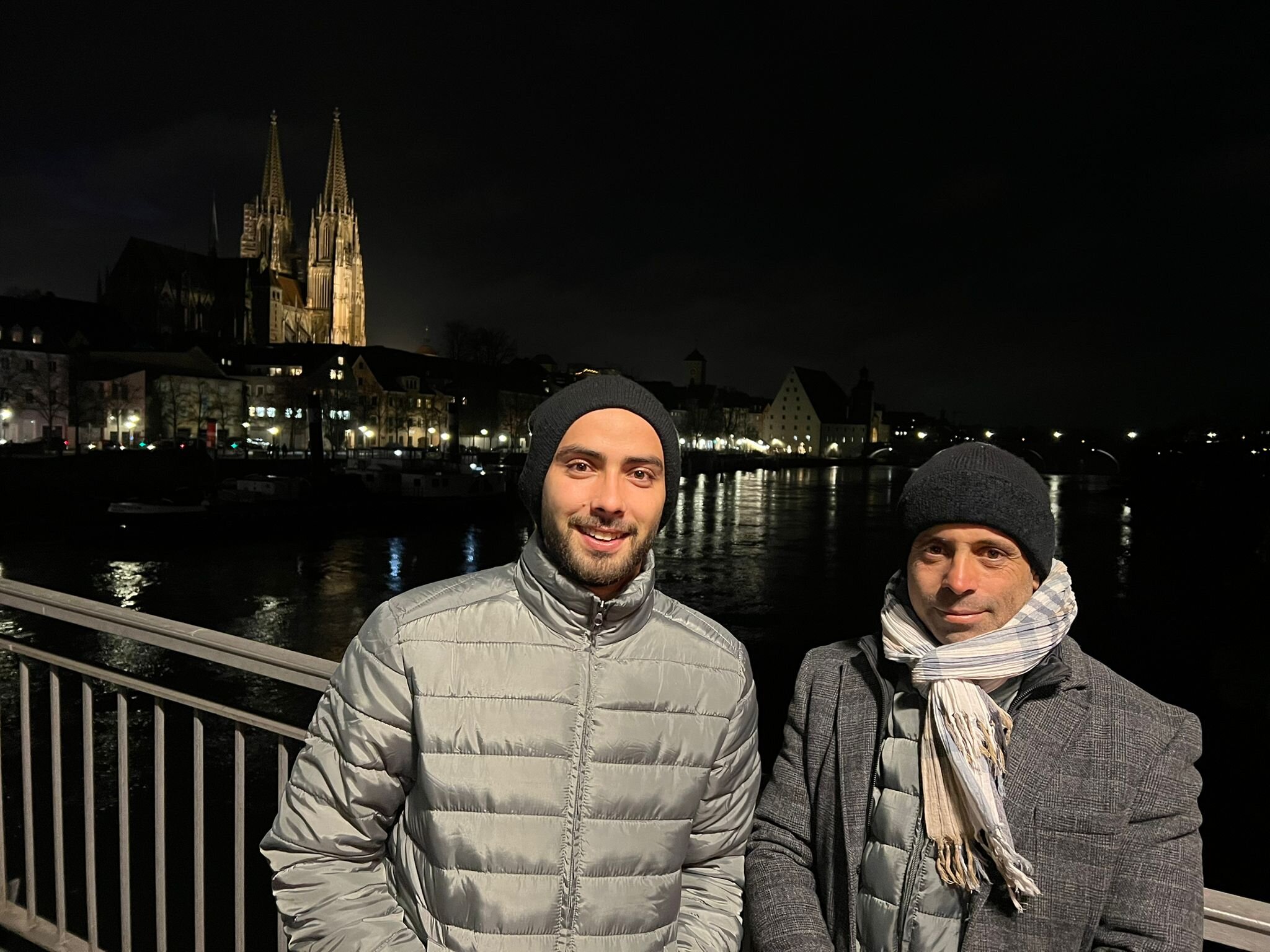
The Wörth-Wiesent Campus (CWW) was once again pleased to welcome Tunisian student Firas Chabbah—this time accompanied by his professor, Adel Bouallegue, from the University of Sousse. Their visit focuses on intercultural exchange and scientific collaboration within the framework of the HVDC Enrich project, which is funded by the German Academic Exchange Service (DAAD).
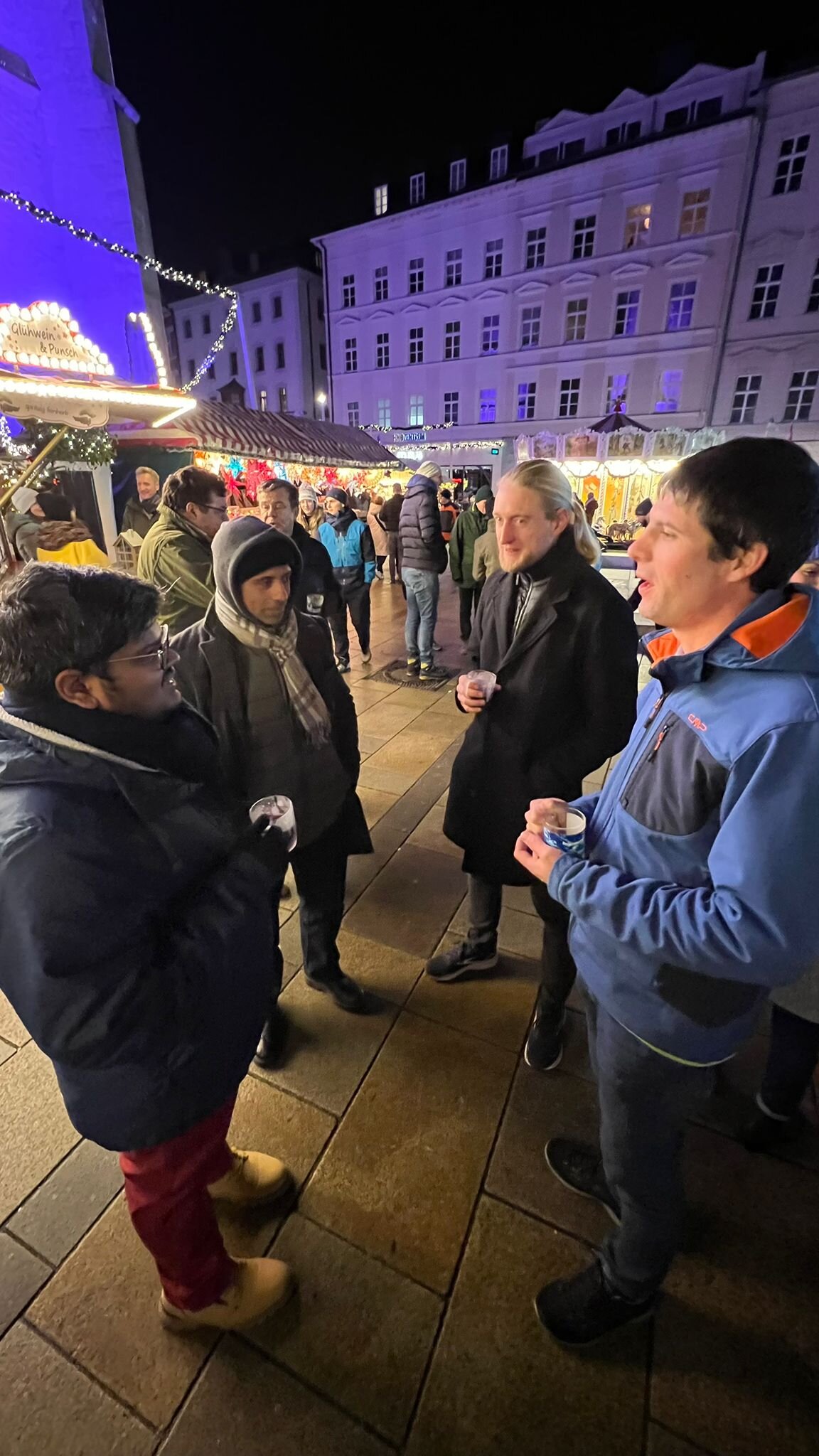
A special highlight of their stay was a visit to the traditional Christmas market, where the two guests could immerse themselves in Bavarian pre-Christmas culture. Accompanied by punch, bratwurst, and festive music, they experienced customs that were new to them, as well as the wintry weather. The CWW team ensured a warm welcome, laying the foundation for a pleasant and productive time in Germany.
Firas Chabbah is no stranger to the campus. He had previously worked at the Deggendorf Institute of Technology (THD) in May and June 2024—alongside another student from the University of Sousse—on the HVDC Enrich project, which explores innovative approaches to high-voltage direct current (HVDC) transmission. He will now spend three months working at the CWW, further intensifying the cooperation between the University of Sousse and THD.
The intercultural exchange at the CWW demonstrates the importance of international cooperation for scientific progress. Direct contact between researchers from different countries fosters not only technological innovations but also greater mutual understanding and closer networking.
The CWW team looks forward with great anticipation to the coming months and the valuable contributions Firas Chabbah and Professor Bouallegue will bring to ongoing research projects.
HY2.ZERO Innovation Network: Successful Conclusion at TechBase Regensburg
On Tuesday, November 26, the Mobility & Logistics Cluster hosted a networking event at TechBase Regensburg to celebrate the successful conclusion of the "HY2.ZERO – Mobility Needs Hydrogen" innovation network. The network aimed to foster exchange between academia, the business sector, and policymakers, while laying the groundwork for the future development of hydrogen-based mobility.
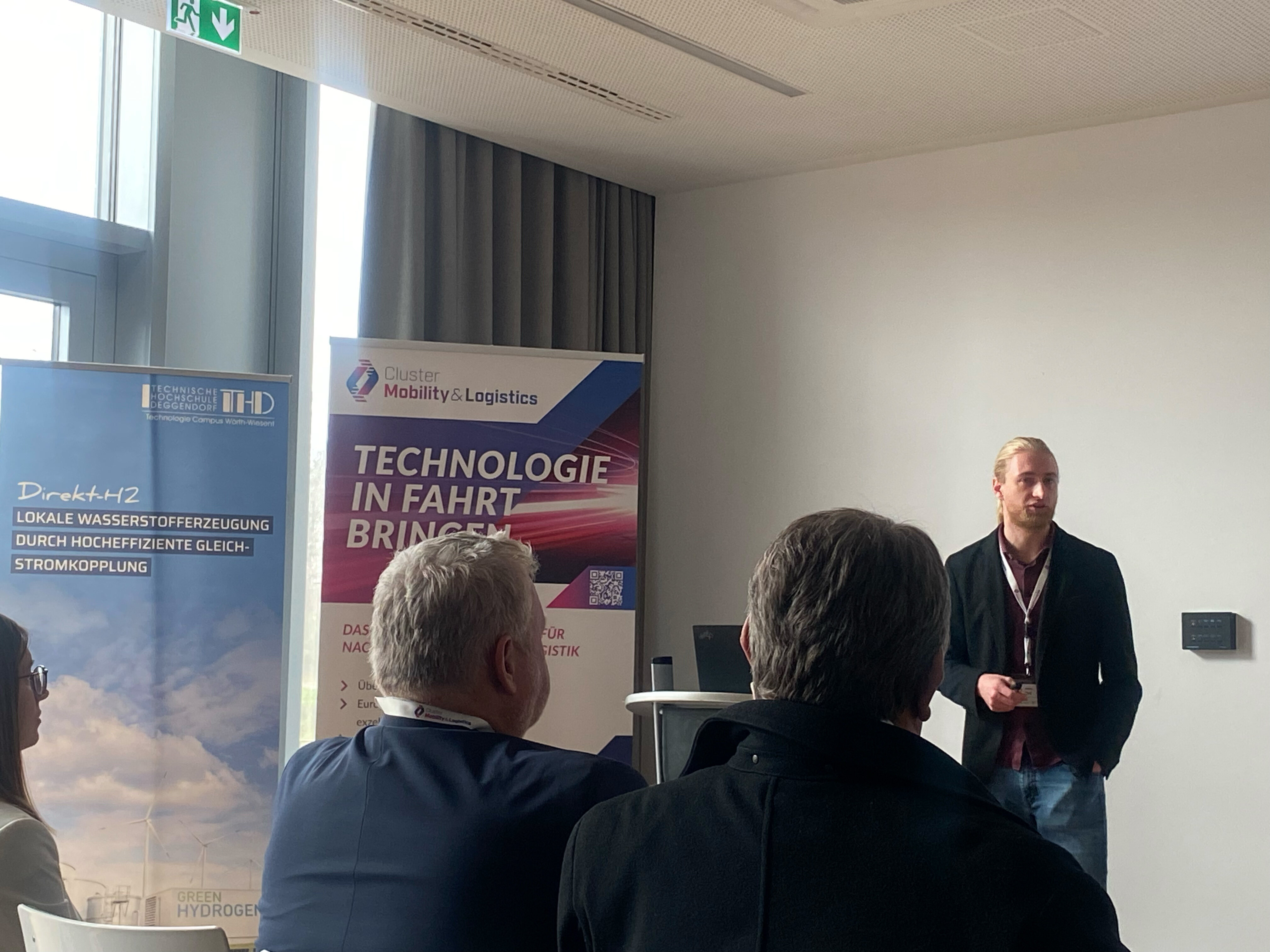
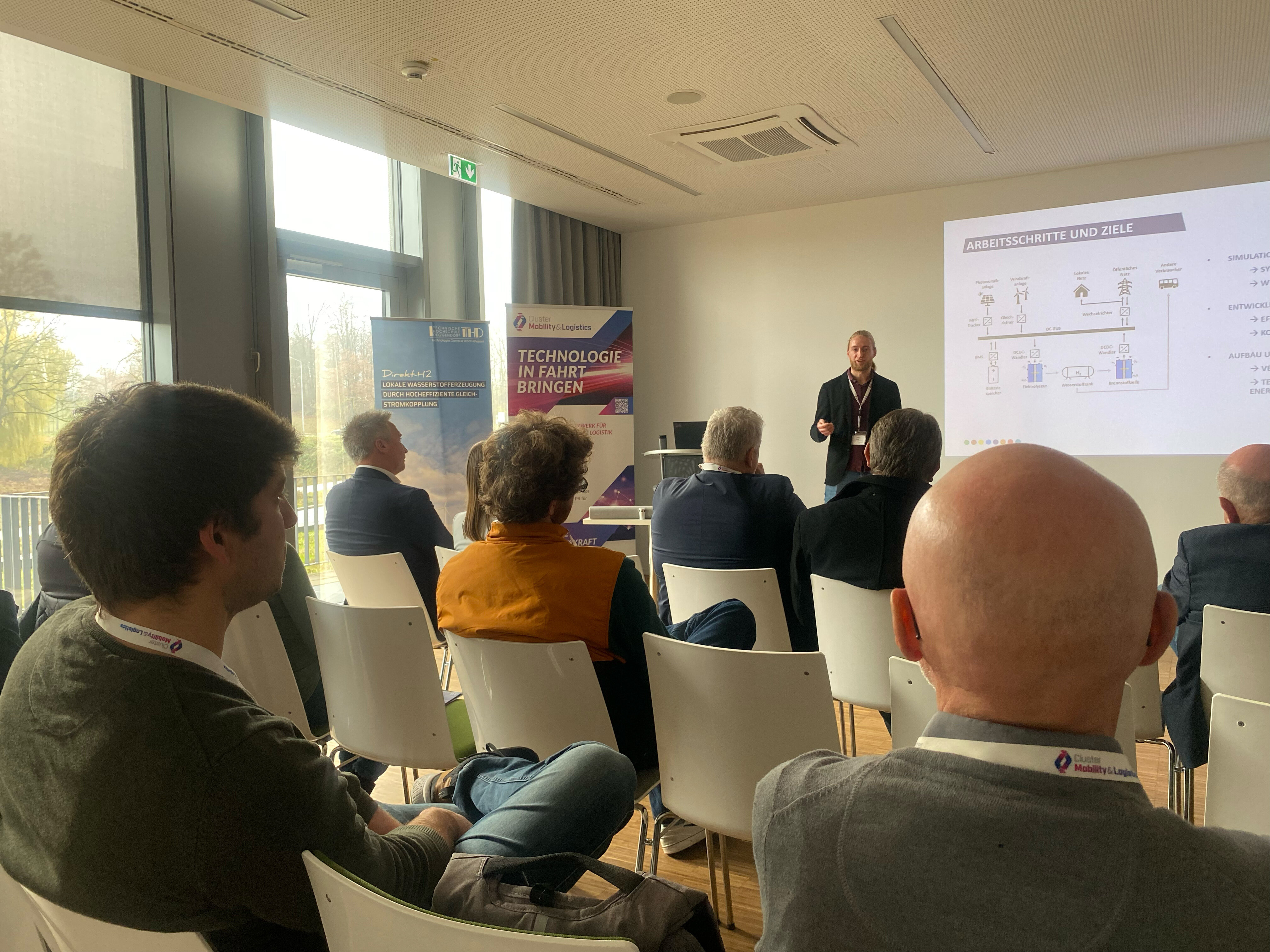
The event began with a warm welcome and engaging discussions among participants from a wide range of disciplines. Jonas Ott, a research associate at the Wörth-Wiesent Campus, gave an informative presentation on his project, "Direkt H-2," which focuses on innovative approaches to the efficient, localized production of hydrogen.
A particular highlight of the morning was the subsequent tour of the "Hydrogen Technologies for Transport" laboratory, led by Prof. Dr.-Ing. Hans-Peter Rabl and supported by Dr. Stefan Miller from Hyperthermics. During the tour, the "BiReMiH2" project was showcased; it investigates innovative methods for producing and utilizing hydrogen derived from biological resources. Participants not only learned about technical details but also had the opportunity to engage directly with the experts.
The morning concluded with a joint lunch, providing a chance to reflect on the insights gained and to strengthen connections among the participants.
The HY2.ZERO innovation network impressively demonstrated that the path toward hydrogen-based mobility can only be pursued through close collaboration between research, industry, and policymakers. The network's success underscores the relevance of hydrogen as a forward-looking energy source and highlights the importance of regional initiatives like this one in the global transition toward sustainable mobility.
CWW STAFF
In our new series, we would like to introduce you to the people behind Campus Wörth Wiesent (CWW).
The campus’s research activities rest on three pillars:
Power electronics, electrolysis and fuel cell technology, and process and systems engineering.
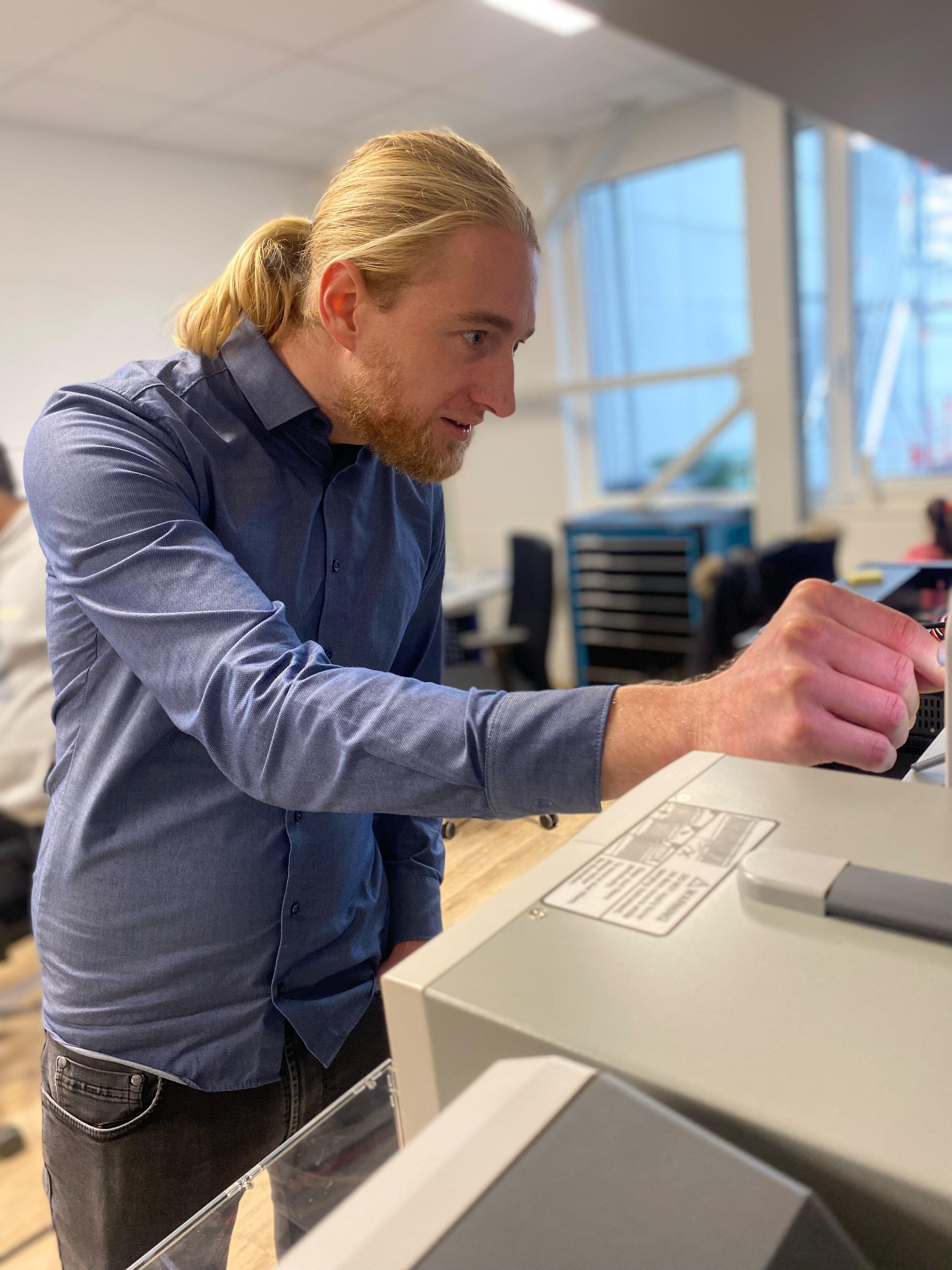
Jonas Ott also works in the field of power electronics, which is headed by Prof. Dr. Otto Kreuzer:
"My name is Jonas Ott, and I am the lead for the 'Direkt-H2' project.
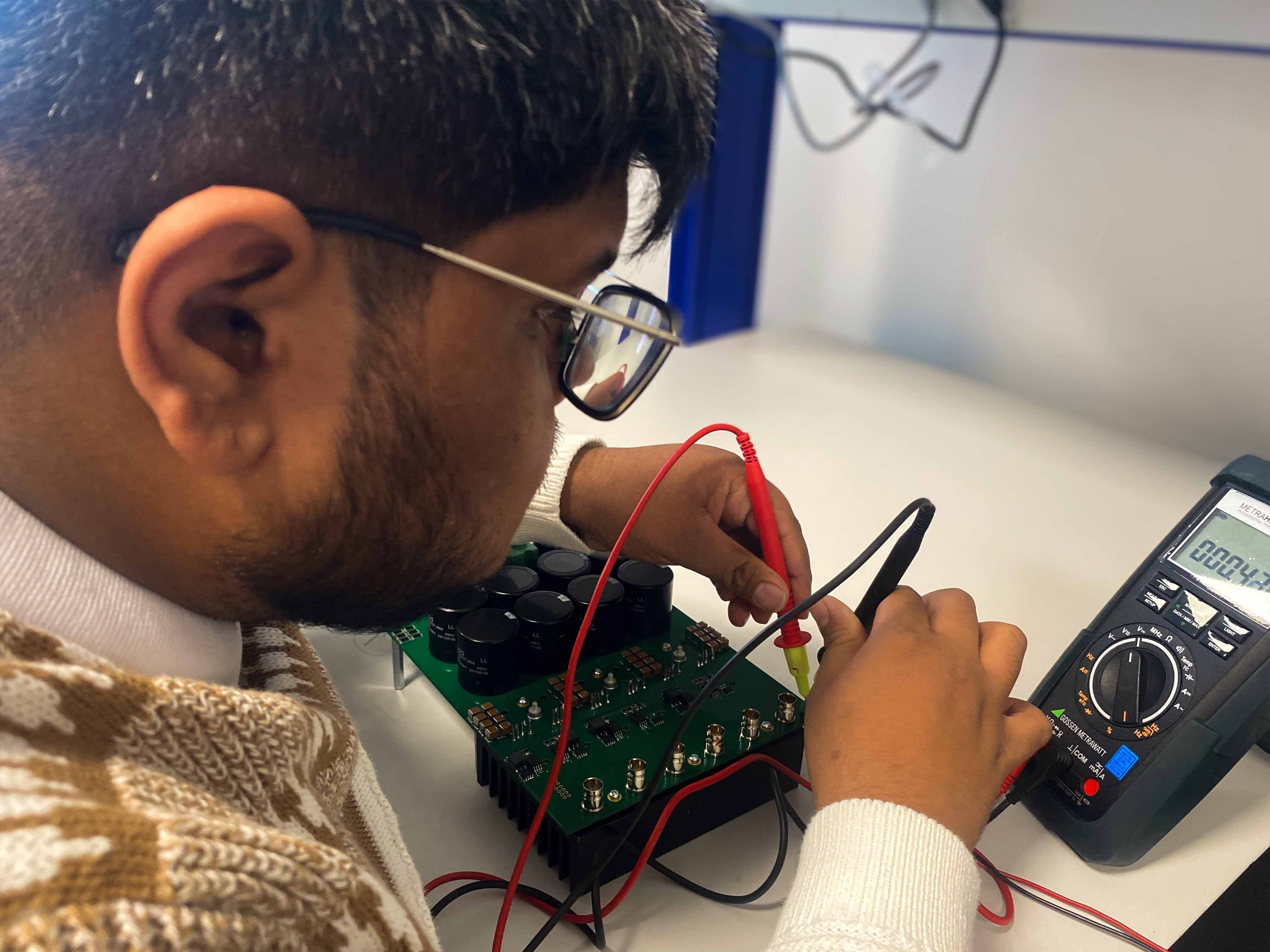
My work focuses on power electronics design, specifically high-efficiency DC/DC converters for coupling renewable energy sources and storage technologies—such as battery storage systems and electrolyzers/fuel cells.
I also work on component- and system-level simulation, energy management, storage system sizing, and—not least—economic analysis. Additionally, I supervise various students working on their final theses."
What do you hope for the future of the CWW?
"I hope that our research results here on campus will help make hydrogen technologies more economically attractive and facilitate their widespread adoption. That way, they can play a key role in climate protection while also unlocking new potential for the industry."
What do you enjoy most about your work?
"In general, I enjoy learning new things and deepening my understanding of technical processes and the underlying physics. The best part, however, is being able to immerse myself completely in a problem—forgetting everything around me and losing track of time entirely."
CWW STAFF
In this series, we would like to introduce you to the people behind Campus Wörth Wiesent (CWW).
The campus focuses its research on three core areas:
Key research areas include power electronics, electrolysis and fuel cell technology, as well as process and systems engineering.
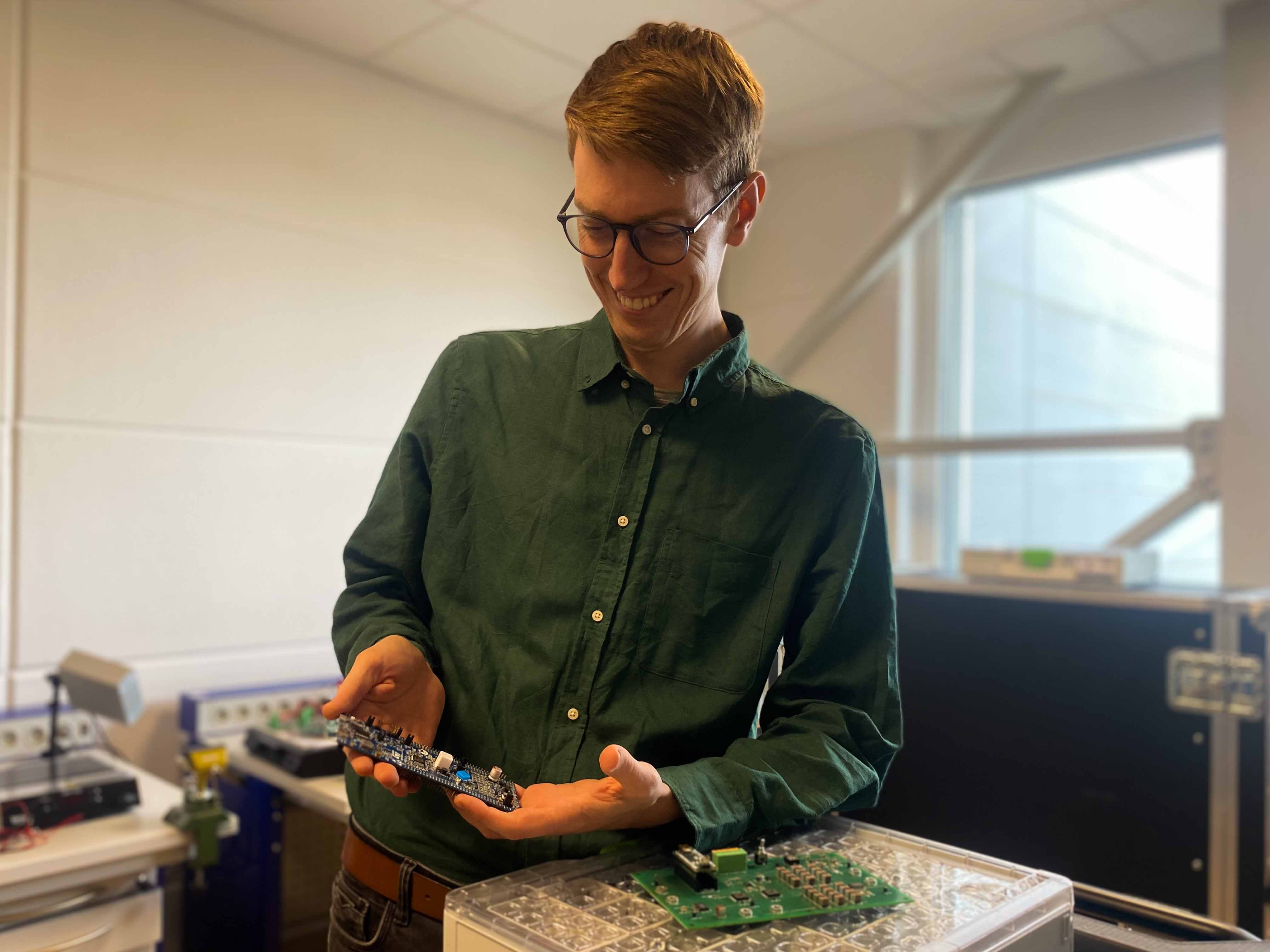
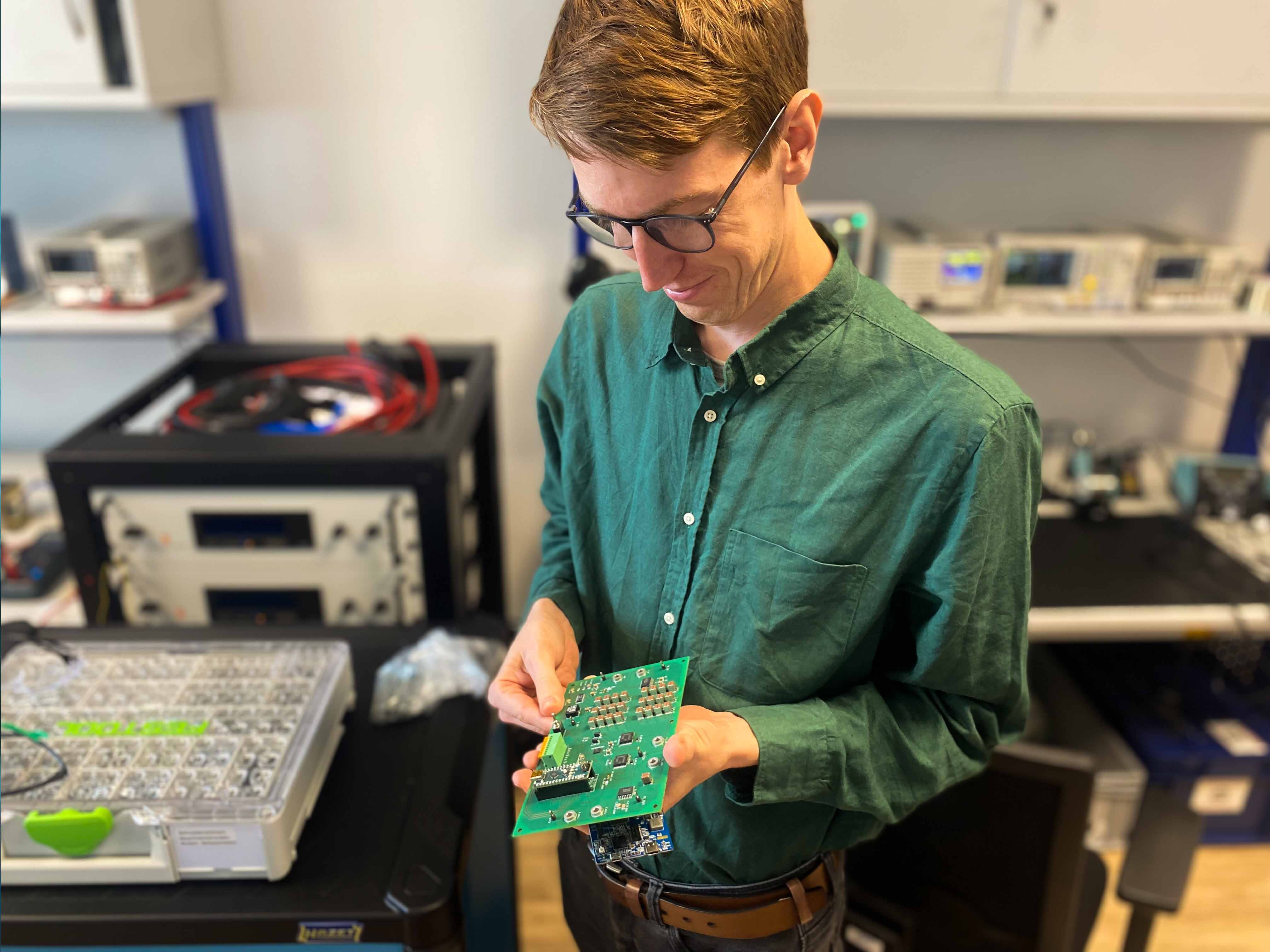
As with our previous introductions, Florian Werner—like Balaji Vunnava—works in the field of power electronics:
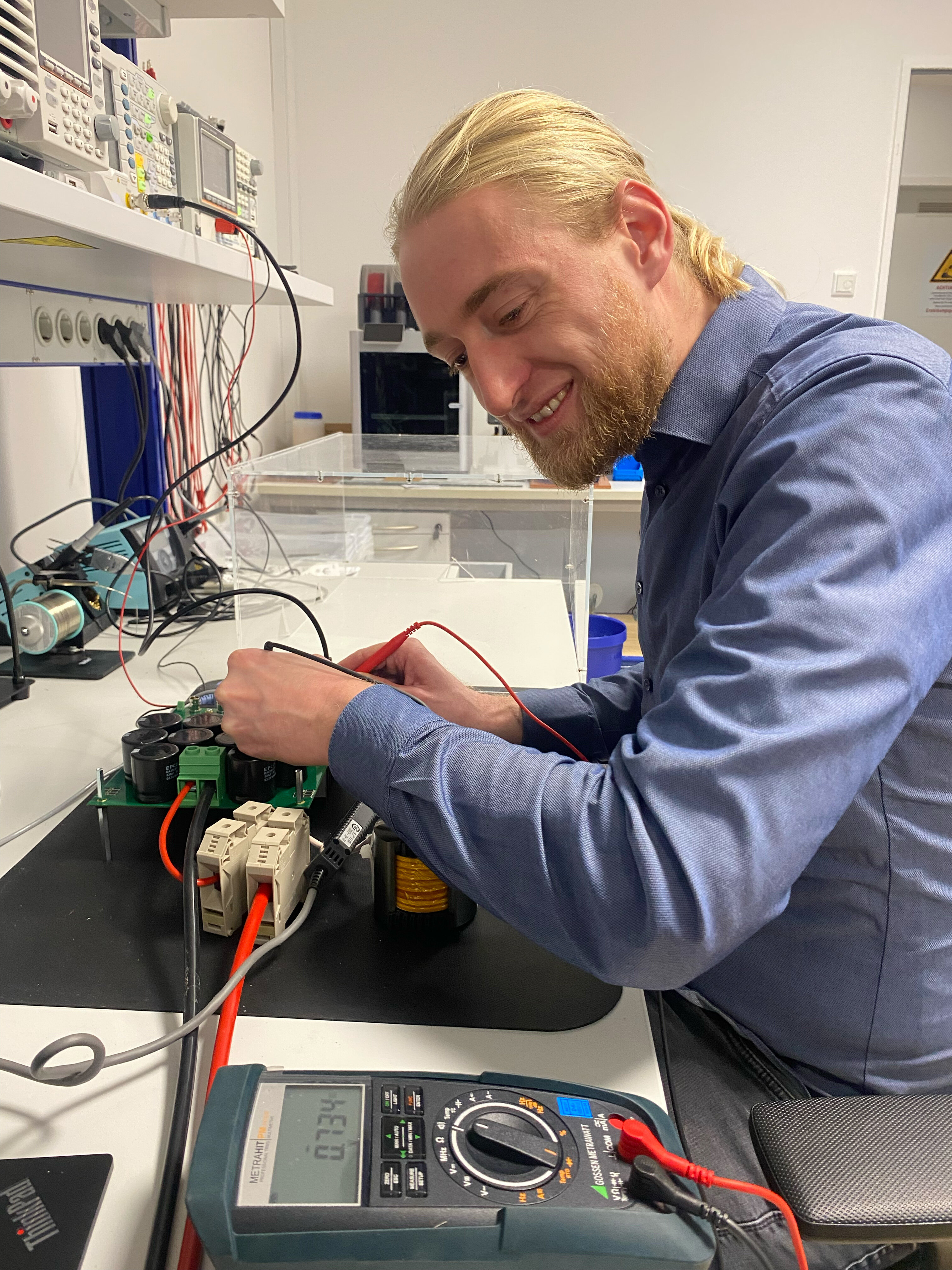
"I work as a research associate in the Power Electronics group. My area of expertise is control engineering. My work focuses on developing intelligent algorithms to control power electronic circuits.
This encompasses simulation, embedded software implementation, and system performance testing and validation.
Additionally, I develop algorithms for energy system management—for example, in the 'Direkt-H2' project, which involves energy management for a system comprising a PV array, battery storage, and hydrogen storage."
What do you hope for the future of the CWW?
"That the campus evolves into a hydrogen competence center where we conduct practical research in collaboration with companies and students."
What do you enjoy most about your work?
"In research, gaining new insights is the top priority; this allows me to work on future-oriented topics that aren't yet widely addressed in the industry due to economic constraints."
CWW STAFF
In our new series, we would like to introduce you to the people behind Campus Wörth Wiesent.
The campus’s research activities rest on three pillars:
Power electronics, electrolysis and fuel cell technology, and process and systems engineering.
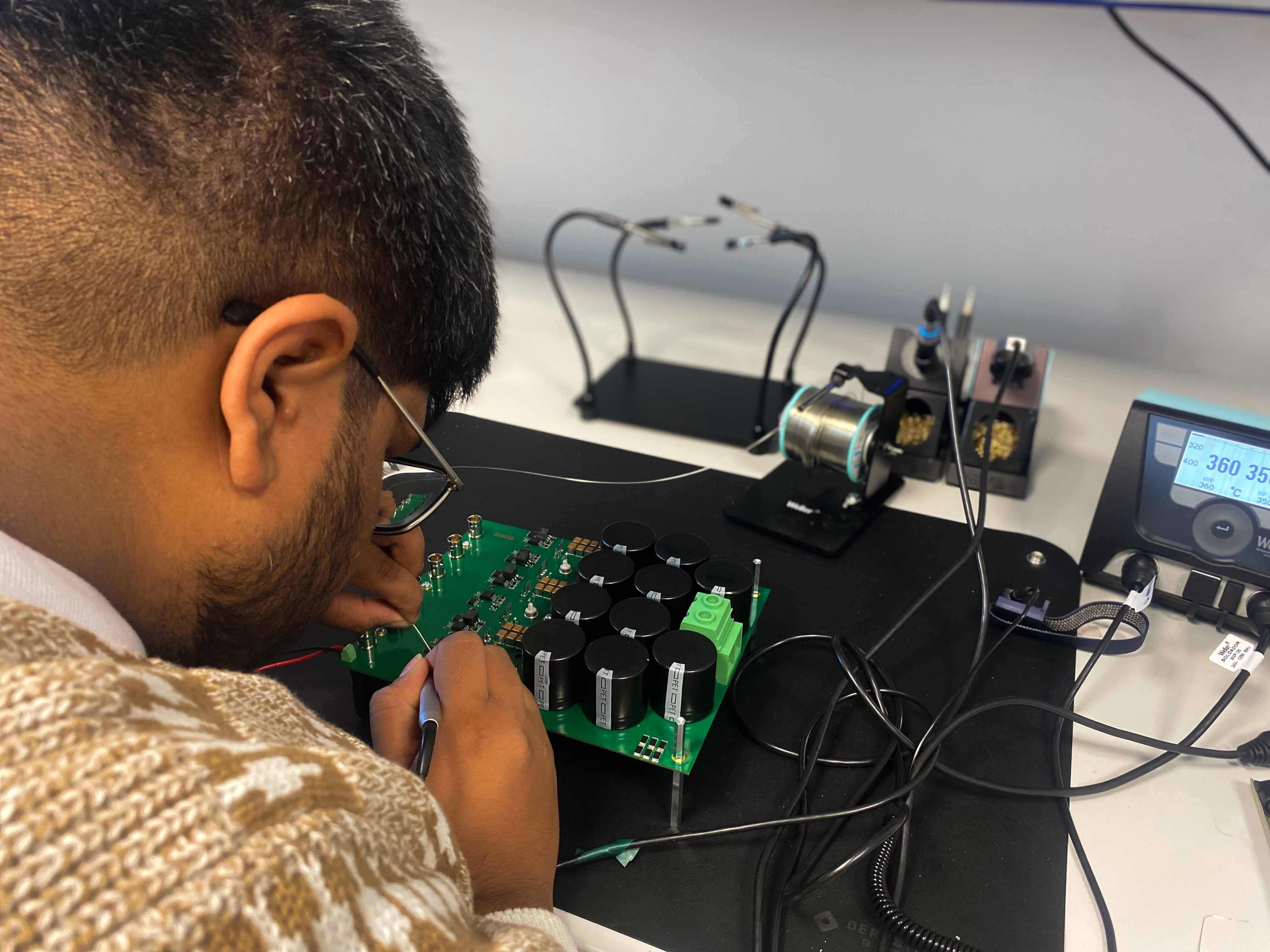
Balaji Vunnava is one of the team members working in the power electronics division, led by Prof. Dr. Otto Kreuzer:
"I am Balaji Vunnava, and I work in the Power Electronics research group. Among other things, I oversee the 'Direkt H2' project, where I am responsible for developing the power electronics for the planned direct current (DC) grid and for hydrogen production."
What do you hope for the future of the CWW?
"A rich research atmosphere where we can exchange and implement innovative ideas."
What do you enjoy most about your work?
"I really enjoy the freedom to develop new ideas and working with a very supportive and dynamic team."
Networking event with trade-fair atmosphere held for the first time at the Wörth-Wiesent Campus
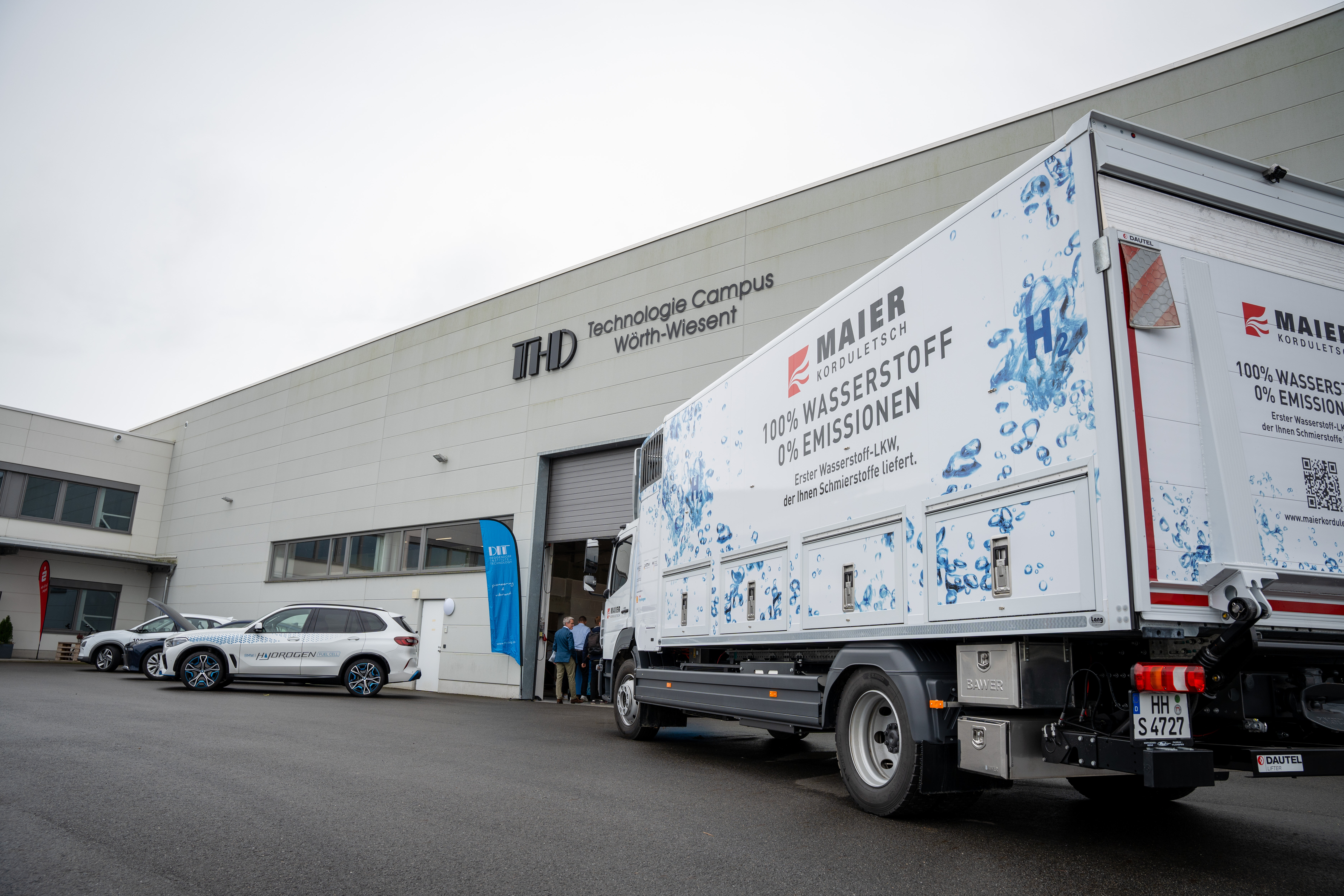
On September 26, the "H2.R Wasserstoffrunde Regensburg" (Regensburg Hydrogen Roundtable) took place at the Wörth-Wiesent Campus. More than 160 interested parties—including company representatives, hydrogen experts, local politicians, and members of the public—gathered to learn more about the future of hydrogen in logistics and mobility.
A total of 21 companies set up information booths and displayed prototypes inside and outside the campus hall, sharing the latest status of their research with attendees. The afternoon’s keynote speaker was Michael Sterner from OTH Regensburg; he argued against hastily dismissing hydrogen mobility based on prejudices spread by the media, urging instead for an openness toward this sustainable alternative to electric mobility.
The networking event was held under the banner: "Hydrogen: Innovation Engine for the Logistics and Mobility of Tomorrow." This theme guided the day’s proceedings, which featured a series of compelling presentations. Speakers included Katharina Radtke from the BMW Group, who complemented her talk by showcasing a fuel-cell-powered BMW iX5 in the outdoor exhibition area. Additionally, the company Maier & Korduletsch presented a fully functional truck powered entirely by hydrogen.
District Administrator Tanja Schweiger expressed her enthusiasm for the innovative businesses emerging from the Regensburg district. Michael Sterner concluded that research in this field—bolstered by the Wörth-Wiesent Campus—is at a high level. However, he noted that there is still significant room for improvement regarding refueling stations, infrastructure networks, storage facilities, and the construction of electrolyzers.
Participants also had the opportunity to view the campus laboratories, which are currently in a major phase of development and expansion.
(Images: Stefan Kunz, DIT)
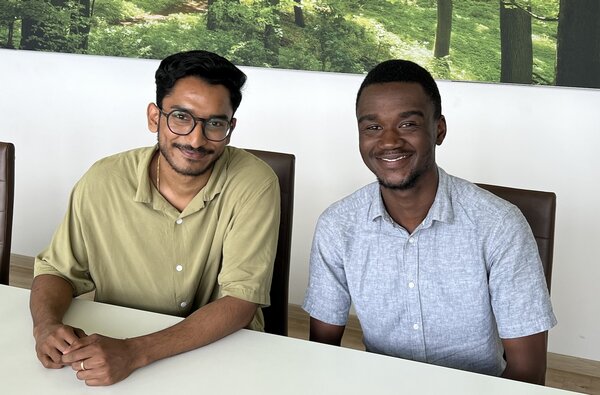
Students from India and Ghana are studying at our Wörth-Wiesent campus.
The first two students have begun working at our Wörth-Wiesent campus as part of our "Direkt H2" project. Akash and Charles have both already successfully completed their bachelor's degrees and aim to deepen and expand their knowledge of electrical engineering and renewable energy systems through their studies at THD. To carry out their practical project work on-site, they accept a commute of over three hours using public transport!
(Image: Wörth-Wiesent campus)
Kick-off for the "Direkt H2" Project at Campus Wörth-Wiesent – April 2024
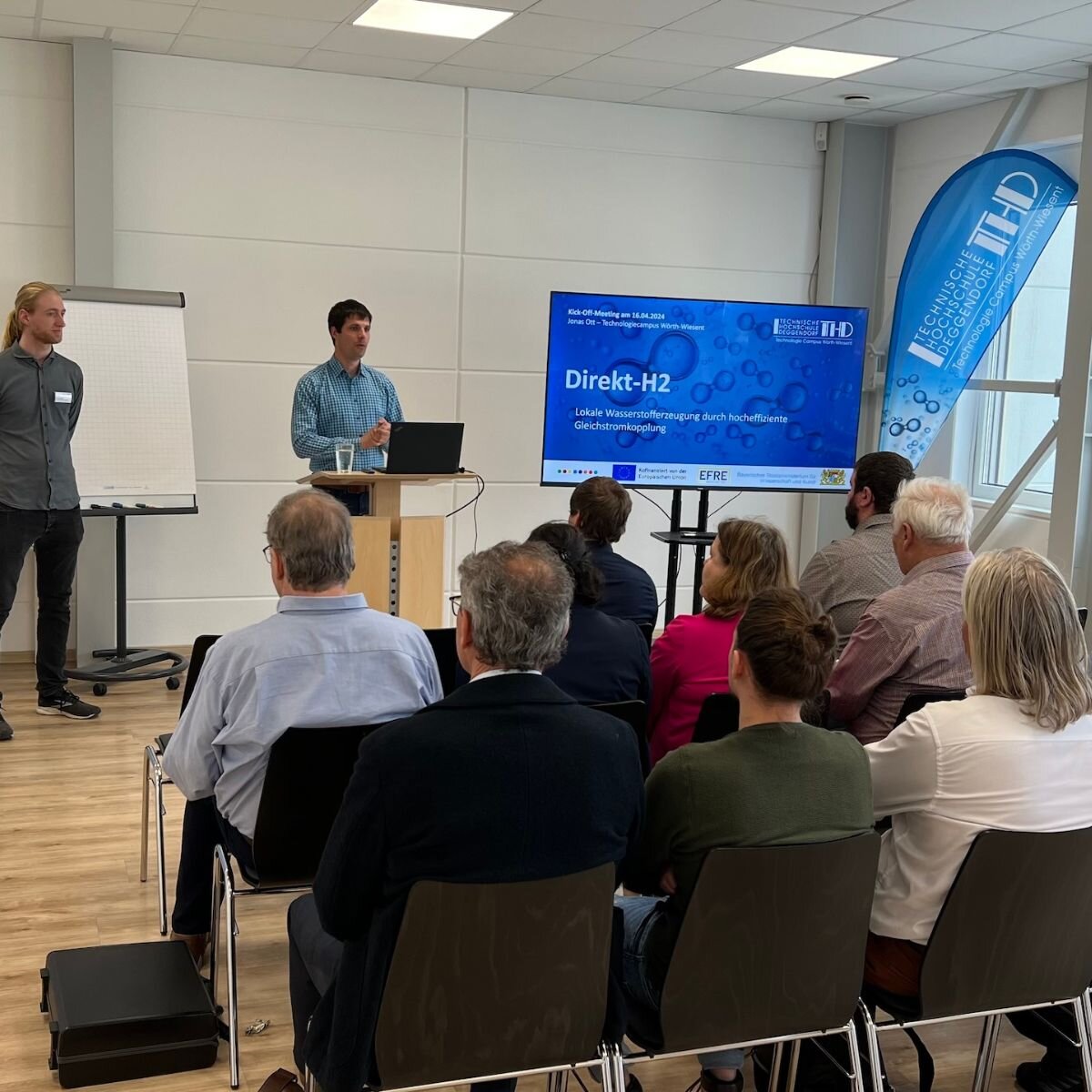
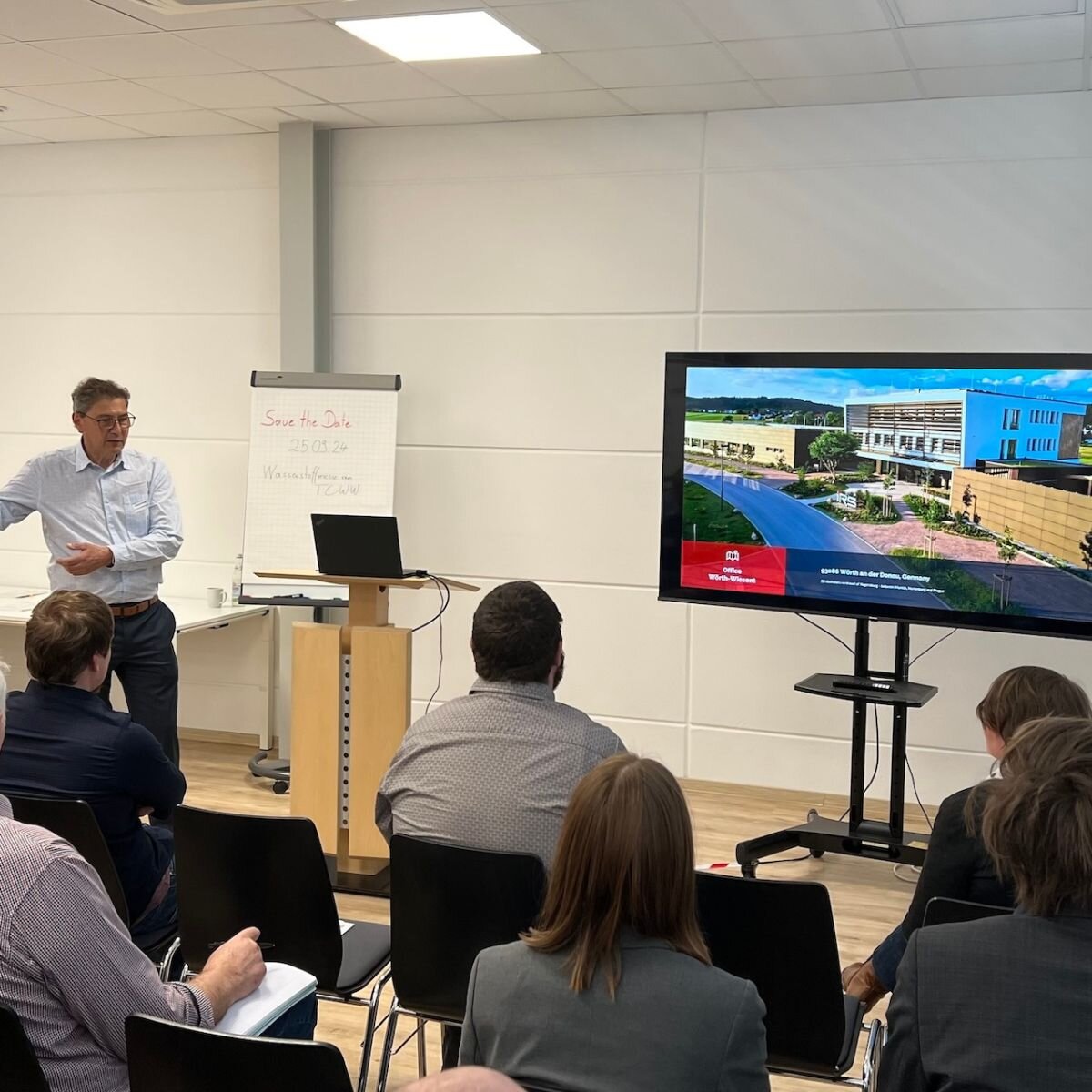
The kick-off meeting for the ERDF project "Direkt H2" took place on April 18, 2024. The participating project partners met in person for the first time and engaged in in-depth discussions about the project. Following a brief introduction to the project by Jonas Ott—the lead scientist from Campus Wörth-Wiesent—all attendees briefly presented their companies and, above all, outlined their expectations for the project.
The "Direkt H2" project focuses on the direct on-site use of DC voltage generated by a photovoltaic system for water electrolysis. A complete system for local hydrogen production is being developed, and its economic viability across various applications is being analyzed and demonstrated. By developing an energy management system tailored to specific applications, the utilization of subsystems is optimized, and investment costs are reduced.
The project's specific objectives are:
Development of an integrated system for local hydrogen production and stationary hydrogen-based energy storage
Direct use of DC voltage generated by photovoltaic systems for water electrolysis
Optimization of energy efficiency compared to standard market solutions involving AC coupling, thereby reducing costs
The project "Direkt H2: Local Hydrogen Production via High-Efficiency DC Coupling" is co-financed by the European Union. ERDF projects primarily support technology transfer from higher education institutions to SMEs.
The next project meeting involving all cooperation partners is scheduled for autumn 2024.
(Images: Campus Wörth-Wiesent)
Business Networking Event at Campus Wörth-Wiesent – March 2024
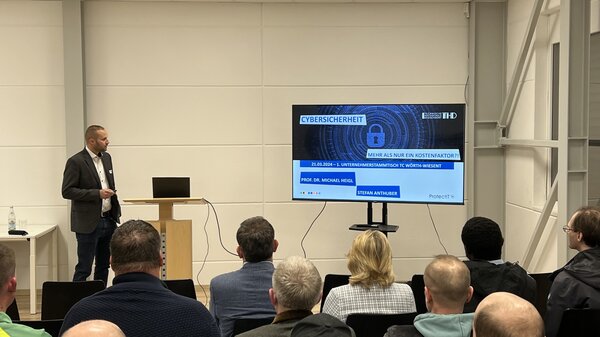
At the inaugural business networking event held at Campus Wörth-Wiesent, Professor Michael Heigl from Campus Vilshofen gave a presentation titled "Cybersecurity – More Than Just a Cost Factor."
The Industrial Park Association and Campus Wörth-Wiesent had invited companies from the two municipalities as well as the ILE Vorderer Bayerischer Wald region to attend. In his welcoming remarks, Josef Schütz, Chairman of the Association, outlined the concept behind the gathering: to gain insights into current topics and to have the opportunity to exchange ideas and network with other businesses.
Attendees took full advantage of this opportunity following the presentation. Feedback was consistently positive, and plans are already in place for the next event this autumn.
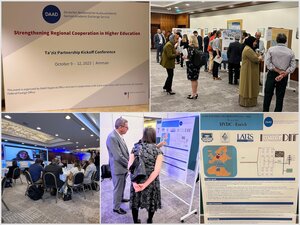 Kick-off Meeting for the DAAD Project "HVDC ENRICH" in Amman
The kick-off meeting for our project "HVDC ENRICH" took place in Amman from October 9 to 12. The project is administered by the German Academic Exchange Service (DAAD), which funds various projects using resources from the Federal Foreign Office.
Together with Professor Jaleleddine Ben Hadj Slama and Professor Adel Bouallègue from the University of Sousse in Tunisia, our research associate Florian Lausser will work on developing a high-voltage direct current (HVDC) transmission submodule made from automotive industry components. This approach reduces the production costs of the submodules.
This will make long-distance power transmission significantly more cost-effective—an important contribution to the energy transition. Over the next two years, Tunisian and German students will collaborate on developing the submodule. In the long term, the initiative also aims to intensify and expand cooperation between our universities.

OPEN HOUSE – SEPTEMBER 23, 2023
Tanja Schweiger, District Administrator of Regensburg, officially opened the Open House event for the Wörth-Wiesent industrial park—which was also part of the district’s "Regional Days"—at a central location on our campus.
Most companies took the opportunity to showcase their work and promote themselves. Visitors to our site could learn about the wide range of potential applications for hydrogen and the planned expansion of the campus. The Paul Group from Vilshofen presented a hydrogen-powered truck, and C.A.R.M.E.N. e.V. from Straubing hosted a booth focused on renewable energy. A staff member from the Campus for Modern Mobility in Plattling provided information about a mini-excavator he had retrofitted to run on standard swappable batteries; his self-developed electric "Bobby Car" also proved a hit with visitors of all ages.
At the Deggendorf Institute of Technology (DIT) STEM team’s booth, children and young people could gain their first programming experience under professional guidance. Right next door, visitors could find out about the various degree programs offered by the institute.
The local DLRG (German Life Saving Association) chapter, Wörth-Hofdorf, provided central catering services on the campus. Visitors could soak up the atmosphere and watch the crowds while enjoying a steak sandwich and a drink, or coffee and cake.
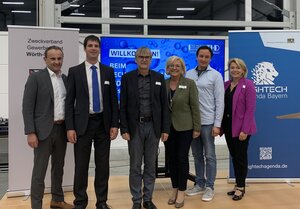
Entrepreneur Evening on Campus – September 22, 2023
The first "Entrepreneur Evening" took place on campus on September 22, 2023. Prof. Dr.-Ing. Otto Kreutzer gave a brief overview of the campus, highlighting its key research areas and future plans. Following this, Tobias Saller from Luxgreen Climadesign GmbH presented the first major hydrogen project in the Regensburg district: the "Hydrogen Bakery" planned by the Schifferl company in Barbing.
After the two presentations, the more than 100 attendees had the opportunity to have research staff explain the exhibits that had already been set up for the upcoming Open Day. Among the displays was a hydrogen-powered truck from the Paul Group in Vilshofen. There was also ample opportunity for professional exchange and networking.
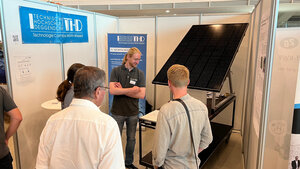
GREEN HYDROGEN FORUM – JUNE 22, 2023, IN STRAUBING
The new Wörth-Wiesent Campus of the Deggendorf Institute of Technology was represented with an exhibition booth at the Bavaria Green Hydrogen Forum, held on June 22, 2023, at the Josef-von-Fraunhofer-Halle in Straubing. At this inaugural forum in Straubing, visitors could gather information on a wide range of topics related to the hydrogen economy from a diverse mix of exhibitors. Throughout the day, a comprehensive program of scientific and practice-oriented presentations was also offered, covering everything from the broad application potential of green hydrogen to various funding instruments.
Using a demonstrator he developed himself, Jonas Ott showcased the direct use of photovoltaics for hydrogen production via DC coupling at the campus booth. Numerous conversations and discussions fostered a lively exchange of ideas regarding efficient electricity use and hydrogen production from photovoltaic systems. Innovative concepts for future collaboration and potential projects eligible for funding were discussed with many interested parties.
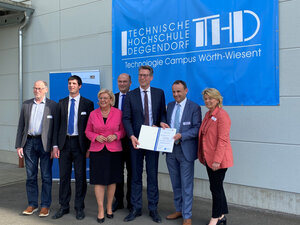
PRESENTATION OF THE FUNDING GRANT IN MAY 2023
On May 9, 2023, the funding grant for the new Deggendorf Institute of Technology (DIT) campus in Wörth-Wiesent was ceremoniously presented to representatives of the university and the local municipalities by Markus Blume, Bavarian State Minister for Science and the Arts, and Albert Füracker, Bavarian State Minister of Finance and Regional Identity.
Working in close cooperation with DIT and the newly established campus in Kelheim, the Wörth-Wiesent site will focus on hydrogen and heavy-duty transport through the "Danube Hydrogen Cluster" initiative. These research activities will make it possible to apply cutting-edge research findings directly within the region.
The speakers agreed that the site boasts an outstanding research concept designed to strengthen local companies—and businesses across Bavaria—through new innovations. Driven by the exceptional motivation of all parties involved, the challenges associated with establishing the campus were overcome in a very short time, and an existing building complex in the Wörth-Wiesent industrial park was secured for the project. This facility is now being adapted and brought to life so that initial research activities can begin promptly.
The Free State of Bavaria is supporting the new hydrogen research campus in the Regensburg district with approximately seven million euros.
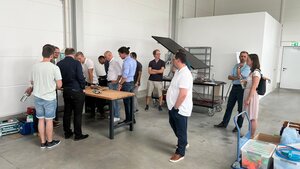 VISIT FROM THE PLATTLING CAMPUS
During an on-site visit, colleagues from the Plattling Campus saw firsthand the progress made in developing our research capabilities. For instance, they critically examined and expertly discussed new features of the demonstrator designed for the direct conversion of solar power into hydrogen, as well as findings regarding the use of a hydrogen flame in the context of minerals. We sincerely thank them for the strong turnout and look forward to seeing them again soon.
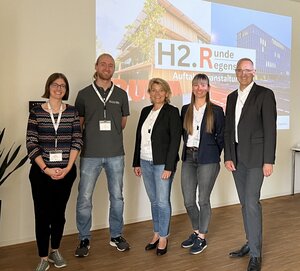 Kick-off Event for the Regensburg Hydrogen Roundtable (H2.R)
We attended the kick-off event for the launch of the Regensburg Hydrogen Roundtable (H2.R) together with Elisabeth Kerscher, Mayor of the Municipality of Wiesent. Elisabeth Kerscher serves as Deputy Chairwoman of the Wörth-Wiesent Joint Authority, which hosts our campus dedicated to hydrogen and heavy-duty transport.
During the event, our research associate Jonas Ott successfully pitched his project idea, "Direct H2."

IAA MOBILITY
Christian Bernreiter, State Minister at the Bavarian State Ministry for Housing, Construction and Transport, also visited the Cluster Mobility & Logistics joint stand at IAA Mobility to learn about the various campuses of the Deggendorf Institute of Technology. Our Operations Manager, Christian Kaiser, was on hand to represent the Wörth-Wiesent campus and establish new contacts.
We were delighted by the general interest shown and the opportunity for exchange.
Bildnachweis: Copyright StMB Winszczyk
press releases
directions & contact
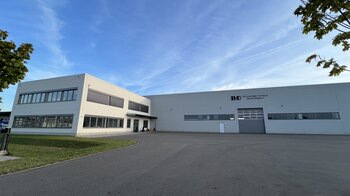
Deggendorf Institute of Technology
Campus Wörth-Wiesent
Gewerbepark B 7
93086 Wörth a.d. Donau
Germany
Operational management
Vanessa Boos
Phone: +49 (0) 991 / 3615-8720
Email: vanessa.boos@th-deg.de
Assistant
Phone: +49 991 3615-8724
Email: silvia.hilmer@th-deg.de