About campus Mainburg
An innovation center for sustainable construction
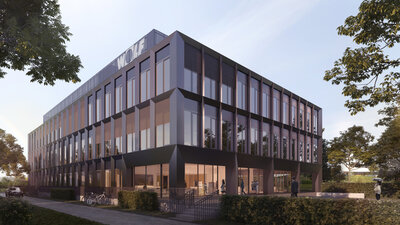
Campus Mainburg is a future-oriented research location of the Deggendorf Institute of Technology, which specializes in the development and implementation of intelligent solutions in the field of sustainable construction. With a clear focus on sustainability, digitalization, and energy efficiency, the campus combines interdisciplinary expertise from science and industry.
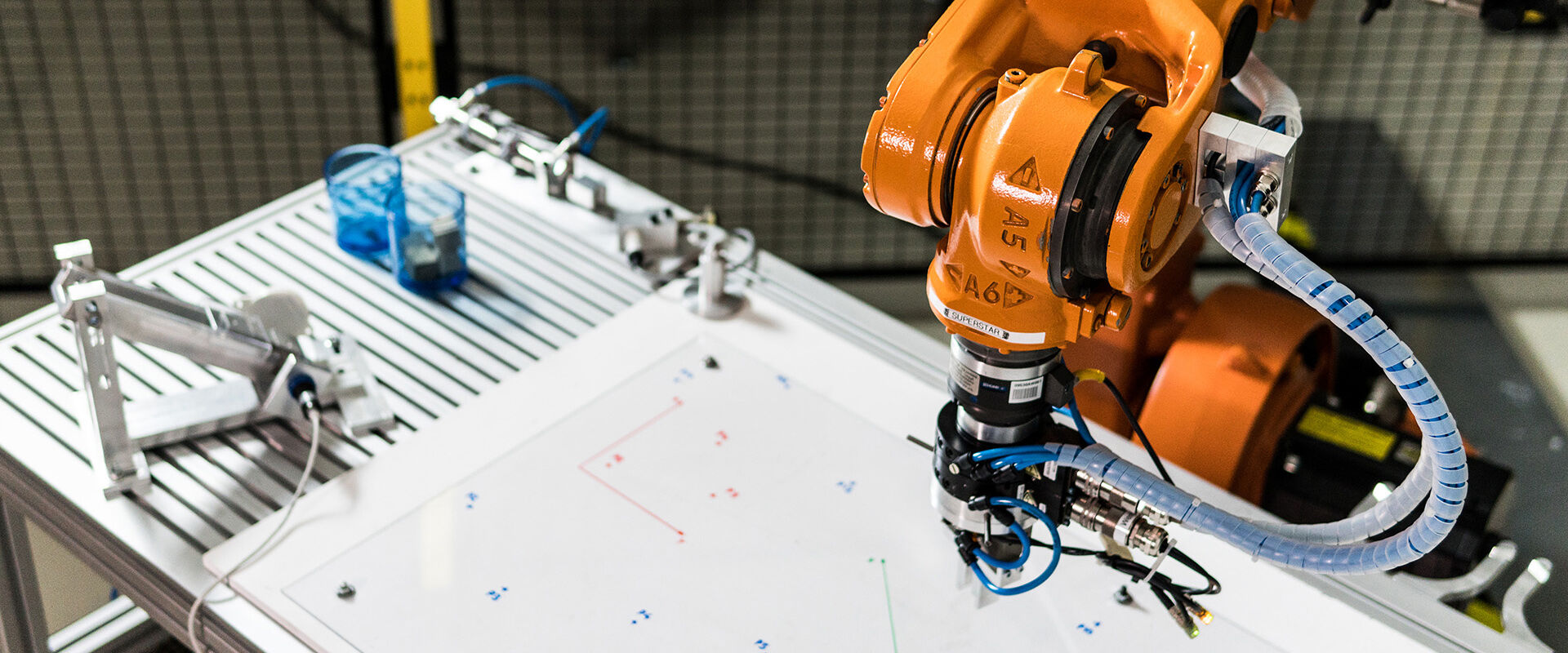
Campus Mainburg of the Deggendorf Institute of Technology sees itself as a bridge between academic research and industrial application. With state-of-the-art laboratory equipment, practical projects, and a strong network of regional partners, it actively contributes to shaping the building technology of tomorrow.
expertise
The focus is on developing resource-efficient construction concepts and operating strategies for buildings. The aim is to combine ecological responsibility with economic efficiency—from the choice of materials to life cycle analysis.
The campus conducts research into digital tools and processes for the intelligent control and monitoring of buildings. These include smart building technologies, IoT applications, and digital twins for building modeling.
The analysis of large amounts of data and the use of AI are opening up new ways to optimize energy consumption, maintenance, and user comfort. Predictive maintenance and automated control systems are key areas of research.
The focus is on innovative concepts for thermal energy generation and efficient air flow and air conditioning. Research ranges from heat pump technologies to fluid dynamics simulation of complex building systems.
projects
Campus Mainburg is involved in an international research project on Building-Integrated Photovoltaics (BIPV), focusing on how PV-integrated building envelopes can contribute to renewable energy generation, improved building energy performance, and urban climate resilience. The project investigates BIPV façade and cladding systems that combine electricity generation with passive thermal regulation of buildings through air-gap ventilation and solar chimney effects.
The project is coordinated by Malaviya National Institute of Technology Jaipur, India, in collaboration with Indian Institute of Technology Roorkee, India. The research uses experimental data from an existing BIPV test chamber to evaluate PV surface temperature, air-gap performance, ventilation behaviour, electrical output, heat-flux reduction, and seasonal thermal effects under warm climatic conditions. These data will be combined with building simulation, urban-scale analysis, and economic feasibility assessment to evaluate the scalability of BIPV solutions for real urban applications.
At Campus Mainburg, Prof. Dr. Kedar Mehta contributes expertise in building energy systems, BIPV modelling, climate-adaptive building technologies, and global energy transition research. TC Mainburg’s role focuses on supporting the scientific framing of the project, strengthening the international BIPV research perspective, and contributing to the interpretation of BIPV performance in the broader context of sustainable buildings, urban energy systems, and climate-responsive building envelopes in the European context.
The project supports TC Mainburg’s strategic development as a research hub for sustainable building energy technologies, linking applied experimental research in India with international expertise in building-integrated renewable energy systems, digital energy modelling, and scalable solutions for future energy-efficient cities.
Campus Mainburg is contributing to an international research initiative on “A Pathway for Net-Zero Building Design in Jaipur City”, a two-year project linked to the AMRUT Centre initiative supported by the Government of India. The project explores how rapidly growing urban areas can transition towards low-carbon and energy-efficient residential building development. Using Jaipur, India, as a case study, it focuses on high-rise residential buildings in a composite climate and investigates how building envelopes, passive design strategies, indoor environmental quality, occupant behaviour, and rooftop solar PV integration can be combined to move buildings towards net-zero performance.
The project applies field surveys, ECBC-R and Eco Niwas Samhita benchmarking, GIS-based PV potential assessment, building energy simulation, and optimisation methods to develop a practical framework for net-zero residential design and policy support. It addresses one of the key challenges of the urban energy transition: the growing energy demand of residential buildings due to rapid urbanisation, increasing cooling needs, and changing lifestyle patterns. By linking real building data with simulation-based design and occupant-centric modelling, the project aims to reduce the gap between theoretical net-zero concepts and practical implementation.
Prof. Dr. Kedar Mehta and Campus Mainburg contribute expertise in sustainable building energy technologies, net-zero energy concepts, solar PV integration, building performance modelling, and climate-responsive urban energy systems. TC Mainburg’s role is to strengthen the international scientific perspective of the project and support the transferability of the proposed net-zero design framework beyond the Indian context. The collaboration also supports TC Mainburg’s strategic profile as a research location for sustainable building energy technology and global energy transition.
The project consortium brings together Malaviya National Institute of Technology Jaipur, India, through the AMRUT Centre supported by the Government of India, as the lead partner responsible for field studies, building stock assessment, code benchmarking, GIS-based PV assessment, simulation, and policy recommendations; Campus Mainburg, Deggendorf Institute of Technology, Germany, contributing expertise in sustainable building energy systems, PV integration, net-zero strategies, and scalability; and the Technical University of Denmark, contributing international expertise in building performance, indoor environmental quality, energy-efficient design, and net-zero building research.
Partner
Campus Mainburg collaborates regionally with partners from industry and education. In addition, there are numerous cooperation partners in our research projects within the individual working groups.
- City of Mainburg - www.mainburg.de
- District of Kehlheim - www.landkreis-kelheim.de