Course Content
You're building the machines of tomorrow
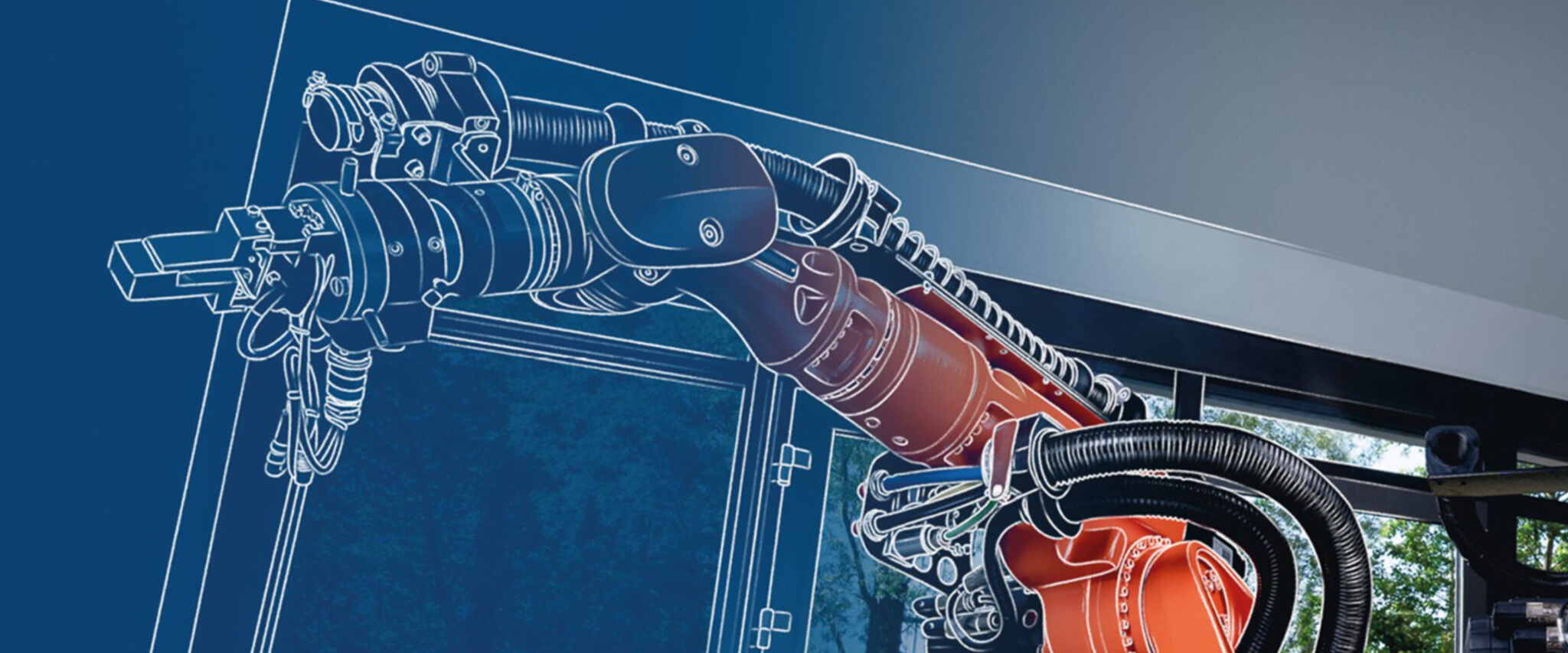
If cars, ships or aeroplanes become more efficient in the future and emit fewer pollutants, then the know-how of mechanical engineers will be behind them. If you're interested in becoming a mechanical engineer, transport and mobility concepts are just one example of what you can work on. Mechanical engineering is one of the classic training areas in the engineering disciplines. Machines are used wherever mechanical work has to be relieved or made easier for people. They extend people's scope of action far beyond the limits of their senses and physical capabilities. You not only develop new machines, but are also responsible for their maintenance and operation. The spectrum ranges from power plants to tiny devices in medical technology. Above all, you use your knowledge of physics - from materials science to mechanics and control engineering to thermodynamics. You work in interdisciplinary teams and combine professional knowledge and technical skills with pragmatism, intuition, imagination and creative powers to solve ever new concrete tasks in a goal-oriented way.
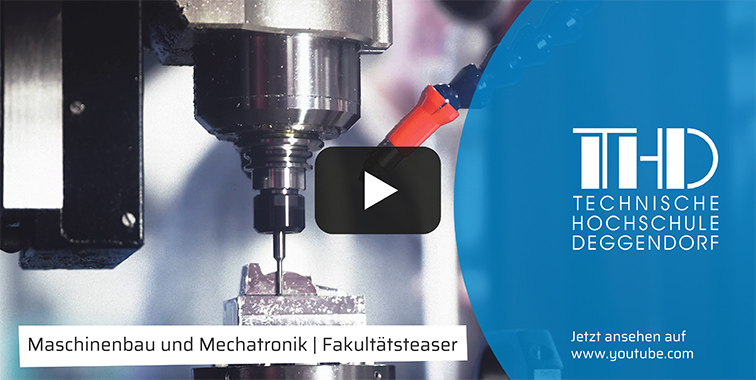
Studying mechanical engineering as a dual course of study with over 120 partner companies is quite popular at the Deggendorf Institute of Technology. One of them is ZF Friedrichshafen AG. In this video you will learn how the combination of theory and practice works.
details & Downloads
I don’t just want to apply technology; I want to truly understand how it all fits together – and that’s exactly what studying mechanical engineering at DIT allows me to do. Through systematic thinking, I’m learning to analyse complex challenges and turn them into practical solutions that actually work.
Alumni Review
2008 | Mechanical Engineering 2010 | MBA General Management
Career Development
After the Abitur I studied twice, both times at DIT. First I studied mechanical engineering (at that time I still had a degree in engineering) and then I did an MBA while still working. That was easy to arrange, because it was block seminars and you didn't have to be on site every weekend.
I did my first (at that time there were still two) internship semester at Linde in the USA, the second one at BMW in Munich. I then wrote my diploma thesis there and returned to Munich for another three years after a three-year detour to MAN Truck & Bus. After that I was able to take over my parents' business in Bogen, Schnupp Hydraulik. We come from the hydraulics sector, but we are now also allowed to build entire production lines and industrial presses for our customers. Today, 160 employees generate annual sales of around € 27 million.
Reminiscing allowed: remember your student days
I have fond memories of my time in Deggendorf. My father and my brother both studied in Munich. The state capital may be more exciting at first glance, but it is also much more anonymous. In Deggendorf there was something to do almost every day or evening in my time, you knew most of the people there and could always meet many friends without having to make a big date. I still have many friends from my time in Deggendorf.
What advice would you give current students?
From my own experience of my time as an employee: if possible, try out as many jobs as possible during your studies, which is not so easy later on, and also make contact with possible employers. That worked out very well for me. So I was recommended from the internship semester to the diploma thesis and the subsequent employment.
Besides, a semester abroad is a very good idea. Most companies are now international and it is more a must than a bonus to speak English fluently and have proven that you can get by on your own abroad. I would always prefer to do a practical semester abroad rather than going to university. It's more strenuous, but you get much better in the language and gain deep insights into the working world of the country than in the study environment with lots of other internationals who perhaps don't speak better English than you do.
2005 | Mechanical Engineering
Career Development
After a successful apprenticeship as a mechanical engineering mechanic at Streicher Maschinenbau in Deggendorf, a 10 month military service in the fighter squadron 74 "Mölders" in Neuburg on the Danube followed. At the Aloys-Fischer-School in Deggendorf I acquired the technical college entrance qualification in 2001. In the winter semester 2001 I started my studies at DIT in the department of mechanical engineering, which I finished in spring 2005. During my studies, I accompanied a work placement as a student trainee at the GFH-GmbH under Prof. Dr. Helml, which was mainly concerned with the development of test machines for diesel injection nozzles. Through these contacts and the help of Prof. Dr. Helml, I was able to complete an internship semester in the USA at Delphi Automotive in 2004.
After my studies, my main focus was production engineering, but I desperately had to change this. The Maschinenelemente II (Seminar) third attempt in the 8th semester left its mark on me. So I ended up as a sales engineer at Bartec GmbH in Gotteszell, which was then under the direction of Prof. Dr. Fröhlich. After a nice 2 years and the realisation that electronics is not my world, I changed to Kurt Willig GmbH & Co. KG in Straubing. Tank trucks made of aluminium, to touch, grind and weld. That was more my world.
In 2009 I took over the sales management at Willig Group and in 2016 I was additionally appointed as an authorised signatory.
In summer 2010 I met a crazy Australian who told me that he can make tanks from carbon fibre. He didn't have to convince my colleagues and me for long, so we started thinking about how to get the job done. In 2014, the companies decided to join forces. In 2016 a JV of the two companies was founded, the Omni Willig Carbon GmbH, whose management I took over as an additional task.
Reminiscing allowed: remember your student days
It is almost impossible to explain this in a nutshell, it would fill volumes. The time of my studies was certainly one, if not the best time I had.
Of course there were challenges one has to take. Descriptive geometry, thermodynamics, fluid mechanics, (are these all Nietzsche subjects?), etc. Business studies can also become a problem if you don't go to the lecture. But all in all, the study was always exciting and above all fair. There were 11 of us in the main focus and we had a good team spirit. These contacts are partly still going on. I also see this as the strength of the DIT. The familiar atmosphere, as well as the personal connection to the professors. That is what makes the DIT's good education, the cooperation.
What advice would you give current students?
Use the time now to ask questions. Now tasks can still be corrected. A lower grade does not necessarily spoil the access to the better job. Take the opportunity to ask what was wrong. In professional life only one person corrects, the customer! But from then on it costs money. You are the one who has to take responsibility for it! Employers of today, at least not the ones I know, do not choose their employees according to the grade sheet. You have to fit into the team. Only those who feelcomfortable in a position can perform well!
The most important thing of all is: stay as you are and don't pretend. A B.Eng. on your business card does not make an engineer!
2003 | Mechanical Engineering
Career Development
Primary school in the Netherlands, then grammar school - but then dropped out because of moving to Austria, one year of secondary school in Austria, then secondary school in Simbach/Inn, technical secondary school in Pfarrkirchen and FH Deggendorf.
In the last year of my ME studies, I worked as a student trainee at Austria Metall AG (AMAG), and from autumn 2002 I had a permanent position and wrote my diploma thesis within the framework of an AMAG project. He then joined the company as assistant to the managing director of AMAG Casting GmbH. Two years later I was promoted to production manager and, due to his increasing responsibility for the profit and loss account, in 2005/2006 he received an MBA from the University of Louisville while working. At the end of 2006, I became plant manager at AMAG Extrusion GmbH, from which Hammerer Aluminium Industries GmbH emerged in 2007 within the framework of a company spin-off.
Here I became the managing director for the recycling and foundry in 2008 and spent almost 2 years in Romania to build and start up a new plant. 2010 when I returned to Austria I was appointed CEO of the HAI Group. At that time the company had 2 locations and 260 million turnover with 480 employees. Together with my team, we have succeeded in using the difficult years after the economic crisis for a strategic reorientation and thus we were able to almost double our turnover to 480 million by 2017 and even more than double the number of jobs to 1150! HAI currently supplies high-quality aluminium components from 6 locations in Austria, Romania and Germany for the automotive industry as well as all other transport segments and also for numerous applications in construction and industry..
Reminiscing allowed: remember your student days
After the technical secondary school I absolutely wanted to study technical studies and at that time mechanical engineering was just being built up in Deggendorf. Since many of my school colleagues also oriented themselves towards Deggendorf, the decision was made quickly and I have never regretted it. It was almost family back then. Getting in touch with the professors was possible at any time and very informal...including the odd beer in the "wheelhouse". Professionally, (most...;-) professors were in a good mood and also tried to bring the technical topics across accordingly...(I will never forget the picture of Professor Nitsche, how he used his "little belly" in combination with all the utensils in the room to give us an understanding of descriptive geometry...;-).
I still remember the basic study period as "dry" and very theoretical and so some lectures after one or the other student party were a bit tedious...but after the division into the main subjects it was very interesting and I got a lot of knowledge which is still very useful for me today.
In the main focus we had quasi individual lessons...we were exactly 4 students at the beginning of today's DIT who had chosen the main focus production engineering! I am still in contact with the professor responsible, Joachim Helml, and he even visited me in Romania almost two years ago. I hope that DIT has maintained this proximity to the students...even though it will certainly not be possible to do so intensively with this growth...
What advice would you give current students?
Use the time while you're studying - not only to acquire knowledge - but also to form friendships and networks - I am still in contact with a few fellow students today and one of them is working as a managing director in our Romanian plant.
Make sure you do a semester abroad! The experiences you make there are an invaluable gain! The challenge of having to "survive" in a completely new environment in a foreign language shapes and encourages you to accept and master challenges later on!
Create a good study-/life balance. The time as a student is unique and in later life you will never again be able to spend so much time for yourself and your interests!
2013 | Mechanical Engineering
Career Development
- School: St. Michaels Gymnasium Metten, Study "Mechanical Engineering at DIT
- During studies as a working student / intern at Streicher and VTA, internship at Daimler (Sindelfingen) in the development department, semester abroad in Sweden, fast and uncomplicated, which definitely promotes the career for MBler! "Thinking outside the box".
- Final thesis at Airbus in Hamburg. Prof. Bongmba (as a former employee) endorsed the "feeling" of being a part in the company, not only as an employee but also with excellent support from DIT.
- Big dream to work in aviation was fulfilled. First job with the Airbus Group. (in the field of Product Lifecycle Management = internal consulting of the complete Airbus Group).
- Decision: technical competence or more into the direction of management ... then an offer from EY. That was at the end of 2014.
- Worked up from consultant to manager within four years.
- Focus on PLM in a closed loop approach = all customers from different industries, consulting from the idea to service/recycling (which data must be provided so that it can be disposed of properly). A great advantage is that the technical background is there to present the entire process flow and keep an overview.
Reminiscing allowed: remember your student days
What I remember most of all is the time I spent at Fast Forest: the perfect addition to my professional life: Project had to be finished. Working with friends, who are still friends today by the way. Working at Fast Forest is a lifelong bond. I even found my husband at Fast Forest.
What advice would you give current students?
Enjoy that time! Form networks and stay in touch. This is important for the rest of your lives. Set goals, but be patient and try reaching them one at a time. I'd love to help and give advice. You can get my details at the Alumni office.
Subject Overview
Overview of lectures and courses, SWS (Semesterwochenstunden = weekly hours/semester) and ECTS (European Credit Transfer and Accumulation System) in the Bachelor's degree Mechanical Engineering.
Semester 7: Choice of Specialisation
Cooperative Studies
Theory meets practice
Would you like to get a taste of the real world whilst you’re still studying – and even get paid for it? Then the dual study programme at DIT is just the thing for you.
The dual study programme combines the best of both worlds: sound theoretical knowledge at university and valuable practical experience in a company. You can choose between two models:
- Joint Studies (Study at university combined with a vocational training at a company)
- or Studies with In-Depth Practice (intensive practical training during semester breaks)
Important: To enrol on the cooperative studies programme, you must apply to both the company and the DIT.
DIT has been working with numerous companies for many years – find out more here about our cooperation partners. You can also find potential cooperative study places in the hochschule dual database.
Do you already have a company in mind, or would you like to send a proactive application to a company that doesn’t yet work with us? Please feel free to pass on our contact details so that we can clarify all the necessary requirements (e.g. partnership agreement, work placement guidelines) with your company.
Do you need general advice on dual study programmes? Please feel free to get in touch with us: Contact Career Service
Interested in a cooperative study programme?
Find out which programme is right for you, how to apply, and how we’ll support you every step of the way – from finding the right company to starting your studies:
Career Prospects
Mechanical engineers are involved in all aspects of research, planning, development, design, production, operation and maintenance of machinery, technical units and entire production facilities within the industry. This opens up a wide range of career fields for you, extending even into the areas of transport engineering, physical engineering, electrical engineering, and supply, production and waste management technology. As a supporting discipline, mechanical engineering also permeates all areas of technology and the natural sciences, for example in the development of innovative production processes for microchips or in the construction of the largest particle accelerators, which physicists use to investigate the smallest building blocks of matter.
The range of potential employers extends from international corporations, through publicly funded research institutes and established medium-sized regional businesses, to newly founded start-ups with just a handful of employees. In addition to a technical career path in development and applied research, as a mechanical engineer you will often take on roles in production planning, sales or operations management. There is also a high proportion of mechanical engineers in management consultancy and the civil service. Furthermore, freelance work is an option, for example as an expert witness. With additional training, careers as a patent attorney or patent assessor, or as an industrial engineer, may also be within your reach.
Today, the field of mechanical engineering is particularly shaped by requirements such as
- the use of new materials
- the use of renewable energies
- the sustainability of materials and production processes
- the impact of technical innovations on the environment and society
- the high level of innovation in ever-shorter development cycles
- the use of computer-aided tools and simulation methods
- working in interdisciplinary teams
- working in an international environment