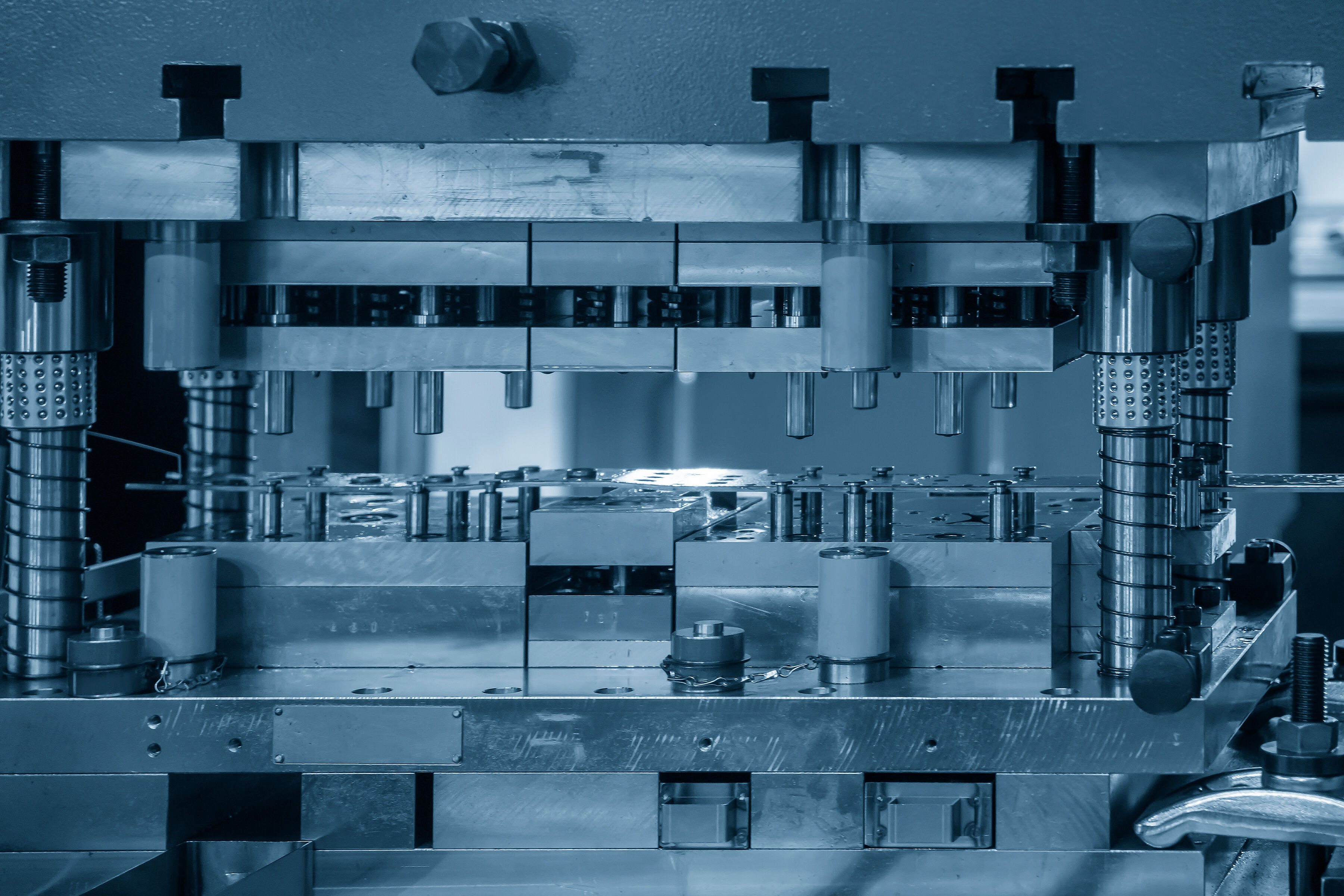
Connected production and new technologies: the key to the future of tool, mould and model making
As an institute for toolmaking, mouldmaking and model-making that is unique in Bavaria, we conduct research and develop practical solutions for the end-to-end digitalisation of the process chain, from the customer’s product right through to the tool, mould or model. Our research and development also focuses on new technological approaches to the manufacture of tools and moulds with outstanding functional properties.
Our aim is to support companies in making processes across the entire value chain more efficient, transparent and future-proof.
These include, amongst others:
- Digital cross-domain networking, from design through to quality assurance
- Integration of real-time data flows and data-driven analytics; development of key performance indicator systems for the bespoke manufacturing sector
- End-to-end optimisation of the entire value chain (rough planning, CAD, production planning and control, CAM, clamping systems, tool management, measurement)
- Development of methods for the early identification of errors, bottlenecks and unplanned downtime
- Development of robust, digitally integrated and highly automated process solutions in one-off manufacturing
- Establishment of digital, cross-organisational collaborations
- Research and development of new hybrid process chains that combine novel additive and conventional subtractive processes
Together with our partners from industry and science, we carry out research and development projects that are directly tailored to the specific requirements of the sector.
In this way, we lay the foundations for a competitive, resource-efficient and fully digitally networked process chain in tool, mould and model making.


Image credit - Fabian Diehr (on behalf of the Verband Deutscher Werkzeug- und Formenbauer e.V. (VDWF))
Vision
The Institute for Tool, Mould and Model Making aims to provide pioneering impetus for the digital and technological transformation of this long-established sector, which is essential to Germany as a manufacturing hub.
We develop in-depth knowledge and practice-oriented methods that enable companies to fully digitise their entire process chain, tailored to their specific needs. Through an innovative approach to process standardisation, businesses are empowered to network collaboratively, thereby creating location-independent digital production clusters that offer a competitive advantage.
The IWFM actively supports companies through their digital transformation. This process design, which is significant from both a technological and business management perspective, enables even companies specialising in one-off production to systematically collect, compile and utilise data in line with the principles of networked production (formerly Industry 4.0).
By combining proven industrial practice with disruptive organisational and technological approaches, we create forward-looking solutions that make processes in the value chain more efficient, sustainable and competitive, and even open up new business models. Our aim is to guide the industry safely through digital and technological change and to strengthen its innovative capacity in the long term.
Mission
Our mission is to use scientific methods to unpick the challenges posed by complex interactions between materials, manufacturing processes and cross-domain and cross-organisational processes – from design through to quality management, digital technologies and industrial value creation – and to translate these into practical insights and optimise them in a targeted manner.
We focus on application-oriented research, close collaboration with partners from industry and academia, and the consistent transfer of innovations into practice. The aim is to drive forward the end-to-end digitalisation of the entire process chain in tool, mould and model making, in order to secure the sector’s long-term competitiveness and strengthen its contribution to resource-efficient, sustainable and regionally-based, collaborative production.
A key element is the establishment of a central, neutral knowledge platform for the key sector of tool, mould and model making, in order to make this available to researchers and companies for their collaborative optimisation.
Research
Our primary research objective is to understand the role of digital technologies, process digitalisation and smart materials throughout the entire process chain of tool, mould and model making, to develop these areas in a targeted manner, and to transfer this knowledge to industry. In doing so, we consider both the interactions within the heterogeneous system landscape and external influences such as market requirements, technological trends and regulatory frameworks.
To achieve this objective, we work in the following closely interlinked research areas:
- Production environments and manufacturing ecosystems – Analysis and optimisation of the interactions between people, machines, processes, materials and systems.
- End-to-end digital process chain – Development of fully integrated workflows from design through planning and manufacturing to quality assurance.
- Human-technology interaction – Design of user-friendly, efficient and safe interfaces for the shop floor.
- Standards and quality – Ensuring reproducible results and integrating current industrial and quality standards.
- New technologies – Use of AI, CAD analyses, feature coding, structured FMEA and digital process twins to increase efficiency and ensure process reliability.
- Process control and regulation – Development of adaptive, data-driven control concepts and control loops for a manufacturing process optimised in terms of time, cost and quality.
- Cross-organisational, end-to-end digital collaboration based on standardised CA-X processes.
New hybrid manufacturing processes combining subtractive and additive techniques for the production of tools and moulds with outstanding functional properties.
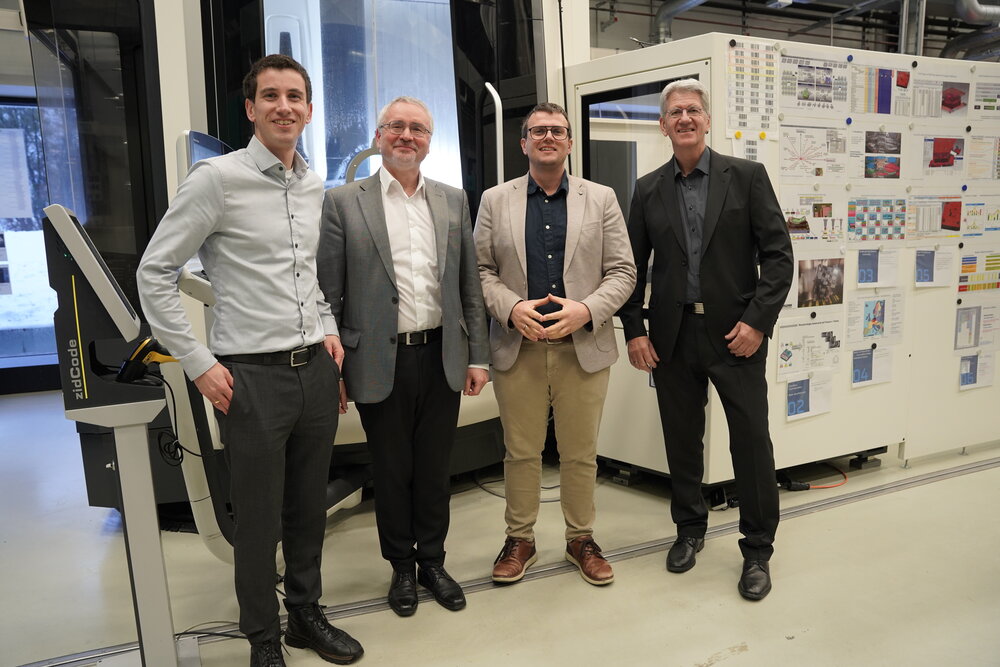
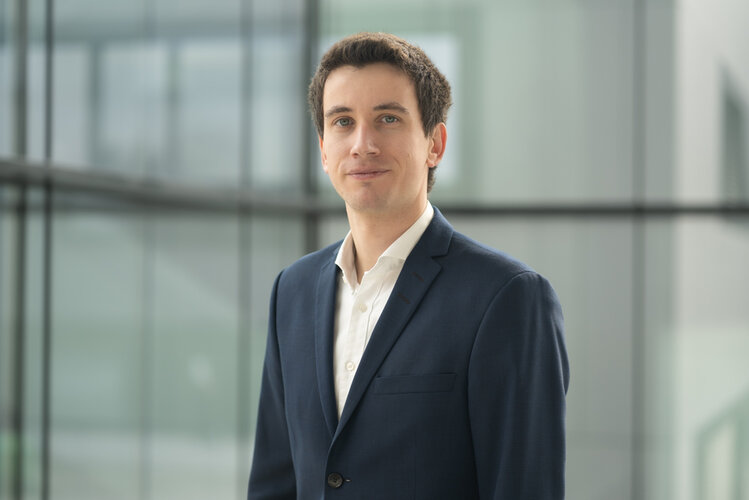
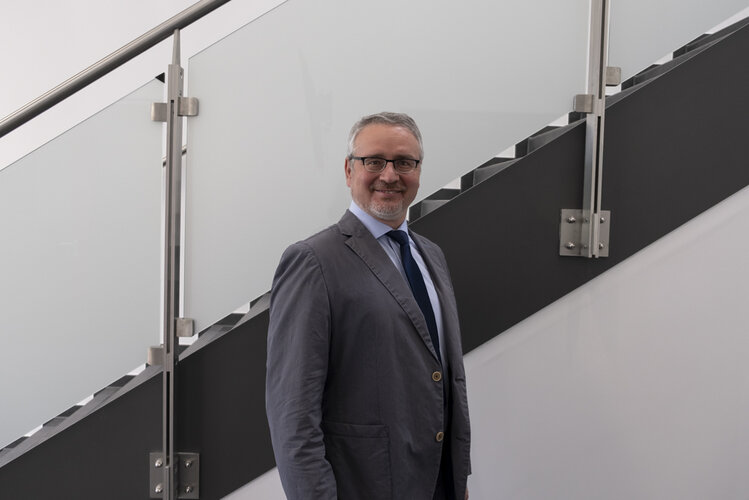
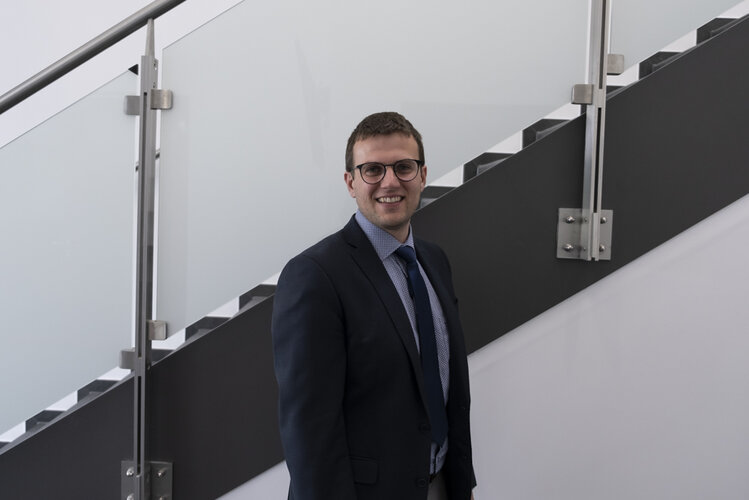
Founding members of the IWFM (from left to right): Prof. Dr.-Ing. Nikolaus Urban, Prof. Dr.-Ing. Andrey Prihodovsky, Prof. Dr.-Ing. Anton Schmailzl, Prof. Dr.-Ing. Ludwig Gansauge
core competencies
- Human-Machine Interaction – MDE-Box patent (future-link); KPI development, OEE enhancement
- Enhancement of OEE visualisations with additional efficiency assessment
- Optimal utilisation of existing data through data science and artificial intelligence methods, as well as the tapping of new data sources
- Standardisation in one-off production – the basis for automation
- Process automation: CAD, AV, CAM (3D), CAQ – colour coding system
- CAD feature analysis: feature decomposition, feature coding, feature classification
- Systematic AI-based fault management (FMEA – item – feature)
- Cross-domain knowledge management
- Cross-organisational collaboration in one-off production
Services
Innovation and precision in machining and additive manufacturing – your partner for contract manufacturing and small-batch production
Do you have an idea, a component design or a complex technical challenge – but are unsure whether and how it can be implemented efficiently?
We support you every step of the way, from feasibility analysis and process development right through to the production of prototypes, small-batch runs or individual parts with the highest precision.
Your point of contact for contract manufacturing and scientifically-backed manufacturing services: Manfred Dengler
With our machinery and in-depth expertise, we guarantee you the highest quality, short lead times and maximum process reliability – whether for complex 5-axis machining, precision milling, turning, material testing or 3D printing.
Your benefit:
Through a combination of state-of-the-art manufacturing technology, proactive knowledge and error management, data-driven process analysis and non-destructive quality testing, you receive components that meet the highest standards – from one-off production to small-batch runs.


Laboratory/institute equipment
On DIT's main campus and the inter-university Parsberg/Lupburg campus, equipment is available in the following areas:
- Mechanical manufacturing processes (CNC lathe, column drill, belt grinder, band saw, CNC milling machine)
- Laser material processing (four laser safety enclosures with appropriate safety equipment)
- Additive manufacturing (several plastic 3D printers)
- Materials analysis (microscopes and macroscopes, photographic documentation workstation, automatic hardness testing system, vibration test rig, metallography, tensile and compressive testing machine, workstations for residual stress measurement)
In addition to the equipment, a range of software products is also available, which enable, in particular, the simulation of manufacturing processes. (CAD/CAM/PLM programmes, FEM programmes, and many more.)
Link to the general machine overview at DIT:
DMG DMU 65 Monoblock (5-axis milling)
DMG DMU 70V (5-axis milling)
DMG DMU 63V (3-axis machining centre)
Kern HSPC (3-axis precision milling)
Gildemeister CTX400 (Turning)
DMG Ultrasonic 40 evo FD (5-axis internally cooled milling, turning, drilling, grinding, cylindrical grinding)
Spannsysteme: FCS, ZeroClamp
Stratasys
Prusa Research
Sinterit
SAAM
Networking software (incl. ERP-, PDM- and MES functionality): AVERP by Snyerpy
CAD: Catia, Solid Works, Creo, Siemens NX
Experimental NC machining centre CAM: Openmind Hypermill, Tebis, Catia, Siemens NX
Zero-point clamping system: BCK Guideline (Software)
Tool organisation: TMS by Zoller incl. Redomatic 600, Keeper, Organizer and zidCode
Simulation: Siemens NX, ANSYS, Altair, MSC One, DynaWeld, LS-DYNA, JMatPro, GENISIS Hatching Advanced
Pro-micron tool control center, Matlab, Simulink
Machine data collection: Future-Link
MS Hololens
Rapid-Protoyping-Platform for data collection and processing, e.g. for WiFI, Zigbee
IoT-Sensors
Server infrastructure for supporting complex database and dashboarding systems
pro-micron spike mobile (sensor-equipped tool holder for measuring cutting forces directly at the tool)
Keyence digital microscope VHX 600
Tescan Scanning electron microscope (REM)
Heitec PTS HeiDetect FX InlineCT (Computed tomography)
Labs
Directions:
Building L at Campus Deggendorf: directions
Labs:
- Anwendungslabor Industrie 4.0 (L001, L010)
- Campus Parsberg/Lupburg
Research projects
We bring applied research directly from the institute to businesses – from the initial project idea right through to industrial application.
Would you like to put your innovative idea into practice whilst benefiting from public funding and scientific methodology?
We’ll support you every step of the way – from the initial idea to successful implementation.
Your benefits at a glance:
- Attractive funding opportunities: Secure funding for research and development projects – SMEs can receive up to 80% funding.
- Minimal administrative burden: We take care of coordinating the application process, project organisation and reporting.
- Boost profitability: with end-to-end digital processes, innovative digitalisation and automation concepts, and targeted process optimisations.
- Practical and scientifically sound: Research projects are developed in collaboration with you.
- Wide range of topics: From process analyses, knowledge management and an introduction to data-driven production through to holistic digital process solutions.
- From prototype to market readiness: We support the development of marketable products and jointly explore start-up potential.
The IWMF offers a wide range of services to address material and process-related challenges in tool, mould and model making.
We take the specific requirements of your production process into account and develop bespoke solutions – supported by state-of-the-art analytical methods, digital simulations and AI-assisted analyses.
- FutuRE-Lab: the demonstration centre for virtual and mixed reality in the SME sector
- UniqueCT: Integration of CT quality inspection and conventional measurement methods into the production cycle of automated single-unit manufacturing
- ThinkDigital – Accelerating the growth of SMEs in structurally disadvantaged regions by fostering a digital identity through digital start-ups
- Validation of IoT-based qualification in tool and mould making
- hoWAAMi: Development of a highly automated WAAM process based on incremental process control
- IAMhuge: Industrial additive manufacturing of large-volume components made from nickel-based alloys
- IntelliTemp: Hybrid manufacturing concepts for large-volume moulds with intelligent temperature control
- KIdetect: Reliable identification of weed growth centres in camera-guided weeding machines through the use of artificial intelligence in image processing
- rAIse - creating AI mindsets: Establishment of a sustainable platform for knowledge-sharing and dialogue for small and medium-sized enterprises (SMEs) on the subject of artificial intelligence (AI) and its potential to transform the world of work
- Shopfloor Networking with the aim of ensuring data consistency throughout the entire process chain in tool and mould making - EXIST
- MDE-Box - EXIST
- future-link - FLÜGGE


Publications
Käsbauer, J.; Baufeld, B.; Petersen, M.; Prihodovsky, A.: Experimental and numerical investigation of thermo-mechanical distortion of parts made by wire electron beam directed energy deposition. In: Progress in Additive Manufacturing 2026; Springer Nature
Urban, N., Vogel, C.; Brunner, T.; Gansauge, L.: Collaborative Electromechanical Engineering: A Concept to Overcome Domain- and IT-System Borders. (Hg.): 2024 14th International Electric Drives Production Conference (EDPC).
Schmailzl, A.; Schröcker, K.; Gansauge, L.; Prihodovsky, A.: Potenziale von hybriden Fertigungsprozessketten. In: Baier, W. (Hrsg.): 1. TRIOKON 2019 – Die ostbayerische Transferkonferenz für Wirtschaft, Wissenschaft und Gesellschaft, Regensburg (2019).
You can find an overview of all publications by IWFM members in our Publication Database.
Teaching
Master Technologie Management – Faculty of Applied Natural Sciences and Industrial Engineering
Project work and theses
Are you looking for an exciting, hands-on and forward-looking role in an industrial setting? If so, we look forward to getting to know you!
We are regularly on the lookout for committed students and engineers specialising in mechanical engineering, production engineering, mechatronics, industrial engineering, computer science or materials science who are keen to tackle the challenges of digital transformation in the custom manufacturing sector, specifically in tool, mould and model making.
We offer:
- Master’s theses – including those carried out in close collaboration with our industry partners
- Project-specific positions as research assistants or project engineers
- Industry support for process and data-driven process optimisation
If you are interested, please contact the institute’s management or our staff directly. Together, we will find an exciting topic that matches your interests and our research focus.
We look forward to receiving your speculative application and applications in response to vacancies advertised on the DIT job board.
Memberships
- Founding Member "Forschungsgemeinschaft Deutscher Werkzeug- und Formenbauer e.V. FDWF"
- Member "Verband Deutscher Werkzeug- und Formenbauer e.V. VDWF"


Image credit - Fabian Diehr (on behalf of the Verband Deutscher Werkzeug- und Formenbauer e.V. (VDWF))